


The Wola Massacre, a gruesome and devastating event, remains etched in the annals of history as one of the most brutal atrocities committed during World War II. Between August 5th and 12th, 1944, the German army, driven by an ideology of hatred and supremacy, unleashed a torrent of violence upon the civilian population and prisoners of war in Wola, Poland, resulting in the estimated slaughter of 40,000 to 50,000 innocent lives.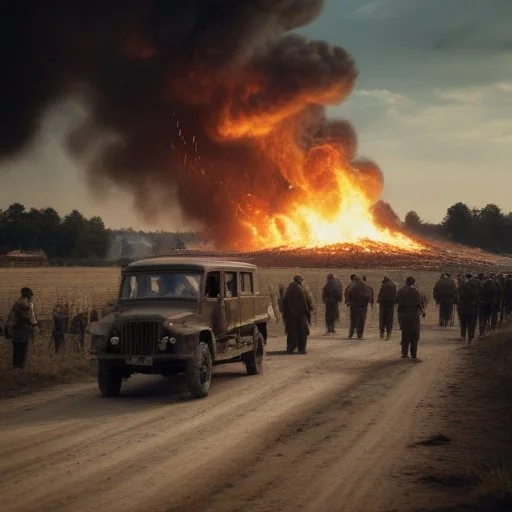
As the Allies pushed deeper into Nazi-occupied Europe, the German war machine, faced with imminent defeat, grew increasingly desperate and brutal. The Polish capital, Warsaw, was a key stronghold, and Wola, a district on the city's west side, was a strategic location for both the Nazis and the Polish resistance. The stage was set for a tragic confrontation.
| Date | Event |
|---|---|
| August 5, 1944 | Nazi forces, comprising of German army units and SS troops, enter Wola, marking the beginning of the massacre. |
| August 6-7, 1944 | Civilians and prisoners of war are rounded up and executed in mass shootings, with many more brutally killed in their homes and on the streets. |
| August 8-10, 1944 | The carnage continues, with entire families and neighborhoods falling victim to the Nazi forces' unrelenting brutality. |
| August 12, 1944 | The massacre finally subsides, leaving behind a trail of unimaginable destruction and despair. |
The Wola Massacre sent shockwaves throughout the world, serving as a grim reminder of the atrocities committed during World War II. The event not only devastated the people of Wola but also had far-reaching consequences:
In the years following the massacre, the people of Wola, Poland, and the world at large have worked tirelessly to preserve the memory of the victims and ensure that such atrocities are never forgotten. Memorials, museums, and commemorative events have been established to honor the lives lost and to educate future generations about the importance of promoting peace, tolerance, and understanding.
The Wola Massacre serves as a poignant reminder of humanity's capacity for cruelty and brutality. However, it also stands as a testament to the resilience and strength of the human spirit. As we reflect on this dark chapter in history, we are compelled to recommit ourselves to promoting peace, justice, and compassion, ensuring that the horrors of Wola are never repeated.
The Wola Massacre occurred during a critical phase of World War II, when the Allies were making significant gains on the Eastern Front. The Soviet Union's advance on Warsaw put pressure on the German army, leading to a desperate and brutal response. The massacre was a manifestation of the Nazi regime's fascist ideology, which sought to intimidate and terrorize civilian populations.
In the geopolitical context of 1944, Poland was a crucial battleground, with both the Soviet Union and the Western Allies vying for control. The Wola Massacre was a brutal reminder of the human cost of war and the devastating consequences of military occupation.

Historians have approached the Wola Massacre from various perspectives, including Marxist, liberal, and nationalist interpretations. Some have seen the event as a testament to the Polish people's bravery and resistance against Nazi occupation, while others have viewed it as a tragic consequence of the war.
Recent historiographical research has focused on the role of ideology in shaping the German army's atrocities, highlighting the importance of understanding the massacre within the broader context of Nazi racial and political ideology.
The Wola Massacre had a profound impact on Polish culture, leading to a significant loss of cultural heritage and historical artifacts. The destruction of Wola's historic buildings and landmarks resulted in an irreparable loss of Poland's cultural identity.
The event also inspired a wave of artistic and literary responses, including works by prominent Polish writers and artists who sought to commemorate the victims and convey the horrors of the massacre.
The Wola Massacre had a devastating impact on the local economy, with widespread destruction of infrastructure and property. The displacement of tens of thousands of people led to a significant refugee crisis, straining the resources of the Polish government and international organizations.
The long-term economic consequences of the massacre were equally severe, with the destruction of businesses, industries, and agricultural production leading to a lasting legacy of economic instability and poverty.
The Wola Massacre raises fundamental questions about the nature of humanity, morality, and the consequences of ideological extremism. The event challenges us to confront the darkest aspects of human nature and to reexamine our values and principles in the face of such atrocities.
Philosophically, the massacre invites us to consider the implications of totalitarian ideologies and the dangers of unchecked nationalism and militarism, serving as a powerful reminder of the importance of promoting peace, tolerance, and human rights.