


Exercise Tiger, a dress rehearsal for the Allied forces' D-Day invasion, turned into a bloodbath on the night of April 28, 1944, when nine German E-boats attacked the unsuspecting Allied convoy in the English Channel, claiming 946 lives. This covert catastrophe, shrouded in secrecy for decades, remains one of the least-known yet most devastating maritime disasters of World War II.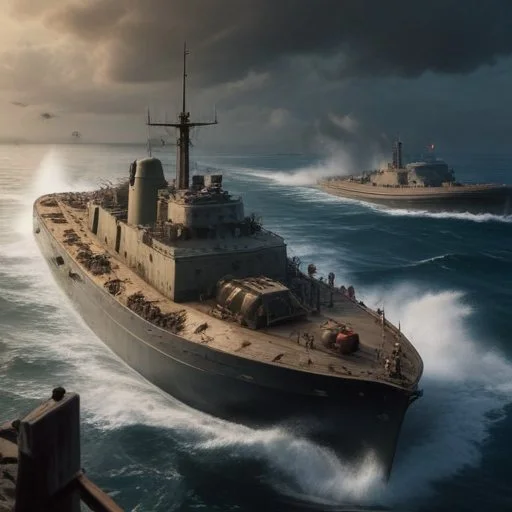
In the darkness of the English Channel, a convoy of Allied ships, carrying American and British troops, was engaged in a mock invasion exercise, code-named Exercise Tiger. The objective was to rehearse the upcoming Normandy landings, but the Germans had been monitoring the Allies' radio communications and were lying in wait.
At 1:30 a.m., the E-boats, fast and agile German torpedo boats, emerged from the darkness, launching a surprise attack on the Allied convoy. The ensuing chaos was catastrophic, with torpedoes ripping through the vessels, sending men plummeting into the icy waters. The Allied forces, caught off guard, struggled to respond effectively, leaving many ships vulnerable to the German assault.
The attack on Exercise Tiger resulted in the deaths of 946 Allied personnel, with many more injured or reported missing in action. The tragedy was compounded by the fact that the victims were largely young, inexperienced soldiers, who had not yet seen combat and were mere weeks away from the actual D-Day invasion.
The aftermath of the disaster was shrouded in secrecy, with both the British and American governments imposing a strict embargo on the news to prevent it from affecting morale. The incident was only declassified decades later, leaving the families of the victims in the dark about the circumstances of their loved ones' deaths.
The carnage of Exercise Tiger served as a sobering wake-up call for the Allied forces, highlighting the importance of security and intelligence gathering in the lead-up to the Normandy landings. The debacle led to a significant overhaul of Allied naval tactics, with increased emphasis on protecting convoys and anticipating German countermeasures.
In the midst of tragedy, the bravery and sacrifice of the Exercise Tiger victims were not in vain. Their loss helped pave the way for the ultimate Allied victory in World War II, as the lessons learned from this fateful night informed and improved the planning and execution of the D-Day invasion.
Today, the Exercise Tiger Memorial stands at Slapton Sands, Devon, as a poignant tribute to the victims of that fateful night. The memorial serves as a reminder of the human cost of war and the importance of honoring the sacrifices of those who gave their lives in the pursuit of freedom and democracy.
The planning and execution of Exercise Tiger were shrouded in secrecy, with only a select few aware of the true nature of the operation. The Allies had been monitoring German radio communications, and they knew that the enemy was aware of the impending invasion. However, the Germans were not aware of the exact location and timing of the exercise, which made it an ideal opportunity to test their defenses.
In the months leading up to Exercise Tiger, the Allies had been conducting a series of smaller-scale exercises, code-named "Fabius," which were designed to test the readiness of their troops and equipment. However, Exercise Tiger was the largest and most complex of these exercises, involving over 25,000 troops and numerous ships.
The exercise was designed to simulate a realistic invasion scenario, with troops boarding landing craft and ships, and then setting off towards the coast of France. The aim was to test the Allies' ability to coordinate a large-scale amphibious assault, and to identify any weaknesses in their plans.
Admiral Bertram Ramsay: A seasoned naval officer, Ramsay was one of the key architects of the Allied invasion plan. As the commander of the Allied Naval Forces, he was responsible for overseeing the planning and execution of Exercise Tiger.
Ramsay was a meticulous planner, known for his attention to detail and his ability to think strategically. He was instrumental in developing the plan for the Normandy landings, and his experience and expertise were invaluable in the lead-up to D-Day.
The Exercise Tiger debacle highlights the delicate balance of power in the European theater during World War II. The Allies were racing against time to launch their invasion of Nazi-occupied France, while the Germans were desperate to prevent it.
The English Channel, where Exercise Tiger took place, was a key battleground in this struggle. The Channel was a vital supply route for the Allies, and its control was crucial for the success of the invasion.
The Exercise Tiger disaster was a sobering reminder of the risks involved in the Allied plan, and it underscored the need for a more robust defense against German naval forces.
The Exercise Tiger files, declassified in the 1990s, provide a unique insight into the planning and execution of the exercise. The files reveal a complex web of communications and intelligence reports, which highlight the Allies' concerns about German naval activity in the English Channel.
The files also contain details of the investigation into the disaster, which was conducted by the British and American governments. The investigation report, marked "Top Secret," reveals a catalogue of errors and oversights that contributed to the tragedy.
Today, the Exercise Tiger files are housed at the National Archives in London, where they remain an important resource for historians and researchers.
The Exercise Tiger disaster led to a significant overhaul of Allied naval tactics, with a renewed emphasis on convoy protection and intelligence gathering. The tragedy highlighted the importance of advanced sonar technology and radar systems in detecting and tracking enemy submarines.
In the aftermath of Exercise Tiger, the Allies invested heavily in developing new technologies, including advanced radar systems and improved sonar detection methods. These technologies played a critical role in the success of the D-Day landings, and they remained a crucial component of Allied naval operations for the remainder of the war.