


In the midst of World War II, a remarkable feat of bravery and strategic prowess took place in the frozen landscape of Norway. On May 28, 1940, a coalition of Norwegian, French, Polish, and British forces achieved the first Allied infantry victory, reclaiming the vital port city of Narvik from German occupation.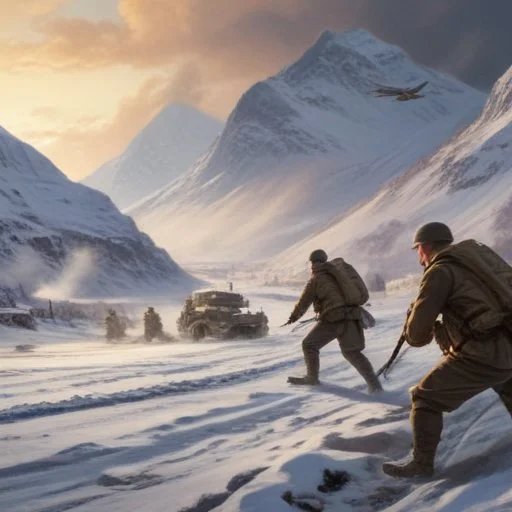
This triumph marked a significant shift in the war's momentum, as it secured a crucial supply route and bolstered Allied morale. The recapture of Narvik demonstrated that collaborative efforts could yield tangible results, paving the way for future joint operations.
In April 1940, Germany launched Operation Weserübung, a surprise invasion of Denmark and Norway. The Norwegian government, led by King Haakon VII, fled to the UK, and the country's military forces were left to resist the German occupation. The Allies, determined to support their Scandinavian allies, dispatched troops to Norway, setting the stage for the battle of Narvik.
General Pierse Mackesy, a seasoned British officer, commanded the Allied forces during the recapture of Narvik. Alongside him, General Carl Gustav Fleischer, a Norwegian veteran, played a crucial role in coordinating the Norwegian resistance. Their combined leadership and tactical expertise proved instrumental in the ultimate success of the operation.
The recapture of Narvik had far-reaching consequences, including:
The recapture of Narvik resonated deeply with the people of Norway, who saw it as a beacon of hope in the face of occupation. The successful collaboration between the Norwegian, French, Polish, and British forces fostered a sense of unity and cooperation, forging strong bonds between the Allied nations.
"We knew it wouldn't be an easy fight, but we were determined to take back our country. The sacrifices we made that day will never be forgotten." – Norwegian soldier, quoted in The Norway Campaign, 1940
The recapture of Narvik served as a model for future Allied operations, showcasing the benefits of collaborative efforts and joint military strategy. This hard-won victory paved the way for the eventual liberation of Norway and contributed to the ultimate defeat of Nazi Germany.
General Pierse Mackesy was Knighted in 1942 for his exceptional leadership during the recapture of Narvik. The bravery and sacrifice of the Allied forces were recognized through numerous awards and decorations, including the Norwegian War Cross and the French Croix de Guerre.
The recapture of Narvik has been extensively studied in military academies and historical institutions, serving as a prime example of successful collaborative warfare. This pivotal event has inspired generations of military leaders, strategists, and historians, its lessons continuing to shape modern military doctrine.
The recapture of Narvik remains an enduring testament to the power of unity and determination in the face of adversity. This remarkable achievement continues to inspire and educate, its significance reverberating through the annals of history.
The German invasion of Norway, codenamed Operation Weserübung, was a carefully planned and executed campaign that caught the Norwegian military off guard. The invaders utilized a combination of naval and airborne troops to rapidly secure key ports and cities, including Narvik. The Allies, however, were quick to respond, and by mid-April, British and French troops had begun arriving in Norway to bolster the Norwegian resistance.
As the battle for Narvik intensified, the Allies adopted a strategy of gradual encirclement, aiming to trap the German forces in a pincer movement. This approach required meticulous planning and coordination between the disparate national contingents, but ultimately proved decisive in securing the city's recapture.
The harsh Arctic environment played a significant role in the battle, with both sides struggling to adapt to the unforgiving climate. The Germans, however, were better equipped to deal with the extreme cold, having brought specialized winter gear and equipment. Despite this, the Allies persevered, leveraging their superior numbers and coordination to overcome the German defenses.
General Carl Gustav Fleischer, the Norwegian commander, was a highly respected and experienced officer who played a crucial role in the recapture of Narvik. Born in 1883, Fleischer had served in the Norwegian military since the early 1900s, rising through the ranks to become one of the country's most trusted and capable leaders.
Fleischer's strong personal connections with King Haakon VII and the Norwegian government-in-exile allowed him to coordinate effectively with the Allies, ensuring a united effort against the German occupiers. His tactical acumen and knowledge of the Norwegian terrain proved invaluable in planning and executing the campaign to retake Narvik.
The recapture of Narvik had a profound impact on Norwegian cultural identity, serving as a beacon of hope and resistance against the Nazi occupation. The bravery and sacrifice of the Norwegian, French, Polish, and British forces were celebrated in songs, stories, and art, becoming an integral part of the country's wartime heritage.
The successful collaboration between the Allied forces also fostered a sense of international solidarity, highlighting the importance of cooperation in the face of adversity. This spirit of unity and defiance would continue to inspire the Norwegian people throughout the war and beyond.
The German invasion of Norway was motivated in part by a desire to secure the country's strategic ports and naval bases, particularly Narvik, which offered a crucial gateway to the North Atlantic. The Allies, recognizing the significance of this prize, were determined to deny it to the Germans, lest they gain a foothold for future aggression.
The battle for Narvik was thus a critical component of the larger geopolitical struggle, with the outcome holding significant implications for the balance of power in Europe. The Allies' ultimate success in recapturing the city dealt a strategic blow to German ambitions, while bolstering the morale and confidence of the anti-Nazi coalition.
The recapture of Narvik had important economic implications, particularly with regards to the Allied supply chain. The port city's strategic location allowed for the efficient transportation of goods and equipment, providing a vital lifeline for the Norwegian resistance and the broader war effort.
The Allies' control of Narvik also enabled the continued export of iron ore and other essential resources, which were critical to the war effort. The economic benefits of the recapture were felt far beyond Norway's borders, contributing to the ultimate defeat of Nazi Germany.