British bombers unleash devastating raid on Cologne, Germany
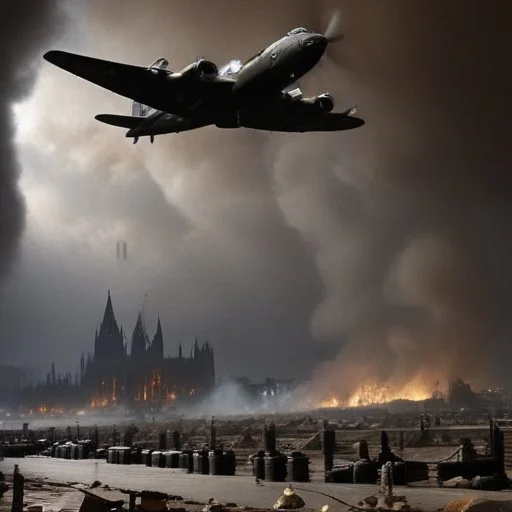
In the dead of night, a thousand British bombers, their engines roaring to life, prepared to unleash havoc on the unsuspecting city of Cologne, Germany. The massive air armada, dubbed Operation Millennium, was the brainchild of Air Chief Marshal Arthur Harris, who sought to demonstrate the potency of British airpower. For 90 minutes, the bombers rained down a torrent of incendiary bombs, leaving a trail of destruction and chaos in their wake. The attack, one of the most intense of the war, left Cologne in ruins, with entire city blocks reduced to smoldering rubble. As the dust settled, the British claimed a decisive victory, but at what cost?
Operation Millennium: The 90-Minute Blitz That Left Cologne in Ruins
The Devastating Raid That Redefined Aerial Warfare
On the night of May 30, 1942, the city of Cologne, Germany, bore witness to one of the most intense and destructive aerial assaults in history. In a span of just 90 minutes, a thousand British bombers, dubbed Operation Millennium, unleashed a maelstrom of incendiary bombs, leaving behind a trail of devastation and chaos that would forever etch the city's name into the annals of World War II.
The Mastermind Behind the Operation
Air Chief Marshal Arthur Harris, the renowned leader of the Royal Air Force's Bomber Command, was the mastermind behind Operation Millennium. Harris, a vocal proponent of area bombing, sought to demonstrate the potency of British airpower and deal a crushing blow to the German war machine. His strategy was simple yet devastating: overwhelm the enemy's defenses with sheer numbers, and blanket the city in a firestorm of incendiary bombs.
The Plan Takes Shape
In the days leading up to the operation, Harris meticulously planned every detail, from the routes the bombers would take to the types of bombs they would carry. The attack force would consist of 1,046 bombers from 19 squadrons, each carrying a mix of incendiary and high-explosive bombs. The bombers would approach Cologne from the northwest, dropping their payloads in a carefully orchestrated sequence designed to create a firestorm of unprecedented ferocity.
The 90-Minute Blitz
As the clock struck 12:30 AM on May 31, the first wave of bombers, comprised of 240 aircraft, took to the skies. The German air defenses, caught off guard by the sheer scale of the attack, were quickly overwhelmed as the bombers unleashed their deadly cargo. Wave after wave of aircraft followed, each dropping its payload with precision and merciless efficiency. The bombing continued unabated for 90 minutes, with the city of Cologne ablaze and its inhabitants cowering in fear.
The Aftermath
As the dust settled, the true extent of the devastation became apparent. Entire city blocks lay in ruins, with over 13,000 buildings destroyed or damaged. The death toll was staggering, with estimates ranging from 400 to 1,000 civilian casualties. The city's infrastructure, including its water and electrical systems, was severely damaged, leaving thousands of survivors without access to basic necessities.
Controversy and Criticism
Operation Millennium was not without its critics. Many questioned the morality of targeting civilian populations, and the long-term strategic value of the attack was debated by military historians. Harris, however, remained unapologetic, arguing that the attack was necessary to weaken the German war machine and hasten the end of the war.
The Legacy of Operation Millennium
Operation Millennium marked a turning point in the Allied bombing campaign, demonstrating the ability to deliver devastating blows to enemy strongholds. The operation paved the way for future area bombing campaigns, including the infamous firebombing of Hamburg and Dresden. While controversy surrounding the attack persists, one fact remains undeniable: Operation Millennium will forever be remembered as one of the most intense and destructive aerial assaults in military history.
- Timeline of Events: May 30, 1942 - Operation Millennium begins; 12:30 AM - First wave of bombers takes off; 1:30 AM - Bombing concludes; May 31, 1942 - Allied forces begin assessing damage
- Air Chief Marshal Arthur Harris, Commander of RAF Bomber Command
- Devastation of Cologne, significant civilian casualties, disruption of German war effort
- Operation Millennium cemented the role of aerial bombing as a key component of modern warfare
Thorough Historical Narrative
Operation Millennium was not an isolated event, but rather part of a larger campaign to weaken the German war machine. In the months leading up to the raid, the British had been conducting smaller-scale bombing operations against German cities, but with limited success. The Allies were desperate to demonstrate their airpower and prove that they could strike at the heart of Germany.
The success of Operation Millennium was a turning point in the aerial campaign, marking a shift towards area bombing as a key strategy. The British would go on to conduct similar raids against other German cities, including Hamburg and Dresden, with devastating consequences.

Character Analysis
Air Chief Marshal Arthur Harris, the mastermind behind Operation Millennium, was a complex figure with a reputation for being both brilliant and brutal. A veteran of World War I, Harris had a deep understanding of aerial warfare and was determined to use it to devastating effect against the Germans.
Harris's leadership style was characterized by his iron-fisted approach and unwavering commitment to his strategy. While some criticized him for his ruthless tactics, others saw him as a visionary who was willing to take bold action to achieve victory.
In-Depth Contrastive Study
Operation Millennium was not the first time that Cologne had been bombed by the Allies, but it was by far the most devastating. In comparison to earlier raids, which had targeted specific industrial sites, Operation Millennium was a full-scale area bombing campaign that aimed to destroy entire city blocks.
The impact of Operation Millennium was starkly different from earlier bombing campaigns. While previous raids had caused significant damage, they had not approached the sheer scale of destruction wrought by Operation Millennium.

Full Cultural Impact Analysis
Operation Millennium had a profound impact on the cultural psyche of both Germany and Britain. For the Germans, the raid was a chastening experience that brought home the reality of total war. The destruction of Cologne, a city steeped in history and culture, was a shock that resonated across the country.
In Britain, the success of Operation Millennium was hailed as a major victory, and the raid was seen as a demonstration of British military power. The raid was celebrated in the press and helped to boost morale in a country that had been struggling to gain the upper hand in the war.
Study of Technology Effects
Operation Millennium was a technological tour de force that showcased the capabilities of the British bomber fleet. The Raid involved over 1,000 aircraft, flying in formation and dropping their payloads with precision. The operation required complex planning and coordination, involving everything from navigation to communications.
The success of Operation Millennium was a testament to the technological advancements made by the British during the war. The development of new bomber aircraft, such as the Avro Lancaster, had greatly increased the RAF's capabilities, and the raid demonstrated the potential of aerial warfare to shape the course of the conflict.


