


Operation Anthropoid is remembered as one of the most audacious and daring operations of World War II – a plot to assassinate Reinhard Heydrich, the ruthless SS leader and architect of the Final Solution, the Nazi's plan to exterminate Jews and other minority groups. This bold mission was the first targeted killing of a high-ranking Nazi official, and its success would be a massive blow to the morale of the Third Reich.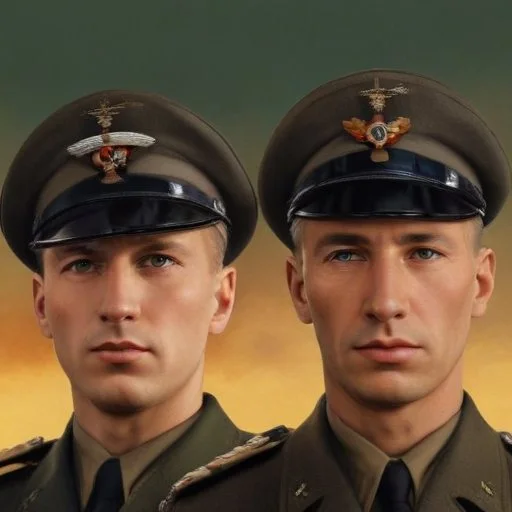
In the early 1940s, the Czechoslovakian government-in-exile, led by President Edvard Beneš, was determined to disrupt the Nazi occupation of their country. They knew that Heydrich, also known as "The Butcher of Prague," was the key to controlling the region and crushing any opposition. The Czechs turned to the British Special Operations Executive (SOE) for help, and together, they hatched a plan to eliminate Heydrich.
The two Czechoslovakian agents, Jan Kubiš and Josef Gabčik, were recruited and trained by the SOE in specialized skills such as sabotage, explosives, and marksmanship. These brave men were tasked with infiltrating Heydrich's inner circle and taking him out.
The success of Operation Anthropoid dealt a significant blow to the Nazi regime, causing widespread panic and a wave of reprisals against the Czech population. However, it also boosted morale among the Allies and inspired other resistance movements across Europe. The operation also led to the infamous Lidice massacre, in which the Nazis destroyed the entire village of Lidice, killing its 340 inhabitants, in a brutal attempt to crush the Czech resistance.
The bravery and sacrifice of Kubiš and Gabčik have become legendary in Czech history, inspiring numerous books, films, and plays. The story of Operation Anthropoid has also been commemorated in various ways, including a memorial at the site of the assassination and a museum dedicated to the heroes of the Czech resistance.
Kubiš and Gabčik's families were torn apart by the Nazi occupation, and both men knew that their mission would likely mean certain death. Yet, they remained committed to their goal, even in the face of overwhelming danger. In a poignant letter to his mother, Kubiš wrote, "I am doing this for our country, for our freedom, and for our people."
Operation Anthropoid set a precedent for targeted assassinations of high-ranking officials, influencing the development of modern special operations and covert warfare. It also highlighted the importance of resistance movements and guerrilla warfare in undermining enemy morale and disrupting supply lines.
Operation Anthropoid remains one of the most remarkable and daring operations of World War II, a testament to the bravery and sacrifice of those who fought against the Nazi regime. Its legacy continues to inspire and educate people around the world, serving as a powerful reminder of the importance of resistance and courage in the face of tyranny.
Historians have debated the significance of Operation Anthropoid, with some arguing that it was a crucial turning point in the war, while others view it as a symbolic act of resistance with limited tangible impact. Nevertheless, the operation remains a powerful symbol of the Czech resistance and a testament to the bravery of those who fought against the Nazi occupation. Most historians agree, however, that the assassination of Heydrich was a strategic mistake, as it led to brutal reprisals against the Czech population and weakened the resistance movement in the long run.

Jan Kubiš, one of the two Czechoslovakian agents, was born in 1913 in Dolní Bojanovice, Moravia. Before joining the resistance, Kubiš worked as a locksmith and was an avid sportsman, enjoying skiing and hiking in his free time. He was recruited by the SOE in 1941 and underwent rigorous training in sabotage, explosives, and marksmanship. Kubiš's family was torn apart by the Nazi occupation, and his motivation for joining the resistance was deeply personal.
The cultural impact of Operation Anthropoid extends far beyond the Czech Republic. The bravery and sacrifice of Kubiš and Gabčik have inspired countless books, films, and plays, cementing their place in the pantheon of World War II heroes. The 2016 film "Anthropoid," directed by Sean Ellis, brought the story to a new generation of audiences, while the Czech resistance museum in Prague remains a popular tourist destination. The operation has also inspired numerous works of literature, including novels and poetry.

The aftermath of Operation Anthropoid was marked by a series of brutal reprisals against the Czech population. In the Lidice massacre, the Nazis destroyed the entire village, killing its 340 inhabitants, in a brutal attempt to crush the Czech resistance. The Nazis also launched a series of sweeps and arrests, targeting anyone suspected of being involved in the resistance movement. The Czech population was subjected to forced labor, deportations, and executions, leading to widespread terror and demoralization.
The political implications of Operation Anthropoid were far-reaching, with the Nazis launching a series of crackdowns on resistance movements across Europe. The operation also led to a significant escalation of the war, as the Nazis became increasingly brutal and ruthless in their attempts to crush opposition. The Allies, meanwhile, were galvanized by the operation's success, and it marked a turning point in the war, as the tide began to shift in their favor.