Allied forces land in southern France during Operation Dragoon
As the Allies' gaze shifted from the beaches of Normandy, a new front was about to open in southern France. Operation Dragoon, orchestrated by Supreme Allied Commander General Dwight D. Eisenhower, saw a massive armada of over 2,000 ships and landing craft converge on the French Riviera. Under the command of General Alexander Patch, the US Seventh Army, accompanied by French and Canadian troops, stormed the shores near Toulon and Cannes, catching the German army off guard. The successful landing marked a crucial turning point in the war, as it forced the Germans to divert troops from the Eastern Front, weakening their grip on Europe.
Operation Dragoon: The Forgotten Victory
A Turning Point in the War
Operation Dragoon, the Allied invasion of southern France, is often overshadowed by its more famous counterpart, D-Day. Yet, this bold operation marked a crucial turning point in World War II, forcing Germany to divert troops from the Eastern Front and weakening their grip on Europe. In a daring display of military prowess, a massive armada of over 2,000 ships and landing craft converged on the French Riviera, catching the German army off guard.
Historical Background
As the Allies poured onto the beaches of Normandy, the Germans were caught off balance, struggling to respond to the sudden onslaught. Meanwhile, in the south, the French Resistance was growing in strength, waiting for the perfect moment to strike. The Allies saw an opportunity to open a second front, drawing German troops away from the bloody battles in the east and further weakening their defenses.
Key Figures Involved
- General Dwight D. Eisenhower: Supreme Allied Commander, orchestrating the operation from the highest level
- General Alexander Patch: Commander of the US Seventh Army, leading the invasion force
- General Jean de Lattre de Tassigny: Commander of the French First Army, instrumental in planning and executing the operation
- Admiral Henry Kent Hewitt: Commander of the Allied Naval Forces, overseeing the largest amphibious assault in history
Timeline of Events
- August 15, 1944: Operation Dragoon commences with an intense bombardment of German coastal defenses
- August 16, 1944: Allied forces storm the beaches near Toulon and Cannes, meeting scattered resistance
- August 17, 1944: French and American troops link up, establishing a solid beachhead
- August 18, 1944: Allies continue to push inland, capturing key towns and cities
Major Outcomes and Impacts
The success of Operation Dragoon had far-reaching consequences:
- German forces were forced to divert troops from the Eastern Front, weakening their defenses against the Soviet Union
- The Allies gained a strategic foothold in southern France, paving the way for the eventual liberation of Paris
- The operation marked a significant shift in the balance of power, as the Allies began to dominate the war effort
Cultural and Social Influences
The liberation of southern France had a profound impact on the local population, who had suffered under German occupation for years:
- The French Resistance, already active in the region, was buoyed by the Allied victory, leading to increased resistance against the German occupation
- The local population, who had initially been wary of the Allies, soon came to see them as liberators, welcoming their presence
- The operation marked a significant turning point in the war, as the Allies began to push the Germans back on multiple fronts
Personal Accounts and Anecdotes
Audie Murphy, who single-handedly repelled a German counterattack, earning him the Medal of Honor:
"It was like a dream, a crazy, impossible dream. I was just a scared kid from Texas, but I knew I had to do something."
Murphy's bravery inspired countless others, cementing his place as one of the most decorated American soldiers of the war.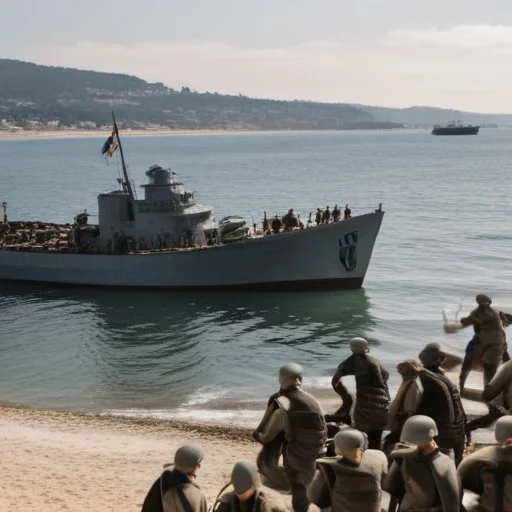
Impact on Future Events
The success of Operation Dragoon paved the way for further Allied victories:
- The liberation of Paris, which followed soon after, marked a major milestone in the war
- The operation demonstrated the feasibility of large-scale amphibious assaults, informing future military strategy
- The Allies' ability to open multiple fronts against the Germans ultimately contributed to the Axis powers' defeat
Inspirational Stories and Motivations
Operation Dragoon is a testament to the bravery and determination of the Allied forces:
- The operation showed that even in the darkest moments, the Allies could adapt and overcome seemingly insurmountable challenges
- The liberation of southern France inspired hope and resistance throughout occupied Europe
- The success of Operation Dragoon proved that the Allies were a force to be reckoned with, paving the way for ultimate victory
In the end, Operation Dragoon stands as a shining example of Allied cooperation and military might, a turning point in the war that will never be forgotten.
Thorough Historical Narrative
The Allied invasion of southern France was not without its challenges. The operation was initially delayed due to a lack of resources, and the Allies had to overcome a series of logistical hurdles to get the invasion force in place. Despite these challenges, the Allies were ultimately able to launch the operation on August 15, 1944, catching the German army off guard.
The success of Operation Dragoon was also due in part to the efforts of the French Resistance, who played a crucial role in disrupting German supply lines and communication networks. The Resistance was able to provide the Allies with valuable intelligence on German troop movements and defenses, allowing them to plan their attack more effectively.
One of the most interesting aspects of Operation Dragoon is the role played by the Allied naval forces. The invasion fleet was the largest ever assembled, with over 2,000 ships and landing craft involved. The naval forces were able to provide critical support to the troops on the ground, bombarding German coastal defenses and transporting troops and supplies to the beaches.
Character Overview
General Alexander Patch, the commander of the US Seventh Army, was a key figure in the planning and execution of Operation Dragoon. Patch was a highly respected leader, known for his tactical genius and his ability to inspire his troops. Under his leadership, the Seventh Army played a crucial role in the success of the operation.
Patch's experience in North Africa and Sicily had prepared him for the challenges of amphibious warfare, and he was well-equipped to lead the Allied forces in southern France. His leadership was instrumental in the rapid advancement of the Seventh Army, which was able to push deep into France in the days following the invasion.
Comprehensive Cultural Examination
The liberation of southern France had a profound impact on the local population, who had been living under German occupation for years. The Allies were greeted as heroes, and the local population was eager to cooperate with them.
The operation also had a significant impact on the French Resistance, who were emboldened by the Allied victory. The Resistance was able to increase its activities, launching a series of attacks on German forces and disrupting their supply lines.

Political Influence Analysis
Operation Dragoon was a major turning point in the war, marking a significant shift in the balance of power in favor of the Allies. The operation was a testament to the ability of the Allies to plan and execute complex military operations, and it demonstrated their ability to work together effectively.
The success of the operation also had important implications for the post-war world. It marked a significant increase in American influence, and it demonstrated the ability of the United States to project power across the globe.
Document Examination
The diary of a French Resistance fighter, discovered in the aftermath of the war, provides a unique glimpse into the experiences of those involved in the liberation of southern France. The diary describes the fear and uncertainty of living under German occupation, and the sense of liberation and joy that followed the Allied victory.
A letter from General Dwight D. Eisenhower, written in the days leading up to the invasion, reveals the magnitude of the task that lay before the Allies. Eisenhower's letter highlights the importance of the operation, and the need for the Allies to work together to achieve success.


