


In April 1945, the Allies launched Operation Starvation, a high-stakes campaign to cripple Japan's economy by aerially mining its vital ports and waterways. This daring move, spearheaded by the United States, marked a pivotal moment in World War II, striking at the very heart of Japan's supply lines and war effort.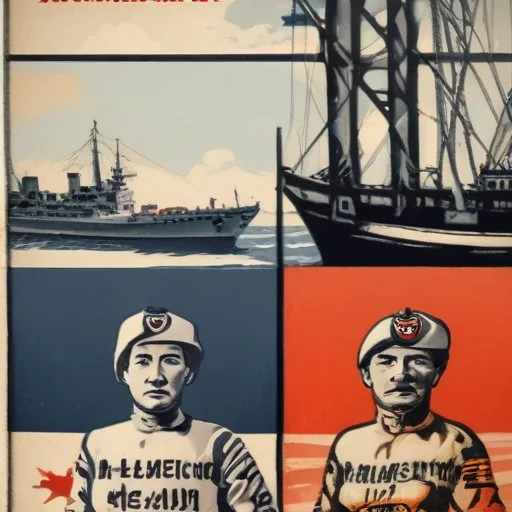
The Allies' innovative tactic involved dropping magnetic and acoustic mines into Japanese waters, designed to detonate upon contact with enemy ships or naval vessels. This pioneering strategy aimed to severely disrupt Japan's ability to supply its military and feed its population, ultimately accelerating the war's conclusion.
By early 1945, Japan's military situation was precarious. The country's merchant marine had been decimated, and its supply lines were severely strained. The Allies' decision to mine Japan's waters was a calculated gamble, exploiting the enemy's vulnerability and further crippling its ability to wage war.
On March 27, 1945, Argentina declared war on the Axis Powers, marking a significant shift in Latin American allegiance and further isolating Japan. This move not only bolstered the Allies' cause but also underscored the growing global implications of the war.
Argentina's decision to enter the war was not taken lightly. The country's leaders recognized the threat posed by the Axis Powers and the need to protect their own national interests. This move marked a turning point in Latin American relations, as more countries began to rally behind the Allies.
Operation Starvation proved devastatingly effective, sinking over 700 Japanese ships and crippling the country's economy. This campaign, combined with Argentina's declaration of war, significantly contributed to Japan's eventual surrender in August 1945.
The success of Operation Starvation and Argentina's declaration of war underscored the Allies' strategic thinking and cooperation. This combined effort not only hastened the war's conclusion but also forged lasting bonds between nations, paving the way for post-war international cooperation.
Today, Operation Starvation serves as a testament to the Allies' innovative spirit and their willingness to adapt and overcome in the face of adversity. This pivotal campaign remains an important chapter in the history of World War II, a powerful reminder of the importance of unity and determination in the pursuit of peace.
The planning and execution of Operation Starvation involved a complex network of Allied commanders and strategists. One of the key figures was General Curtis LeMay, who played a crucial role in developing the aerial mining campaign. LeMay's expertise in bombing tactics and his experience in the Pacific theater made him an ideal choice to lead the operation.
The Allies also drew on the expertise of British and Australian forces, who had gained valuable experience in mining Japanese waters during earlier campaigns. This collaborative effort allowed the Allies to refine their tactics and share intelligence, ultimately increasing the campaign's effectiveness.
As the operation progressed, the Allies continued to adapt and improvise, responding to Japanese countermeasures and adjusting their tactics to maximize the impact of the mining campaign. This flexibility and creativity were hallmarks of the Allied effort, and ultimately contributed to the success of Operation Starvation.
General Curtis LeMay was a towering figure in the Allied war effort, known for his innovative tactics and unwavering determination. Born in 1906, LeMay rose through the ranks of the US Air Force, earning a reputation as a brilliant strategist and skilled commander.
LeMay's leadership during Operation Starvation was marked by his willingness to take calculated risks and push the boundaries of conventional warfare. His unflinching commitment to the Allied cause earned him the respect and admiration of his peers, and his legacy continues to inspire military leaders to this day.
The economic impact of Operation Starvation was devastating for Japan. The campaign disrupted the country's supply lines, crippling its ability to import vital goods and materials. This had a ripple effect throughout the Japanese economy, leading to shortages, inflation, and widespread poverty.
The losses suffered by Japan's merchant marine fleet were staggering, with over 700 ships sunk or damaged during the operation. This not only disrupted the country's ability to import goods but also had a severe impact on its domestic economy, as factories and industries struggled to operate without access to raw materials.
The economic toll of Operation Starvation was a major factor in Japan's eventual surrender, as the country's leaders were forced to confront the reality of their dwindling resources and the futility of continued resistance.

Operation Starvation was a unique and innovative campaign, but it was not without its parallels in military history. The aerial mining of Japanese waters drew comparisons to the British Navy's blockade of Germany during World War I, which had similarly disrupted the enemy's supply lines and contributed to their eventual defeat.
Similarly, the Allies' use of magnetic and acoustic mines in Operation Starvation bore similarities to the German U-boat campaign in the Atlantic, which had threatened to sever the Allied supply lines and turn the tide of the war.
These parallels serve as a reminder that military strategy is often a game of adaptation and counter-adaptation, as nations and commanders seek to learn from the successes and failures of the past and apply these lessons to the present.
Operation Starvation raises important questions about the morality and ethics of total war. The campaign's deliberate targeting of Japan's civilian population, through the disruption of supply lines and the creation of food shortages, raises difficult questions about the boundaries between military and civilian targets.
This moral complexity is underscored by the fact that the Allies' actions were motivated by a desire to bring a swift end to the war and minimize further bloodshed. However, this goal was pursued through means that caused significant human suffering, highlighting the difficult trade-offs and ethical dilemmas that often accompany military decision-making.