


On April 9, 1940, the world awoke to the shocking news that Nazi Germany had launched a surprise attack on neutral Denmark and Norway, a bold move that would forever change the course of World War II. This daring operation, codenamed Weserbung, saw German troops pouring into Denmark and Norway, quickly overwhelming the defenses of both countries.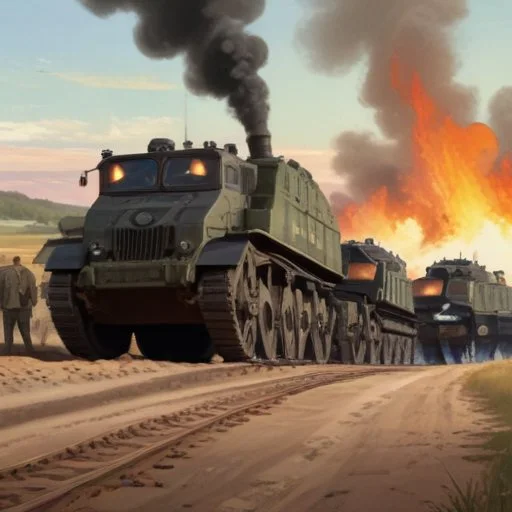
The invasion was sparked by Germany's concern that the British might try to occupy Norway to prevent Germany from accessing its vital iron ore supply. Norway's strategic ports and Denmark's proximity to the Baltic Sea made them crucial assets in the war effort. Germany could not afford to let the Allies gain a foothold in this region.
German forces moved swiftly, deploying troops by air, land, and sea to capture key cities and strategic locations. The Danish government, realizing the futility of resistance, surrendered within hours. Norway, however, put up a brief but valiant fight, but ultimately succumbed to the German onslaught. The speed and precision of the invasion caught the Allies off guard, leaving them scrambling to respond.
The invasion marked a significant expansion of Germany's territorial control, securing vital resources and strategic locations. The fall of Denmark and Norway also led to the establishment of a Norwegian government-in-exile, which would continue to fight alongside the Allies.
The invasion had a profound impact on the cultural and social fabric of Denmark and Norway. The occupation led to a surge in resistance movements, with many ordinary citizens risking their lives to aid the Allies. The bravery and resilience of the Danish and Norwegian people in the face of occupation would become a beacon of hope for the rest of Europe.
| Date | Event |
|---|---|
| April 9, 1940 | German forces launch Operation Weserbung, invading Denmark and Norway. |
| April 9, 1940 | Denmark surrenders to German forces. |
| April 10, 1940 | German forces capture Oslo, Norway's capital city. |
| June 10, 1940 | Norway surrenders to German forces. |
One of the most remarkable stories to emerge from the invasion was that of the Norwegian resistance fighter, Gunnar Sønsteby. Despite being captured and tortured by the Nazis, Sønsteby continued to resist, eventually escaping and rejoing the resistance. His bravery and defiance inspired countless others to join the fight against the occupation.
The success of Operation Weserbung emboldened Hitler to launch even more audacious attacks, including the ill-fated invasion of the Soviet Union. The operation also marked a turning point in the war, as the Allies began to take a more aggressive stance against Germany.
Operation Weserbung serves as a testament to the power of strategic thinking and the importance of securing vital resources in times of war. As the world looks back on this pivotal moment in history, it is clear that the daring invasion of Denmark and Norway was a turning point in the course of World War II.
Nikolaus von Falkenhorst, the German general who led the invasion of Denmark and Norway, was a meticulous planner and strategist. Born in 1885, Falkenhorst came from a long line of Prussian military officers and was known for his discipline and attention to detail.
Falkenhorst's role in Operation Weserbung was crucial, as he was tasked with planning and executing the surprise attack on Denmark and Norway. His careful planning and coordination of air, land, and sea forces ensured a swift and decisive victory for the Germans.
Despite his successes, Falkenhorst's legacy is often overshadowed by that of Adolf Hitler. However, his contributions to the war effort cannot be overstated, and he remains one of the most important figures in the German military during World War II.

The German occupation of Denmark and Norway had a profound impact on the cultural and social fabric of both countries. The occupation led to a surge in resistance movements, with many ordinary citizens risking their lives to aid the Allies.
The bravery and resilience of the Danish and Norwegian people in the face of occupation would become a beacon of hope for the rest of Europe. The occupation also led to a re-evaluation of national identity, with many Danes and Norwegians questioning their own role in the war effort.
The occupation also had a profound impact on the arts, with many Danish and Norwegian artists and writers responding to the occupation through their work. The occupation remains a powerful symbol of resistance and defiance in the face of overwhelming odds.
The economic impact of Operation Weserbung was significant, as Germany gained control of Norway's strategic ports and Denmark's proximity to the Baltic Sea.
The occupation led to a significant increase in German trade and commerce, as Germany was able to exploit Norway's natural resources, including iron ore and fish.
The occupation also had a devastating impact on the economies of Denmark and Norway, as trade and commerce were severely disrupted. The economic impact of the occupation would be felt for years to come, as both countries struggled to recover from the devastation.

Operation Weserbung was launched against the backdrop of a rapidly changing geopolitical landscape. Germany's concern about the British occupation of Norway was heightened by the fall of France and the subsequent threat of a British invasion.
The invasion of Denmark and Norway was also driven by Germany's need to secure vital resources, including iron ore and other strategic materials.
The operation marked a significant shift in the balance of power in Europe, as Germany expanded its territorial control and secured a crucial advantage over the Allies.
The political implications of Operation Weserbung were far-reaching, as Germany's bold move was seen as a major escalation of the war.
The invasion led to a strengthening of the alliance between Britain and France, as both countries recognized the grave threat posed by Germany's expansionist policies.
The operation also marked a turning point in the war, as the Allies began to take a more aggressive stance against Germany.