


The Allied forces' declaration of Guadalcanal as a secure territory marked a pivotal moment in World War II's Pacific War, as it brought an end to the six-month-long Battle of Guadalcanal. This hard-won victory thwarted Japan's plans to cut off Australia's supply lines, paving the way for further Allied advances in the Pacific.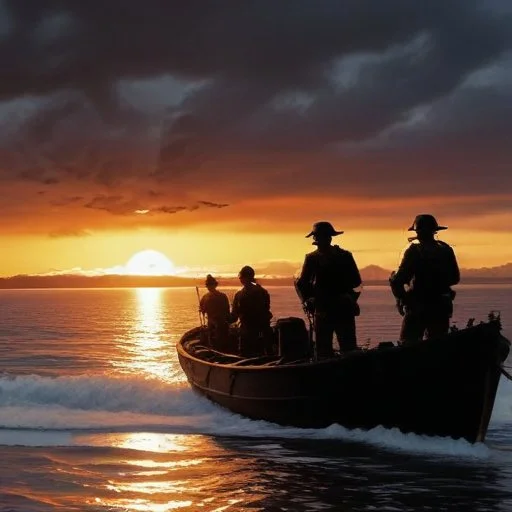
In August 1942, Japanese forces occupied Guadalcanal, a strategic island in the Solomon Islands, with the intention of building an airbase to support their expansion in the Pacific. The Allies, determined to prevent this, launched a counterattack in August 1942, initiating the Battle of Guadalcanal.
August 7, 1942: Allied forces land on Guadalcanal, marking the start of the battle
August 21, 1942: Japanese forces suffer a decisive defeat at the Battle of the Tenaru River
October 13, 1942: Japanese troops launch a major offensive, resulting in intense fighting
November 12-15, 1942: Allied naval forces secure a crucial victory at the Naval Battle of Guadalcanal
February 7, 1943: Japanese forces evacuate Guadalcanal, ending the battle
The Battle of Guadalcanal resulted in significant losses for the Japanese, with estimates suggesting over 25,000 casualties. The Allied victory:
The Battle of Guadalcanal has been immortalized in literature and film, with James Jones's novel "The Thin Red Line" and Terrence Malick's film adaptation paying tribute to the bravery and sacrifice of the soldiers who fought on the island.
"Guadalcanal is no longer merely a name, it is a symbol... It is a symbol of the invincibility of the human spirit." - General Alexander Vandegrift
Private First Class Mitchell Paige, a Marine Corps veteran, recalled the intense fighting on Guadalcanal: "We were pinned down, and the Japs were closing in. I remember thinking, 'This is it. This is the end.'" Paige went on to receive the Medal of Honor for his heroism during the battle.
The Allied victory at Guadalcanal paved the way for further advances in the Pacific, including the eventual capture of the Solomon Islands and the Philippines. The battle also marked a significant shift in the balance of power in the war, as the Allies gained momentum and confidence.
The Battle of Guadalcanal was a decisive turning point in World War II's Pacific War, showcasing the bravery and determination of the Allied forces. This hard-won victory will forever be etched in history, serving as a testament to the sacrifices made by those who fought for freedom and democracy.
As we reflect on this pivotal moment, we are reminded of the importance of perseverance and cooperation in the face of adversity. The Battle of Guadalcanal serves as a powerful inspiration, urging us to strive for peace, unity, and a better future for all.
The Japanese occupation of Guadalcanal, which lasted from May 1942 to February 1943, was a period of significant strategic importance for the Empire of Japan. The island's proximity to Australia and its potential as a staging ground for further Pacific conquests made it a crucial target for Japanese expansion.
The Japanese occupying forces, led by General Harukichi Hyakutake, established a network of defensive positions, including the construction of airfields, bunkers, and artillery emplacements. They also established a series of naval bases and anchorages, including the key anchorage at Tulagi.
Despite their efforts, the Japanese occupation was marked by logistical challenges, including supply chain disruptions and communication breakdowns. The harsh jungle environment and tropical diseases also took a toll on the Japanese forces, weakening their effectiveness.

Admiral Isoroku Yamamoto, Commander-in-Chief of the Japanese Combined Fleet, was the mastermind behind Japan's naval strategy during World War II. A brilliant and innovative strategist, Yamamoto was instrumental in planning the surprise attack on Pearl Harbor, which drew the United States into the war.
Yamamoto was a strong advocate for the development of naval aviation, recognizing the potential of aircraft carriers to project power and dominate the seas. He was also a proponent of the "decisive battle" strategy, which sought to engage and destroy the enemy's main fleet in a single, decisive engagement.
The Battle of Guadalcanal has had a profound impact on popular culture, inspiring numerous films, books, and video games. One of the most famous works inspired by the battle is James Jones's novel "The Thin Red Line," which tells the story of a group of American soldiers fighting on Guadalcanal.
The novel was adapted into a film in 1998, directed by Terrence Malick and starring Sean Penn, Adrien Brody, and George Clooney. The film received widespread critical acclaim and won several awards, including the Academy Award for Best Cinematography.
The Battle of Guadalcanal took place against the backdrop of a rapidly shifting geopolitical landscape. The Japanese occupation of Southeast Asia and the Pacific islands had created a network of strategic alliances and rivalries, with the United States, Australia, and Great Britain forming a loose coalition to counter Japanese expansion.
The battle was also influenced by the broader context of World War II, including the war in Europe and the Soviet Union's campaign against Germany. The Allied victory at Guadalcanal marked a significant turning point in the war, as it thwarted Japan's plans to cut off Australia's supply lines and paved the way for further advances in the Pacific.
The Battle of Guadalcanal has been the subject of intense historiographical debate, with historians and scholars offering a range of interpretations and reevaluations of the battle's significance.
One prominent school of thought views the battle as a crucial turning point in the war, marking the beginning of the end of Japanese expansionism and the rise of American power in the Pacific. Others have interpreted the battle as a brutal and devastating conflict, highlighting the human cost of the war and the experiences of individual soldiers.