


In the midst of World War II, as Nazi and Soviet forces closed in on Warsaw, the Polish government, led by President Ignacy Mocicki, was forced to make a daring escape to neighboring Romania, marking a pivotal moment in the war.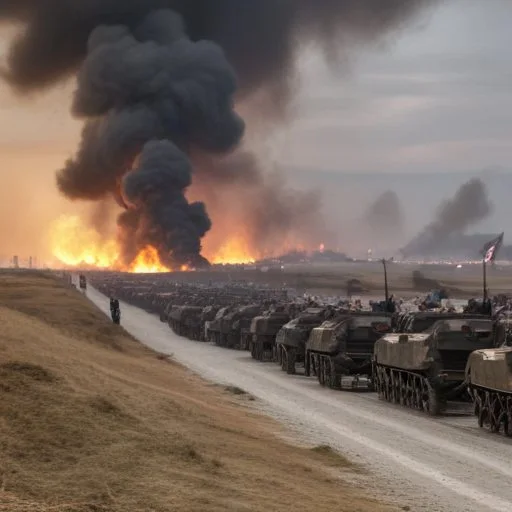
The year was 1939, and Poland was caught in the midst of a brutal pincer movement. To the west, the German army, led by Adolf Hitler, was closing in, while to the east, the Soviet Union, under the command of Joseph Stalin, was making its move. The Polish army, despite its valiant efforts, was vastly outnumbered and outgunned, leaving the government with no choice but to flee.
On September 17, 1939, President Mocicki and his government made a hasty escape from Warsaw, leaving behind the besieged city and its people. The government's departure marked a devastating turning point in the war, as Poland's sovereignty began to unravel.
The Polish government's escape to Romania had far-reaching consequences. The country was effectively occupied by the Nazi and Soviet forces, and its people were subjected to brutal treatment and persecution. The government-in-exile, led by President Mocicki, continued to operate from abroad, but its influence was limited, and its ability to protect its citizens was severely curtailed.
The fall of Poland and the government's escape to Romania had a profound impact on the country's culture and society. Many Polish intellectuals and artists were forced into exile, leading to a brain drain that would take decades to recover from. The war also led to a significant shift in Poland's cultural identity, as the country struggled to come to terms with its trauma and loss.
The Polish government's escape to Romania marked the beginning of the end of Poland's sovereignty. The country would remain occupied for the duration of the war, and its people would suffer greatly. The event also had a significant impact on the broader course of the war, as it allowed the Nazi and Soviet forces to focus their attention on other fronts.
The Polish government's escape to Romania bears some resemblance to the Dutch government's flight to London in 1940. Both events involved the government of a beleaguered country fleeing to safety, leaving behind its people to face the brunt of the war. However, the Polish government's escape was marked by a greater sense of urgency and desperation, as the country was caught between the pincer movement of two powerful foes.
In his memoirs, President Mocicki recalled the escape as a "desperate and chaotic" affair, with government officials scrambling to gather their belongings and flee the city. He wrote, "We knew that our departure would be seen as a betrayal by the Polish people, but we had no choice. We had to escape, or risk being captured and executed by the Nazis."
The Polish government's escape to Romania had a significant impact on the course of the war. It allowed the Nazi and Soviet forces to focus their attention on other fronts, and paved the way for the eventual invasion of France and the Low Countries. The event also marked a turning point in the war, as the Allies began to realize the gravity of the threat posed by the Axis powers.
The Polish government's escape to Romania was a desperate attempt to preserve the country's sovereignty in the face of overwhelming odds. As Nazi Germany and the Soviet Union closed in on Warsaw, the government was faced with the daunting task of evacuating its officials and valuable assets to safety. The escape was a testament to the resilience and determination of the Polish people, who despite being vastly outnumbered and outgunned, refused to surrender to their enemies.
In the days leading up to the escape, the government worked frantically to destroy sensitive documents and equipment, and to evacuate key officials and their families. The streets of Warsaw were filled with chaos and panic, as people scrambled to escape the city before it was too late. The government's escape was a secret operation, known only to a select few, and it was carried out with the utmost speed and precision.
The escape route took the government officials through the treacherous Carpathian Mountains, where they were forced to navigate steep terrain and avoid detection by German and Soviet patrols. The journey was arduous and dangerous, but the officials persevered, driven by their determination to preserve Poland's independence.
President Ignacy Mocicki was a man of strong convictions and unwavering determination. As the leader of Poland, he was faced with the impossible task of defending his country against the combined might of Nazi Germany and the Soviet Union. Despite the overwhelming odds, Mocicki refused to surrender, and instead chose to lead his government in a daring escape to Romania.
Mocicki's leadership during this period was instrumental in maintaining the morale of the Polish people, and his bravery in the face of danger inspired a generation of Poles. His decision to flee to Romania was a difficult one, but it was a necessary step in preserving the country's sovereignty and continuing the fight against the Axis powers.
Throughout his life, Mocicki was driven by a strong sense of patriotism and duty to his country. He was a skilled politician and diplomat, and his leadership played a crucial role in Poland's struggle for independence during World War II.
The Polish government's escape to Romania shares some parallels with the Danish government's flight to Sweden in 1940. In both cases, the governments of beleaguered countries were forced to flee their capitals in the face of overwhelming military might. However, the Polish government's escape was marked by a greater sense of urgency and desperation, as the country was caught between the pincer movement of two powerful foes.
In contrast, the Danish government's flight to Sweden was a more orderly affair, with the government having more time to prepare and plan its escape. Additionally, the Danish government was able to maintain more control over its military forces, and was able to continue to resist the German occupation from its exile in Sweden.
Despite these differences, both the Polish and Danish governments' escapes were testaments to the resilience and determination of the people involved, and demonstrate the importance of preserving national sovereignty in the face of overwhelming odds.

The Polish government's escape to Romania had a profound impact on the country's cultural identity. The war led to a significant brain drain, as many of Poland's leading intellectuals and artists were forced into exile. This had a devastating impact on the country's cultural scene, and would take decades to recover from.
The war also led to a significant shift in Poland's cultural identity, as the country struggled to come to terms with its trauma and loss. The government's escape to Romania marked a turning point in this process, as the country began to rebuild and redefine itself in the face of occupation.
Despite the devastating impact of the war, Poland's cultural identity remained strong, and the country continued to produce some of the world's most talented artists, writers, and musicians. The government's escape to Romania was a testament to the resilience of the Polish people, and demonstrated the country's ability to persevere even in the darkest of times.
The Polish government's escape to Romania had significant political implications for the country and the wider world. The escape marked a turning point in the war, as the Allies began to realize the gravity of the threat posed by the Axis powers.
The government's decision to flee to Romania was a strategic one, as it allowed Poland to maintain its sovereignty and continue to resist the German and Soviet occupations. The escape also paved the way for the Polish government-in-exile to continue to play a key role in the Allied war effort, and to advocate for Poland's interests on the international stage.
The Polish government's escape to Romania was also a symbol of defiance in the face of overwhelming odds, and demonstrated the country's determination to resist the forces of oppression. It was a powerful statement of Poland's commitment to democracy and freedom, and inspired other nations to resist the Axis powers.