


In the midst of World War II, on July 26, 1945, the Allied leaders of the United States, Great Britain, and China gathered in Potsdam, Germany, to issue a stern ultimatum to Japan: surrender unconditionally or face imminent destruction. This historic document, known as the Potsdam Declaration, marked the final warning to Japan before the devastating atomic bombings of Hiroshima and Nagasaki that would soon follow.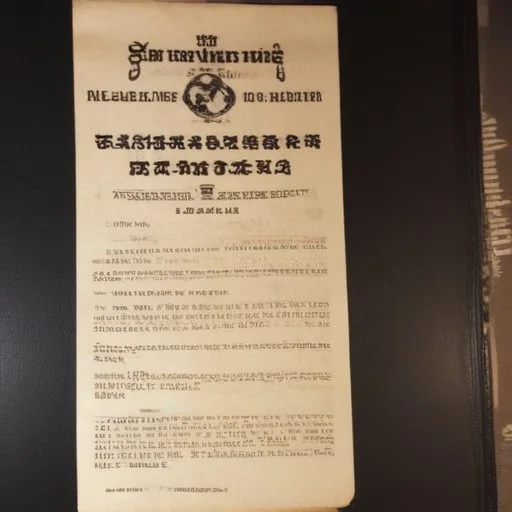
The Potsdam Declaration was a carefully crafted statement that outlined the terms of Japan's surrender. It was a culmination of the Allied leaders' efforts to bring a swift end to the war in the Pacific. The declaration demanded that Japan cease all military operations, surrender its armed forces, and submit to occupation by the Allied powers.
The Potsdam Declaration was a collective effort, with three prominent leaders at the helm: Harry S. Truman, the President of the United States; Winston Churchill, the Prime Minister of Great Britain; and Chiang Kai-shek, the leader of the Nationalist Government of China. These leaders, determined to put an end to Japan's aggressive expansion, worked together to craft a statement that would unequivocally convey the gravity of Japan's situation.
The Potsdam Declaration was the culmination of a series of events that unfolded in the summer of 1945. Here is a brief timeline of the key milestones that led to the signing of the declaration:
The Potsdam Declaration had far-reaching consequences, shaping the course of world history in profound ways. The declaration:
Harry S. Truman, in a statement to the press on August 6, 1945, said:
"The world will note that the first atomic bomb was dropped on Hiroshima, a military base. That was because we wished to avoid, in so far as possible, the killing of civilians."
The Potsdam Declaration and the subsequent atomic bombings of Hiroshima and Nagasaki remain controversial topics to this day. The debate surrounding the use of atomic power and the morality of the bombings continues to shape our understanding of World War II and its legacy.
The Potsdam Declaration serves as a powerful reminder of the devastating consequences of war and the importance of diplomacy in preventing such conflicts. As we reflect on this pivotal moment in history, we are reminded of the enduring importance of international cooperation and the pursuit of peace.
The road to the Potsdam Declaration was paved by a series of secret meetings and diplomatic efforts. In April 1945, Soviet leader Joseph Stalin had promised to declare war on Japan within three months of Germany's surrender. This promise was made at the Yalta Conference, where the Allied leaders had agreed to coordinate their efforts to defeat Japan.
In the following weeks, the United States, Great Britain, and China engaged in intense diplomatic efforts to persuade Japan to surrender. The Soviet Union, however, was slow to fulfill its promise, and its delayed declaration of war on Japan raised concerns among the other Allied leaders.
The Potsdam Conference itself was marked by tension and uncertainty. The Allied leaders were divided on the issue of post-war reorganization, and the Soviet Union's reluctance to commit to the Declaration added to the sense of unease.
Winston Churchill, the Prime Minister of Great Britain, played a crucial role in shaping the Potsdam Declaration. Known for his eloquence and persuasive powers, Churchill was instrumental in convincing the other Allied leaders to issue a strong ultimatum to Japan.
Churchill's experience in World War I had taught him the importance of united action against a common enemy. He believed that a swift and decisive victory over Japan was essential to preventing a prolonged and bloody conflict.
Despite his hawkish stance, Churchill was also a pragmatist who recognized the need for diplomacy. He worked closely with Harry S. Truman and Chiang Kai-shek to craft a declaration that would be both firm and persuasive.
The Potsdam Declaration had a profound impact on Japanese culture, particularly in the years immediately following the war. The Declaration's emphasis on democracy and individual liberty resonated with many Japanese citizens, who had grown disillusioned with their country's militaristic regime.
The Allied occupation of Japan, which followed the surrender, introduced a range of reforms aimed at democratizing Japanese society. These reforms included the enfranchisement of women, the promotion of labor unions, and the introduction of a new constitution.
Today, the Potsdam Declaration is remembered in Japan as a turning point in the country's history, marking the beginning of a new era of peace and cooperation with the international community.
The Potsdam Declaration was issued against the backdrop of a rapidly changing geopolitical landscape. The war in Europe had ended, and attention had shifted to the Pacific, where the Allies were engaged in a bloody and protracted conflict with Japan.
The Soviet Union's delayed declaration of war on Japan had raised concerns about the post-war balance of power. The United States, in particular, was anxious to secure a swift victory before the Soviet Union could gain a foothold in East Asia.
Against this tense geopolitical backdrop, the Potsdam Declaration represented a calculated gamble by the Allied leaders to bring a swift end to the war and establish a new order in the Pacific.
The Potsdam Declaration was drafted on July 26, 1945, in a large, ornate room at the Cecilienhof Palace in Potsdam, Germany. The document itself was a single sheet of paper, typed on both sides and bearing the signatures of Harry S. Truman, Winston Churchill, and Chiang Kai-shek.
The original draft of the Declaration included several provisions that were subsequently dropped, including a call for Japan to surrender its territories in Korea and Taiwan.