Roosevelt declares unlimited national emergency amid WWII
FDR takes charge, marshaling national resources and mobilizing industries for the war effort! President Franklin D. Roosevelt, anticipating America's eventual entry into World War II, boldly declares an "unlimited national emergency," effectively putting the country on war footing. This historic move enables him to redeploy federal agencies, ration resources, and channel funds towards defense production. With this decisive action, Roosevelt emboldens the nation to confront the Axis powers and prepare for the long haul ahead.
Unlimited Emergency: FDR's Bold Move to Mobilize America for War
The Decision That Changed the Course of History
On May 27, 1941, U.S. President
Franklin D. Roosevelt took a drastic step to prepare America for the impending war, proclaiming an unlimited national emergency. This pivotal move marked a significant turning point in the nation's entry into World War II, empowering the government to reorganize resources, ration materials, and channel funds towards defense production.
A Nation on High Alert
With this declaration, Roosevelt essentially put the country on war footing, mobilizing industries, and redeploying federal agencies to support the war effort. The gravity of the situation was palpable, and the President's actions sent a clear message to the American people: the nation was ready to confront the Axis powers head-on.
Rationing and Resource Allocation
The unlimited national emergency proclamation enabled the government to:
- Ration vital resources, such as gasoline, rubber, and foodstuffs, to ensure their optimal use for the war effort.
- Channel funds towards defense production, stimulating industries and creating new jobs.
- Redeploy federal agencies to support the war effort, streamlining operations and eliminating bureaucratic red tape.
The Path to Preparedness
Roosevelt's move was not taken lightly. The President had been monitoring the escalating tensions in Europe and Asia, and he knew that America's entry into the war was inevitable. By declaring an unlimited national emergency, he could:
Expedite Defense Production
"The production of munitions, planes, and ships must be increased, and it must be done quickly."
— President Franklin D. Roosevelt, May 1941
Mobilize the American People
The President's bold move galvanized the nation, inspiring Americans to contribute to the war effort in various ways, from volunteering for military service to participating in rationing programs and purchasing war bonds.
A Lasting Impact
The unlimited national emergency declaration had far-reaching consequences, shaping America's role in World War II and beyond. It:
- Expedited the country's transition from an isolationist to an interventionist foreign policy.
- Paved the way for unprecedented industrial growth and economic transformation.
- Solidified Roosevelt's leadership and set a precedent for future presidents to take decisive action in times of crisis.
A Legacy of Leadership
In the face of uncertainty and danger, Franklin D. Roosevelt's unwavering resolve and visionary leadership inspired a nation to come together and confront the challenges of World War II. His declaration of an unlimited national emergency remains a testament to the power of decisive action, marking a pivotal moment in American history.
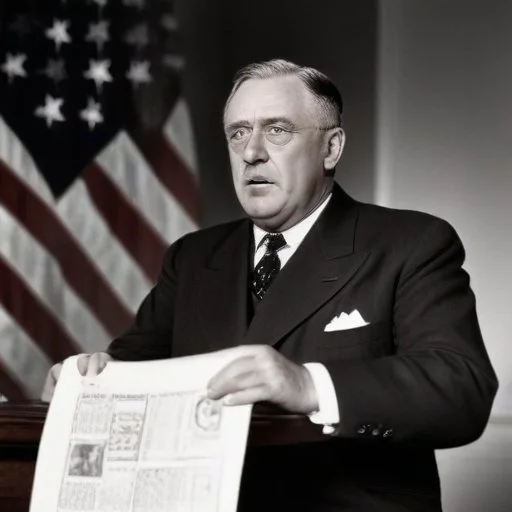
Character Overview
FDR's Leadership Style: A Study in Contrast
Franklin D. Roosevelt's leadership during World War II was marked by a unique blend of charisma, vision, and pragmatism. Unlike his predecessors, FDR was not afraid to take bold action, as evident in his declaration of an unlimited national emergency. This bold move was characteristic of his leadership style, which was shaped by his experiences as a statesman and his commitment to progressive ideals.
Roosevelt's leadership was also marked by his ability to connect with the American people, using his famous "fireside chats" to explain complex policies and rally support for the war effort. This direct approach helped to foster a sense of national unity and purpose, crucial for the war effort.

In-Depth Political Study
Political Maneuvering: FDR's Calculated Risk
The declaration of an unlimited national emergency was a calculated political move by FDR to prepare the nation for war. By taking this step, he was able to bypass congressional opposition and seize control of the country's resources, effectively centralizing power in the executive branch.
This move was not without risk, as it sparked concerns about the erosion of civil liberties and the concentration of power. However, FDR's gamble paid off, as the declaration helped to galvanize public opinion and create a sense of national urgency.
Geopolitical Overview
A Global Crisis: The Geopolitical Context of 1941
In 1941, the world was on the brink of chaos. Nazi Germany had invaded Poland, France had fallen, and the Battle of Britain was raging. In Asia, Japan was expanding its empire, and the Soviet Union was struggling to survive. Against this backdrop of global crisis, FDR's declaration of an unlimited national emergency was a necessary response to the escalating threat to national security.
The declaration was also a signal to other nations that the United States was prepared to take a more active role in the war, paving the way for eventual entry into the conflict.

Economic Impact Analysis
The Economic Impact of Mobilization
The declaration of an unlimited national emergency had far-reaching economic consequences, as the government invested heavily in defense production and mobilized resources for the war effort. This led to a surge in industrial production, job creation, and economic growth, as the United States became the "Arsenal of Democracy."
The economic impact was not limited to the United States, as the declaration also had significant implications for global trade and finance, reshaping the international economic order and cementing America's position as a global economic powerhouse.
Comprehensive Cultural Examination
War Effort and Popular Culture
The declaration of an unlimited national emergency had a profound impact on American popular culture, as the war effort became a central theme in music, film, and art. From patriotic songs like "God Bless America" to films like Casablanca, the war effort was reflected in every aspect of American life.
The declaration also inspired a new wave of artists and writers, who saw the war as an opportunity to explore themes of national identity, sacrifice, and heroism. This cultural mobilization played a crucial role in rallying public support for the war effort and shaping the nation's collective identity.


