


In the midst of World War II, a sinister voice echoed across the airwaves, whispering sweet nothings to the British public. Germany Calling, a cunning radio show, began transmitting Nazi propaganda to the United Kingdom and its allies, spreading deceit and demoralization.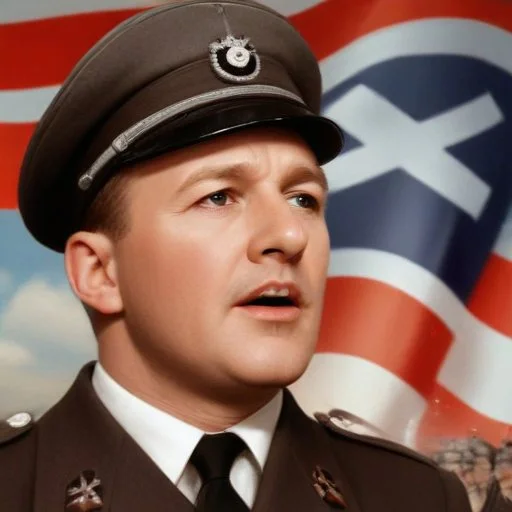
At the helm of Germany Calling was William Joyce, a British-born traitor with a silky smooth voice and a talent for manipulation. Nicknamed "Lord Haw-Haw," Joyce's silver tongue dripped with venom as he spewed fabricated news, manipulated information, and insulted the British war effort.
Germany Calling's broadcasts were a masterclass in psychological warfare. Joyce and his team crafted their messages to exploit the deepest fears and anxieties of the British people. They spread false rumors of military defeats, exaggerated German victories, and even claimed that the British government was hiding information from its citizens. The goal was simple: to break the British spirit and pave the way for a Nazi victory.
Germany Calling may have been silenced, but its legacy lives on. The show's cunning use of propaganda and psychological warfare influenced the way governments approached information dissemination during wartime. The Allies, too, learned valuable lessons about the power of propaganda and the importance of counterpropaganda efforts.
"The most effective propaganda is that which is not recognized as propaganda." - William Joyce
In the end, Germany Calling serves as a reminder of the dangers of manipulation and the importance of critical thinking. As we navigate the complexities of modern media, we would do well to remember the lessons of this insidious radio show.
The Ministry of Information, established by the British government in 1939, played a crucial role in countering Germany Calling's propaganda efforts. Today, organizations like the International Committee of the Red Cross continue to work tirelessly to promote truth and accuracy in times of conflict.
William Joyce, the mastermind behind Germany Calling, was a British-born traitor with a complex and tumultuous past. Born on April 24, 1906, in Brooklyn, New York, to Irish immigrant parents, Joyce moved to England at a young age and became fascinated with fascist ideologies.
Before joining the Nazis, Joyce was an active member of the British Union of Fascists (BUF), led by Oswald Mosley. He quickly rose through the ranks, becoming the BUF's director of propaganda and eventually its deputy leader.
Joyce's decision to defect to Germany in 1939 was motivated by his strong anti-Semitic and anti-communist beliefs, as well as his desire for power and recognition. His silky smooth voice and talent for manipulation made him the perfect candidate to spearhead Germany Calling.
Germany Calling was more than just a propaganda tool – it was a cultural phenomenon that permeated British society during World War II. The show's theme music, a haunting rendition of the German national anthem, became synonymous with fear and anxiety.
The show's impact extended beyond the realm of politics, influencing the cultural landscape of Britain. Germany Calling inspired a wave of anti-Nazi sentiment in art, literature, and music, with many artists using their work as a form of resistance against Nazi ideology.
In the years following the war, Germany Calling became a cultural reference point, symbolizing the dangers of manipulation and the importance of critical thinking. The show's legacy continues to influence popular culture, with references in films, literature, and music.
Historians have long debated the significance of Germany Calling, with some viewing it as a minor nuisance and others seeing it as a critical component of Nazi propaganda.
The revisionist school of thought, led by historians like James C. Robertson, argues that Germany Calling was an ineffective propaganda tool, citing its lack of credibility and the British public's skepticism towards its messages.
In contrast, the traditional school of thought, led by historians like R. B. Macdougall, emphasizes the show's significant impact on British morale and the importance of counterpropaganda efforts in mitigating its effects.
Germany Calling was broadcast during a critical period in World War II, when the balance of power was shifting in favor of the Allies.
The show's broadcasts coincided with key military events, including the Battle of Britain and the D-Day landings. Germany Calling's propaganda efforts were designed to demoralize the British public and undermine their support for the war effort.
In the broader geopolitical context, Germany Calling was part of a larger propaganda war waged by the Nazis, targeting not only Britain but also the United States and other Allied nations.
Germany Calling was not the only propaganda tool used by the Nazis during World War II. Other notable examples include the Völkischer Beobachter, the official newspaper of the Nazi Party, and the Reichspropagandaleitung, the central propaganda agency responsible for coordinating Nazi propaganda efforts.
In comparison to these efforts, Germany Calling was unique in its focus on psychological warfare and its use of radio broadcasting as a medium.
The Allies, too, employed propaganda efforts, including the British Broadcasting Corporation's (BBC) own counterpropaganda efforts and the United States' Office of War Information.