


The Battle of Seelow Heights is infamously known as one of the bloodiest and most pivotal battles of World War II, marking the beginning of the end of the Third Reich. On April 16, 1945, nearly one million Soviet troops clashed with German forces in a brutal and decisive battle that would change the course of history.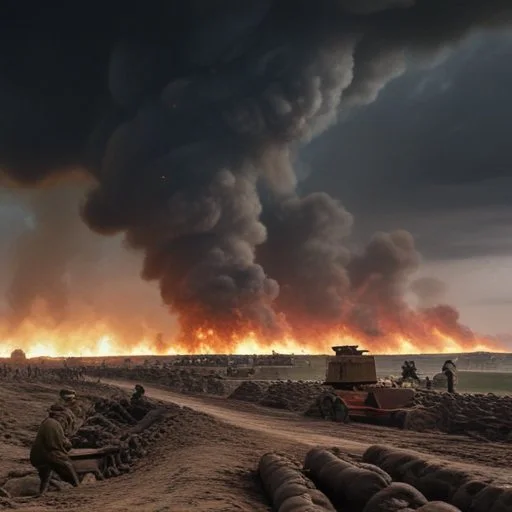
In the spring of 1945, the Allies were closing in on Germany from all sides. The Soviet Union, led by Joseph Stalin, had been advancing on the Eastern Front, while the United States, Great Britain, and France pushed forward on the Western Front. Berlin, the capital of Germany, was the ultimate prize, and the Red Army was determined to capture it.
The Seelow Heights, a strategic stronghold just east of Berlin, was the last major obstacle standing between the Red Army and the German capital. The German forces, led by General Gotthard Heinrici, had dug in deep, fortifying their defenses with trenches, bunkers, and artillery emplacements. The Soviet troops, fueled by revenge and determination, were preparing for a fierce battle to break through the German lines.
The German forces, though valiantly defending their positions, were vastly outnumbered and outgunned. As the battle raged on, their lines began to break, and the once-formidable German army crumbled under the relentless Soviet onslaught.
The Battle of Seelow Heights was a crushing defeat for the German forces, with estimates suggesting that up to 20,000 soldiers were killed or wounded. The Soviet Union suffered heavy casualties as well, with around 30,000 troops lost.
The victory at Seelow Heights paved the way for the eventual capture of Berlin, which fell on May 2, 1945. The Battle of Berlin marked the final stages of World War II, and the Red Army's triumph would soon lead to the surrender of Germany and the end of the war in Europe.
"The Seelow Heights were the gates of Berlin, and we had to break them open." - Georgy Zhukov, Soviet Marshal and Commander of the 1st Belorussian Front
The Battle of Seelow Heights had a profound impact on the Soviet people, marking a turning point in the war and paving the way for the eventual defeat of Nazi Germany. The battle is still commemorated today, with many monuments and memorials dedicated to the brave soldiers who fought and died on both sides.
In conclusion, the Battle of Seelow Heights was a pivotal moment in World War II, marking the beginning of the end of the Third Reich. The ferocity and sacrifice of the soldiers on both sides will never be forgotten, and this battle serves as a stark reminder of the devastating consequences of war.
The Soviet Union's preparation for the Battle of Seelow Heights was a masterpiece of military strategy. Weeks before the battle, Soviet engineers worked tirelessly to build roads and bridges, allowing troops to rapidly deploy to the front lines. Meanwhile, Soviet intelligence agents infiltrated German ranks, gathering crucial information on enemy troop movements and defensive positions. This meticulous planning allowed the Red Army to launch a cohesive and devastating attack on the German forces.
The German army, on the other hand, was plagued by internal conflicts and a lack of resources. As the war drew to a close, Hitler's grip on reality began to slip, leading to a series of disastrous decisions that weakened the German military. Despite their bravery, German soldiers were no match for the superior numbers and firepower of the Soviet army.
,
General Gotthard Heinrici, the German commander at Seelow Heights, was a seasoned military veteran with a reputation for bravery and tactical genius. Despite being vastly outnumbered, Heinrici's leadership and defensive strategies initially held off the Soviet onslaught. However, as the battle raged on, even Heinrici's skills couldn't compensate for the lack of resources and manpower.
Heinrici's defense of Seelow Heights was a testament to his unwavering commitment to the German war effort, even in the face of certain defeat.
,The Battle of Seelow Heights marked a significant shift in the global balance of power. As the Soviet Union assertively pushed into Eastern Europe, the United States and Great Britain were forced to reassess their post-war strategies. The battle cemented the Soviet Union's position as a dominant world power, paving the way for the Cold War era.
The aftermath of Seelow Heights also led to the Potsdam Conference, where the Allied leaders negotiated the terms of Germany's surrender and began to redraw the map of Europe.
,
The Battle of Seelow Heights had a profound impact on Soviet culture, with the battle becoming a symbol of Soviet resilience and determination. The Soviet media machine propaganda campaign surrounding the battle helped to boost national morale, presenting the struggle as a great patriotic victory.
The battle also inspired a generation of Soviet artists, writers, and filmmakers, who drew inspiration from the heroism and sacrifice of the Soviet soldiers.
,The Battle of Seelow Heights took place against the backdrop of a rapidly shifting geopolitical landscape. As the Allies closed in on Germany, the Soviet Union was poised to become the dominant power in Eastern Europe. The battle marked the beginning of a new era of Soviet influence, with the Red Army emerging as a powerful force in international politics.
The battle also underscored the importance of the Eastern Front, which had long been overshadowed by the Western Front. Seelow Heights served as a stark reminder of the Soviet Union's crucial role in the Allied victory.
,