


The RMS Lancastria, a British passenger liner, holds the somber distinction of being involved in Britain's worst maritime disaster in history. On a fateful day in June 1940, the ship was attacked and sunk by the German Luftwaffe near Saint-Nazaire, France, resulting in the loss of at least 3,000 lives.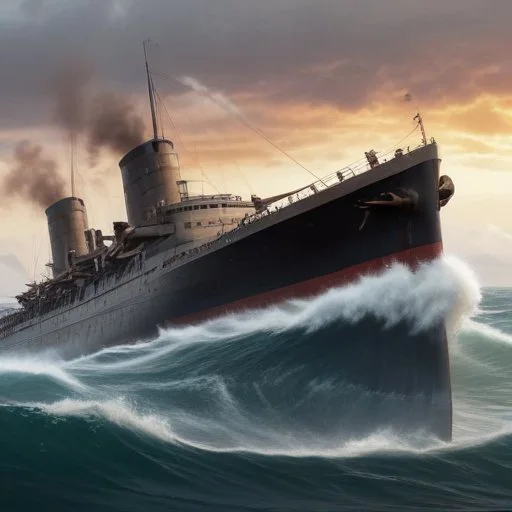
In the early summer of 1940, Allied forces were in dire need of evacuation from France. The German army had advanced rapidly, and the British Expeditionary Force (BEF) was being pushed back towards the coast. The RMS Lancastria, a behemoth of a ship, was tasked with the perilous mission of evacuating as many troops and civilians as possible from the besieged port of Saint-Nazaire.
The Lancastria set sail on June 14, 1940, from Liverpool, bound for Saint-Nazaire. On board, it carried a motley crew of troops, civilians, and crew members, all seeking to escape the clutches of the German army. The ship was grossly overcrowded, with estimates suggesting that over 9,000 people were on board, more than three times its original capacity.
On June 17, 1940, the Lancastria dropped anchor off the coast of Saint-Nazaire, awaiting its turn to disembark the evacuees. As the ship lay anchored, it became an easy target for the patrolling German Luftwaffe. At around 3:50 pm, a formation of Junkers Ju 87 bombers appeared on the horizon, their engines roaring as they descended upon the unsuspecting ship.
The bombers unleashed a hail of bombs, which struck the Lancastria with devastating accuracy. A massive explosion rocked the ship, sending it to the bottom of the ocean in mere minutes. The cries of the doomed passengers and crew still echo in the annals of history as the Lancastria slipped beneath the waves, taking with it thousands of innocent lives.
The sinking of the Lancastria was met with shock and outrage in Britain. The government was forced to confront the harsh realities of war, and the public was left to mourn the loss of so many lives. The disaster led to a significant shift in British policy, with a greater emphasis placed on naval convoys and air support for evacuation operations.
In the years that followed, the Lancastria's tragic fate was overshadowed by other events of World War II. However, in recent years, efforts have been made to commemorate the sacrifice of those who lost their lives in the disaster. A memorial service was held in 2010 to mark the 70th anniversary of the sinking, and a memorial plaque was unveiled at the National Memorial Arboretum in Staffordshire.
A survivor of the disaster, Able Seaman Frank Brodie, recalled the horror of that day: "I saw people crushed to death, trapped in the ship's wreckage. I saw people on fire, screaming and crying for help. It was a scene from hell."
Another survivor, Private Walter Simpson, remembered the ship's final moments: "The ship went down so quickly, it was like a giant lift plummeting to the bottom of the sea. I was lucky to escape with my life."
The sinking of the RMS Lancastria serves as a poignant reminder of the devastating consequences of war. It is a testament to the bravery and sacrifice of those who fought and died in the conflict, and a stark warning against the horrors that humanity is capable of inflicting upon itself.
As we reflect on this tragic event, we are reminded of the importance of honoring the memories of those who lost their lives in the Lancastria's tragic fate. We must also continue to strive for peace and diplomacy, lest we forget the devastating consequences of war and the importance of protecting human life.
The RMS Lancastria was not the only ship involved in the evacuation efforts from France. In fact, a fleet of ships was assembled to help rescue the stranded troops and civilians. The HMS Orion, HMS Oronsay, and HMS Winchester Castle were among the ships that played a crucial role in the evacuation. Despite their efforts, however, the Lancastria was the most tragic casualty of the operation.
The rescue efforts were coordinated by Vice-Admiral Junack, who was in charge of the naval evacuation from Saint-Nazaire. He was tasked with overseeing the safe passage of the troops and civilians from the port to England. The evacuation was a complex operation that required precise planning and execution, and despite the best efforts of the naval officers, the Lancastria's sinking was a devastating blow.
The Lancastria's fate was sealed due to a combination of factors, including poor weather conditions, inadequate air cover, and the sheer number of ships and aircraft involved in the operation. The ship's slow speed and lack of maneuverability made it an easy target for the German bombers, and its overcrowding made it difficult to evacuate passengers quickly.
Meet Captain Rudolf Sharp, the master of the RMS Lancastria on its fateful voyage. A seasoned sailor with over 20 years of experience, Sharp had commanded several ships before taking the helm of the Lancastria. He was known for his bravery and calm demeanor, which inspired confidence in his crew.
Captain Sharp was born in 1894 and began his sailing career at the age of 15. He worked his way up the ranks, serving on various ships before becoming a captain in the 1930s. He was highly respected by his peers and was considered one of the most experienced captains of his time.
Despite his best efforts, Captain Sharp was unable to save the Lancastria from its tragic fate. He went down with his ship, and his bravery and sacrifice will always be remembered.
The sinking of the RMS Lancastria is often compared to the sinking of the Titanic, another maritime disaster that resulted in significant loss of life. While both tragedies share some similarities, they also have some key differences.
Unlike the Titanic, which was on a routine passenger voyage when it sank, the Lancastria was on a wartime mission, carrying troops and civilians from a war zone. This made the Lancastria's evacuation efforts much more complex and challenging.
Another key difference is the response to the disasters. While the Titanic's sinking led to a major overhaul of maritime safety regulations, the Lancastria's sinking was overshadowed by the larger events of World War II. As a result, it took many years for the Lancastria's story to be fully recognized and commemorated.
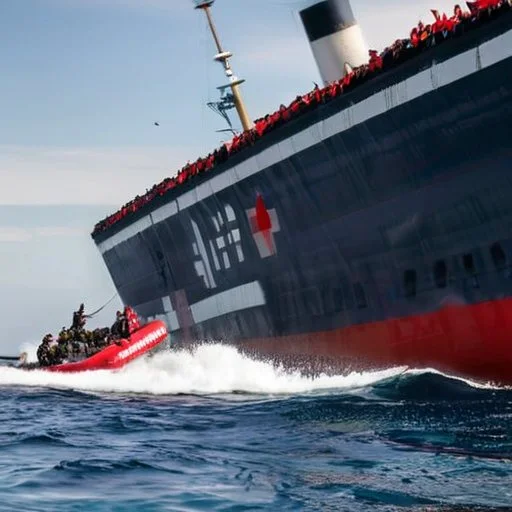
The sinking of the RMS Lancastria took place during a critical phase of World War II, when the German army was rapidly advancing through Western Europe. The British Expeditionary Force (BEF) was in full retreat, and the French army was on the brink of collapse.
The evacuation from Saint-Nazaire was part of a larger effort to rescue Allied troops from the continent. The Lancastria was one of many ships involved in the operation, which was codenamed Operation Ariel.
The sinking of the Lancastria was a major blow to the British war effort, but it did not deter the Allies from continuing to fight. The bravery and sacrifice of the Lancastria's passengers and crew served as a rallying cry for the British people, and the disaster played a significant role in shaping British policy and strategy during the war.
The sinking of the RMS Lancastria had significant economic implications for Britain. The ship was a valuable asset, and its loss was a major blow to the country's merchant navy.
The Lancastria was one of the largest ships in the British fleet, and its sinking resulted in a significant loss of cargo and supplies. The ship was carrying a large quantity of military equipment, including tanks, artillery, and ammunition, which were desperately needed by the British army.
In addition to the material losses, the sinking of the Lancastria also had a significant impact on the British economy. The ship's sinking led to a surge in insurance claims, which put a strain on the country's financial resources. The disaster also led to a decline in morale, which affected productivity and economic growth.