


Dresden, Germany, once a cultural gem and industrial hub, was reduced to smoldering ruins on the night of February 13, 1945, as Royal Air Force bombers unleashed a maelstrom of fire and destruction upon the city. This devastating aerial bombardment, code-named Operation Thunderclap, would become one of the most infamous and controversial episodes of World War II.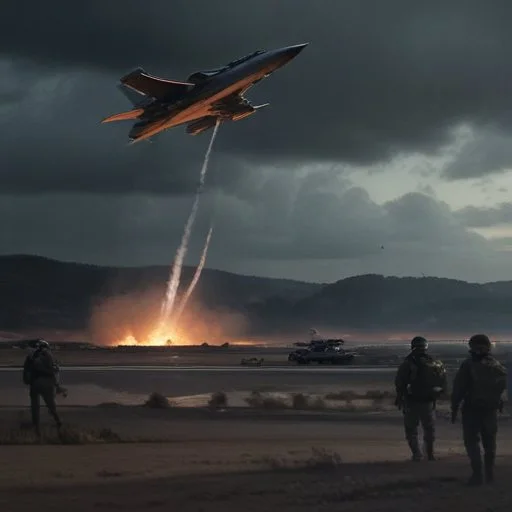
In the final months of World War II, the Allies were determined to cripple Germany's war machine and bring a swift end to the conflict. As the Eastern Front crumbled, the Soviet Army advanced on Berlin, and the Western Allies pushed deep into Germany. The city of Dresden, situated in eastern Germany, was targeted due to its strategic importance as a transportation hub and its alleged role in supporting the German war effort.
At the heart of the Dresden bombing was Air Chief Marshal Arthur "Bomber" Harris, commander of the Royal Air Force Bomber Command. Harris was a staunch proponent of strategic bombing, believing that targeting German cities would weaken the enemy's will to fight. Other key figures involved included Winston Churchill, the British Prime Minister, and General Dwight D. Eisenhower, the Supreme Allied Commander of the Allied Expeditionary Force.
The bombing of Dresden began on the night of February 13, 1945, when 244 Lancasters and 9 Mosquitoes of the Royal Air Force took to the skies, dropping over 1,400 tons of high-explosive bombs and 1,200 tons of incendiaries. The bombing campaign continued for two days, with subsequent waves of bombers attacking the city.
The destruction wrought upon Dresden was catastrophic. An estimated 25,000 people lost their lives, with many more injured or left homeless. The city's historic center, including the iconic Frauenkirche, was reduced to rubble. The bombing also had a significant impact on the German war effort, as the city's industrial and transportation infrastructure were severely damaged.
The bombing of Dresden remains one of the most controversial episodes of World War II. Critics have argued that the attack was disproportionate to the city's military significance, and that it constituted a deliberate targeting of civilians. Others have defended the bombing as a necessary evil in the wider context of the war.
"I do not personally want the war to be shortened by a few months if it means wrecking what's left of the continent." - Arthur Harris, Air Chief Marshal of the Royal Air Force Bomber Command
The bombing of Dresden is often compared to the Allied firebombing of Hamburg, Germany in 1943, and the atomic bombings of Hiroshima and Nagasaki, Japan in 1945. While each event shares similarities in terms of scale and destructive power, the context and motivations behind the bombings differ significantly.
Victor Gregg, a British soldier who was captured and imprisoned in Dresden, recounts the horrors of the bombing in his memoir, "Rifleman": "The noise was like nothing I've ever heard before... It was like the end of the world."
The bombing of Dresden served as a catalyst for the development of international humanitarian law, particularly in terms of the protection of civilians in armed conflict. The event also influenced the development of military strategies, with a greater emphasis on precision-guided munitions and minimizing collateral damage.
The bombing of Dresden has been the subject of numerous historical studies, books, and documentaries. The event has also been referenced in popular culture, including in films, literature, and music.
The bombing of Dresden was codenamed Operation Thunderclap, reflecting the Allies' desire to unleash a dramatic and decisive blow against Germany.
In the aftermath of the bombing, relief efforts were coordinated by organizations such as the Red Cross and the United Nations Relief and Rehabilitation Administration. These efforts helped to provide aid to the survivors and facilitate the rebuilding of the city.
The bombing of Dresden serves as a poignant reminder of the devastating consequences of war and the importance of promoting peace and understanding in international relations.
Arthur Harris, also known as "Bomber" Harris, was a British Royal Air Force (RAF) officer who played a crucial role in the planning and execution of the Dresden bombing. Born on April 13, 1892, Harris joined the RAF in 1915 and quickly rose through the ranks, earning a reputation as a skilled and daring pilot.
Harris's advocacy for strategic bombing was rooted in his belief that it could weaken the enemy's will to fight, a philosophy that was heavily influenced by the theories of Italian general Giulio Douhet. He was appointed Commander-in-Chief of RAF Bomber Command in 1942, where he oversaw the development of the pathfinder force and the implementation of the "thousand bomber" raids.
Harris's legacy is marked by controversy, with critics arguing that his tactics were indiscriminate and led to unnecessary civilian casualties. Despite this, Harris remained unapologetic, convinced that his methods were necessary to secure an Allied victory.
The Dresden bombing had a profound impact on German culture, with the city's destruction serving as a powerful symbol of the devastating consequences of war. The bombing inspired a wealth of artistic and literary responses, including novels, poems, and films that explored the human cost of conflict.
In the decades following the war, Dresden became a powerful symbol of German reconstruction and rebirth. The city's gradual rebuilding and restoration served as a testament to the resilience and determination of the German people.
The Dresden bombing also influenced the development of pacifist movements in post-war Germany, with many Germans calling for a rejection of militarism and a commitment to international cooperation.The Dresden bombing was one of several Allied bombing campaigns launched against German cities during World War II. While each campaign shared similarities in terms of scale and destructive power, the context and motivations behind the bombings differed significantly.
In comparison to the Hamburg firebombing, the Dresden bombing was more extensive and destructive, with a higher civilian casualty rate. In contrast, the atomic bombings of Hiroshima and Nagasaki were driven by a desire to quickly end the war in the Pacific.
The Dresden bombing stands out for its unique combination of strategic and symbolic significance, reflecting the Allies' desire to both cripple Germany's war machine and punish its population.
The Dresden bombing had a devastating impact on the German economy, with the city's industrial and transportation infrastructure severely damaged. The bombing disrupted supply chains, destroyed manufacturing facilities, and crippled the city's rail network.
The economic costs of the bombing were staggering, with estimated damages totaling over 20 billion Reichsmarks. The bombing also had a significant impact on Germany's food supply, with the city's agricultural sector severely disrupted.
In the years following the war, the Dresden bombing was cited as one of the key factors contributing to Germany's economic stagnation and reconstruction challenges.The Dresden bombing has been the subject of intense historiographical debate, with historians offering diverse interpretations of the event's significance and morality. Some have argued that the bombing was a necessary evil, driven by military necessity and a desire to shorten the war.
Others have criticized the bombing as a brutal and indiscriminate act of terror, driven by a desire to punish the German population. More recent scholarship has emphasized the importance of understanding the bombing within the broader context of the Allied bombing campaign and the moral complexities of total war.