


The Allied forces' triumphant arrival in Messina, Italy, on August 17, 1943, marked a pivotal moment in World War II, as the U.S. Seventh Army under General George S. Patton and the British 8th Army under Field Marshal Bernard Montgomery joined forces to liberate Sicily from Axis powers.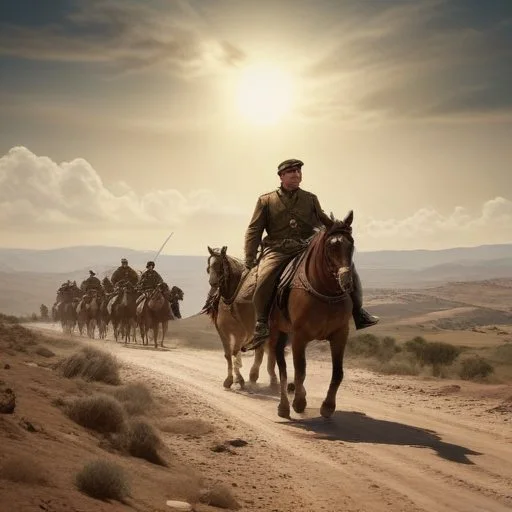
The invasion of Sicily, code-named Operation Husky, was a crucial campaign that aimed to weaken the Axis powers' grip on Europe. Following the Allied victory in North Africa, the invasion of Sicily was designed to secure the Mediterranean, prepare for the Italian Campaign, and ultimately pave the way for the D-Day Normandy landings.
The Allied forces faced fierce resistance from German and Italian troops, but after weeks of intense fighting, the Seventh Army and the 8th Army pushed forward, overcoming treacherous terrain and enemy strongholds. On August 17, the U.S. Seventh Army entered Messina, followed several hours later by the British 8th Army, marking the completion of the Allied conquest of Sicily.
General George S. Patton, known for his bold and aggressive tactics, led the U.S. Seventh Army into Sicily. Meanwhile, Field Marshal Bernard Montgomery, a seasoned military strategist, commanded the British 8th Army. The combined forces of these two renowned leaders proved too great for the Axis powers to resist.
The Allied victory in Sicily had far-reaching consequences, including the surrender of Italy, the weakening of Axis powers, and the securing of the Mediterranean. The campaign also paved the way for the Italian Campaign, which would ultimately lead to the Allied forces' advance into Western Europe.
The liberation of Sicily had a profound impact on the local population, who had suffered under Axis occupation. The Allied victory brought hope and relief, as well as a sense of freedom and liberation.
"A good plan, violently executed now, is better than a perfect plan next week." - General George S. Patton
The Allied conquest of Sicily marked a significant turning point in World War II, showcasing the strength and unity of the Allied forces and paving the way for future victories. As General Patton so aptly put it, "Success is not final, failure is not fatal: It is the courage to continue that counts."
General George S. Patton, known for his fearlessness and tactical genius, played a pivotal role in the Allied conquest of Sicily. Patton's leadership style was characterized by his bold and aggressive tactics, which often caught the enemy off guard.
Despite his tough exterior, Patton was deeply concerned about the welfare of his troops, often visiting the front lines to boost morale and gain a firsthand understanding of the battlefield.
The Allied victory in Sicily marked a significant cultural shift, as the island began to transition from fascist rule to democratic freedom. The liberation brought an end to the regime's strict censorship, allowing for a renaissance in art, literature, and music.
The arrival of the Allies also brought an influx of new cultural influences, as American and British troops introduced the local population to jazz, swing, and other forms of music that had been suppressed under fascist rule.
Sicily's location in the central Mediterranean made it a crucial strategic location for the Allies. The island's control allowed for the securing of vital shipping lanes, enabling the transportation of troops and supplies between North Africa, Europe, and the Middle East.
The Allies' control of Sicily also enabled them to launch further operations in the region, including the invasion of Italy and the eventual push into Western Europe.
The battle for Catania, fought between July 17 and August 5, 1943, was a brutal and intense conflict that marked a turning point in the campaign. The city's strategic location made it a vital prize for both the Allies and Axis forces.
The British 8th Army, led by Field Marshal Montgomery, faced off against the German and Italian troops, who put up fierce resistance. After weeks of fighting, the Allies emerged victorious, paving the way for the eventual capture of Messina.
The Allied conquest of Sicily had significant political implications, as it marked a decisive shift in the balance of power in Europe. The defeat of the Axis powers in Sicily led to a crisis in confidence in the Italian government, ultimately contributing to the downfall of Benito Mussolini's regime.
The victory also bolstered the reputation of the Allies, demonstrating their ability to work together to achieve a common goal. This unity would prove crucial in the months and years to come, as the Allies continued to push forward on multiple fronts.