


The siege of Budapest, a brutal and devastating 107-day ordeal, came to a close on February 13, 1945, as German and Hungarian forces surrendered unconditionally to the Red Army. This pivotal event marked a crushing defeat for the Axis powers, signaling the beginning of the end of World War II.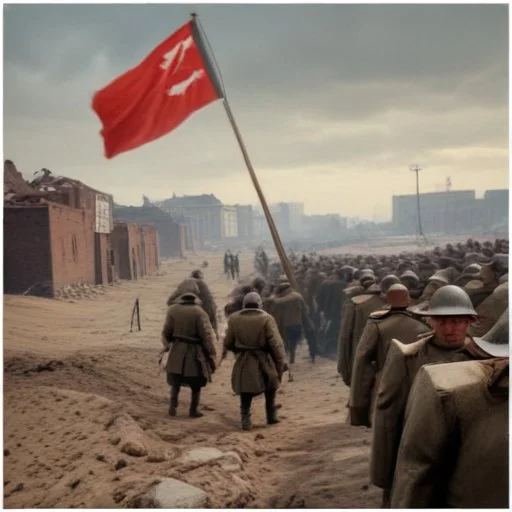
Budapest, the Pearl of the Danube, was encircled by Soviet forces on December 24, 1944. The city, once a hub of cultural and economic prosperity, was transformed into a battleground, with streets littered with rubble, ash, and the remnants of war. The defenders, comprising German and Hungarian troops, fought valiantly but were vastly outnumbered and outgunned.
The Soviet onslaught was relentless, with wave after wave of artillery bombardments and infantry attacks. The defenders, led by German General Karl Pfeffer-Wildenbruch and Hungarian General Iván Hindy, fought with tenacity, but their efforts were ultimately futile. As supplies dwindled and hope waned, the city's defenders were forced to confront the inevitable.
On February 13, 1945, the white flag of surrender was raised, marking the end of the siege. The Red Army, led by Marshal Rodion Malinovsky, accepted the surrender, and the city fell into Soviet hands. The fall of Budapest was a significant milestone in the war, as the Allies closed in on Berlin and the Axis powers teetered on the brink of collapse.
The surrender of Budapest marked a turning point in the war, as the Allies pushed deeper into Axis territory. The city, once a symbol of Hungarian pride and culture, lay in ruins, its people weary and battered. The Soviet occupation of Budapest would last for nearly 45 years, leaving an indelible mark on the city's history and identity.
The fall of Budapest had far-reaching consequences, setting the stage for the Soviet push into Austria and the eventual capture of Vienna. The surrender also paved the way for the Allied victory in World War II, as the Axis powers crumbled under the weight of Soviet and Western Allied advances.
In the words of Hungarian journalist and survivor, Gábor Halász: "The siege of Budapest was a living hell. We lived in constant fear, wondering when the next shell would fall, when the next attack would come. But even in the midst of chaos, there was a sense of community, of solidarity. We Hungarians stood together, united against the enemy."
The siege of Budapest, a testament to the brutality and devastation of war, serves as a poignant reminder of the human cost of conflict. As we reflect on this pivotal event, we honor the memories of those who fought and suffered, and acknowledge the significant impact it had on the course of World War II.
General Karl Pfeffer-Wildenbruch, the German commander who oversaw the defense of Budapest, was a career military officer with a mixed record of success. Born in 1888, Pfeffer-Wildenbruch saw action in World War I and later served in the Reichswehr, the German army during the interwar period. Despite his experience, he was not considered a exceptional commander, and his appointment to lead the Budapest garrison was seen as a consolation prize after being Passed over for more senior roles.
However, Pfeffer-Wildenbruch proved to be a determined defender, rallying his troops and conducting a fierce resistance against the Soviet onslaught. His ultimate defeat was not due to lack of courage, but rather the overwhelming numerical superiority of the Red Army.

The city of Budapest, strategically located on the Danube River, had long been a critical hub for Central European trade and commerce. Its control was essential for both the Axis and Allied powers, as it provided access to the vital transportation routes and natural resources of the region.
As the war turned against Germany, Budapest became a prized target for the Soviet Union, which sought to expand its influence and territory in Eastern Europe. The Soviet capture of Budapest marked a significant shift in the balance of power, paving the way for the eventual Soviet domination of Eastern Europe during the Cold War.
In the years leading up to the siege, Hungary gradually became embroiled in World War II, despite its initial reluctance to join the conflict. The country's fascist government, led by Admiral Miklós Horthy, had long been sympathetic to Nazi Germany, and Hungary eventually declared war on the Soviet Union in June 1941.
As the war turned against Germany, Hungary attempted to extricate itself from the conflict, but it was too late. The German occupation of Hungary in March 1944 marked the beginning of the end for the country's independence, and paved the way for the eventual siege of Budapest.

The siege of Budapest exacted a devastating toll on the city's cultural heritage, with many of its historic buildings, monuments, and artistic treasures destroyed or looted during the fighting. The city's famous museums, including the Hungarian National Museum and the Museum of Fine Arts, suffered significant losses, as did the iconic Chain Bridge, which was severely damaged during the siege.
The cultural impact of the siege was profound, as the city's rich cultural landscape was irreparably altered. Many of Budapest's most treasured landmarks and institutions were lost, leaving behind a scarred and battle-scarred city that would take decades to recover.
One of the most poignant and revealing artifacts from the siege of Budapest is the diary of Hungarian soldier, László Fényes. Fényes, a young officer in the Hungarian army, kept a meticulous record of his experiences during the siege, from the initial Soviet bombardments to the final surrender.
Fényes' diary provides a unique glimpse into the daily life of a soldier during one of the most intense and brutal battles of World War II. His entries, often written in cramped and hurried handwriting, convey the fear, uncertainty, and resilience of those who fought to defend Budapest.