


September 28, 1939, marked the devastating conclusion to the 27-day siege of Warsaw, Poland's capital city, as it succumbed to the relentless onslaught of Nazi Germany's military might. The siege, which began on September 1, 1939, would go down in history as one of the most brutal and destructive battles of World War II.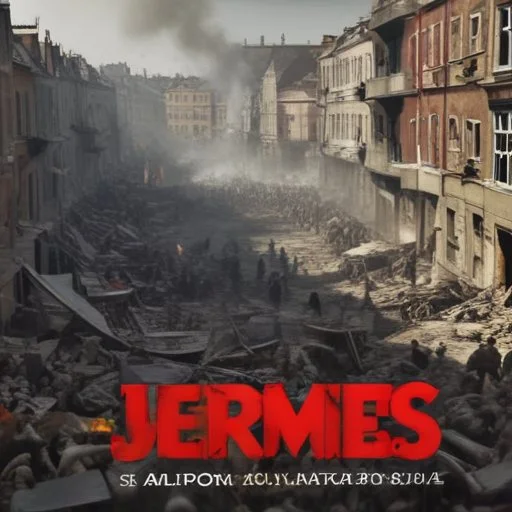
In the lead-up to the siege, Germany, under the leadership of Adolf Hitler, had been making aggressive territorial demands on Poland, igniting a fuse that would eventually engulf Europe in war. Despite being vastly outnumbered and outgunned, Poland refused to back down, prompting Germany to launch a surprise attack on September 1, 1939.
As German forces closed in on Warsaw, the city's defenses were bolstered by a hastily assembled force of 140,000 soldiers, who would face off against an enemy boasting superior airpower and artillery. The Poles fought valiantly, but it soon became apparent that their bravery would be no match for the German war machine.
The Luftwaffe, Germany's air force, unleashed a torrent of bombs on Warsaw, targeting not only military installations but also civilian populations and cultural landmarks. The city's infrastructure, once a testament to its rich history and cultural heritage, lay in ruins as buildings crumbled and historic monuments were reduced to rubble.
The siege of Warsaw exacted a staggering human toll, with over 1.5 million civilians displaced, tens of thousands killed or injured, and countless more left to suffer the brutal consequences of war. The city's streets, once bustling with life, were now a smoldering ruin, as the people of Warsaw struggled to come to terms with the devastation that had been inflicted upon them.
The eventual fall of Warsaw marked a strategic victory for Germany, effectively ending Poland's resistance to the Nazi invasion. The country would go on to suffer six long years of brutal occupation, with the city of Warsaw serving as a symbol of the brutal reality of war.
Today, the siege of Warsaw stands as a testament to the resilience of the human spirit, a poignant reminder of the devastating consequences of war and the unconquerable will to survive in the face of overwhelming adversity. As we reflect on this pivotal moment in history, we are reminded of the importance of preserving peace, promoting diplomacy, and honoring the memories of those who have paid the ultimate price in defense of their nations.
As we remember the siege of Warsaw, we are reminded that even in the darkest of times, the human spirit can find a way to persevere, to resist, and to ultimately overcome. It is a testament to the power of human resilience, a beacon of hope in the face of overwhelming adversity, and a poignant reminder of the devastating consequences of war.
The Siege of Warsaw was preceded by a series of intense diplomatic efforts to prevent the outbreak of war. In the months leading up to the invasion, British and French leaders attempted to mediate a resolution between Germany and Poland, but Hitler's demands proved intractable. The Molotov-Ribbentrop Pact, a non-aggression agreement between Germany and the Soviet Union, further complicated the situation, as it effectively neutralized the possibility of Soviet intervention on Poland's behalf.
As the German army advanced on Warsaw, the city's defenders implemented a scorched earth policy, destroying bridges, roads, and other infrastructure in an effort to slow the enemy's progress. However, this strategy ultimately proved ineffective against the German war machine, which pressed on relentlessly, driven by the doctrine of Blitzkrieg.
The Siege of Warsaw was a stark illustration of the concept of "total war," in which civilian populations and infrastructure were explicitly targeted as a means of breaking an enemy's will to resist. The devastating consequences of this approach would be felt throughout the city, as historic landmarks, cultural institutions, and entire neighborhoods were reduced to rubble.
Władysław Raczkiewicz, the President of Poland, played a crucial role in the country's defense against the Nazi invasion. Though ultimately forced to flee Warsaw as the city fell, Raczkiewicz's determination and leadership helped to galvanize the Polish resistance, inspiring thousands to take up arms against the invaders.
As the symbol of Polish sovereignty, Raczkiewicz's presence in Warsaw served as a powerful rallying cry for the city's defenders. His refusal to surrender, despite overwhelming odds, earned him a special place in the hearts of the Polish people, and his legacy continues to inspire generations of Poles to this day.
The Siege of Warsaw shares unsettling parallels with the Siege of Madrid during the Spanish Civil War, which took place just three years prior. In both cases, a beleaguered city was subjected to intense aerial bombardment, leading to massive civilian casualties and widespread destruction.
Both sieges also showcased the brutal efficiency of modern warfare, as advanced military technology was deployed against densely populated urban centers. The similarities between these two events serve as a poignant reminder of the devastating consequences of total war, and the imperative for nations to work towards preventing such atrocities from recurring.
The Siege of Warsaw has left an indelible mark on Polish culture, inspiring a wealth of artistic and literary works that reflect on the tragedy and heroism of those fateful days.
From Cyprian Kamil Norwid's poetic masterpiece, "To the Warsaw Uprising," to Andrzej Wajda's searing film adaptation of "Kanał," the Siege of Warsaw has been commemorated in a wide range of cultural forms, ensuring that its impact will be felt for generations to come.
The Geopolitical context of the Siege of Warsaw is deeply intertwined with the broader narrative of European history in the 20th century. The Molotov-Ribbentrop Pact, which preceded the invasion, marked a significant shift in the balance of power, as the Soviet Union and Nazi Germany formed a temporary alliance that would ultimately prove devastating for Poland.
The fall of Warsaw, in turn, set the stage for the subsequent invasion of France, Belgium, and the Netherlands, drawing Europe into the maelstrom of World War II.