


The Soviet 322nd Rifle Division's liberation of Auschwitz-Birkenau on January 27, 1945, marked a pivotal moment in World War II, as thousands of prisoners were finally freed from the grasp of the Nazi regime's most notorious death camp.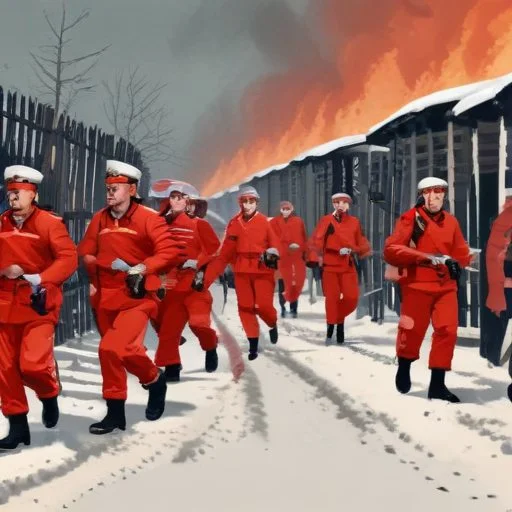
Auschwitz-Birkenau, located in southern Poland, was established in 1940 as a concentration camp for Polish political prisoners. Over time, it evolved into a monstrous extermination center, where an estimated 1.1 million people, mostly Jews, were brutally murdered. The camp's barbaric conditions, forced labor, and mass killings became a symbol of the Nazi regime's depravity.
In January 1945, the Soviet Red Army, led by Marshal Ivan Konev, launched a powerful offensive into Poland, pushing the German forces back. The 322nd Rifle Division, comprised of battle-hardened soldiers, was tasked with liberating the Auschwitz-Birkenau complex.
On January 27, 1945, the Soviet soldiers, armed with rifles and compassion, burst through the gates of Auschwitz-Birkenau. They were met with the haunting sight of emaciated prisoners, many of whom had been subjected to inhumane experiments, forced labor, and starvation. The Soviet soldiers provided food, medical care, and comfort to the exhausted inmates, many of whom were near death.
The liberation of Auschwitz-Birkenau has been immortalized in literature, art, and film, serving as a powerful reminder of the importance of fighting against oppression and protecting human rights. The event has inspired countless works, including Elie Wiesel's "Night," Primo Levi's "If This Is a Man," and the iconic film "Schindler's List."
One of the most poignant accounts of the liberation comes from Dr. Mikhail Kostenko, a Soviet soldier who was part of the 322nd Rifle Division. He recalled: "We saw people who had been turned into skeletons, people who had been beaten, people who had been tortured... We saw the crematoria, the gas chambers, the mass graves... It was a nightmare that we could never have imagined."
The liberation of Auschwitz-Birkenau served as a catalyst for the Nuremberg Trials, where top Nazi officials were held accountable for their crimes against humanity. The event also led to the establishment of the State of Israel, the creation of the Genocide Convention, and the development of international human rights law.
The liberation of Auschwitz-Birkenau serves as a powerful reminder of the importance of standing against tyranny and oppression. It is a testament to the resilience of the human spirit and a beacon of hope for those fighting against injustice.
As we reflect on this pivotal moment in history, we are reminded of the words of Elie Wiesel: "The opposite of love is not hate, it's indifference. The opposite of art is not ugliness, it's indifference. The opposite of faith is not heresy, it's indifference. And the opposite of life is not death, it's indifference."
Marshal Ivan Konev was a seasoned Soviet military leader who played a crucial role in the liberation of Auschwitz-Birkenau. Born in 1897, Konev rose through the ranks of the Soviet Red Army, earning a reputation as a skilled and fearless commander. During World War II, he led several successful campaigns against the German army, including the Battle of Kursk and the Battle of Berlin.
Konev's strategic thinking and military prowess were instrumental in the Soviet advance into Poland, which ultimately led to the liberation of Auschwitz-Birkenau. His bravery and leadership inspired his troops, and his commitment to defeating the Nazi regime drove him to push forward despite the odds.
The liberation of Auschwitz-Birkenau has been immortalized in various forms of art and literature, serving as a powerful reminder of the horrors of the Holocaust. Artists and writers have drawn inspiration from the event, creating works that evoke emotions, spark reflection, and honor the victims.
In literature, Primo Levi's "If This Is a Man" and Elie Wiesel's "Night" are two iconic works that recount the experiences of survivors in Auschwitz-Birkenau. These memoirs provide a glimpse into the lives of those who suffered in the camp, offering a personal perspective on the atrocities committed during the Holocaust.
The liberation of Auschwitz-Birkenau took place amidst a complex geopolitical landscape. As the Soviet Red Army advanced into Poland, they were driven by a desire to defeat the Nazi regime and expand Soviet influence in Eastern Europe.
The Western Allies, led by the United States and Great Britain, were also making progress on the Western Front, pushing the German army back and paving the way for the eventual defeat of Nazi Germany.
Historians have approached the liberation of Auschwitz-Birkenau from various perspectives, highlighting different aspects of the event. Some have focused on the military campaigns leading up to the liberation, while others have examined the experiences of the prisoners and the impact of the event on the broader war effort.
Recent studies have also explored the role of the Soviet Union in the liberation, shedding light on the complexities of the Soviet war effort and the motivations behind the Red Army's advance into Poland.
The liberation of Auschwitz-Birkenau has been extensively documented through archival evidence, including photographs, diaries, and official records. These primary sources provide a unique window into the event, offering insight into the experiences of the prisoners, the Soviet soldiers, and the Nazi guards.
The Auschwitz-Birkenau State Museum has compiled an extensive archive of documents, including prisoner records, camp documents, and photographs taken by Soviet photographers during the liberation.