


In the ravaged streets of Łódź, Poland, a long-awaited beacon of hope emerged on January 19, 1945, as Soviet forces burst through the gates of the notorious Łódź Ghetto, liberating a mere 877 survivors from the clutches of the brutal Nazi occupation. This pivotal moment marked the end of an era of unimaginable terror, where the once-thriving community of over 200,000 Jews was systematically decimated, leaving behind a haunting legacy of devastation and despair.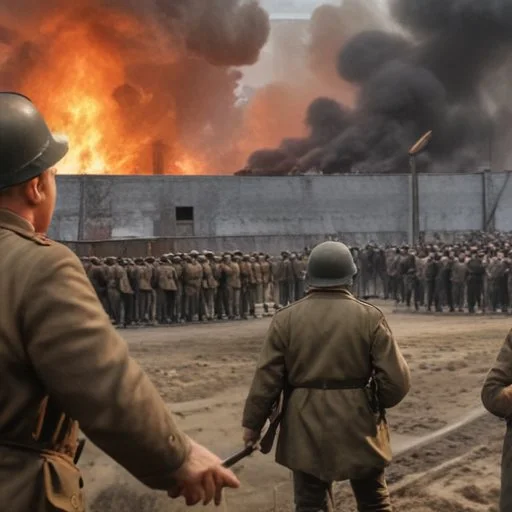
The Łódź Ghetto, established in 1940, was one of the largest and most notorious ghettos in Nazi-occupied Poland. Confined within its walls, the Jewish population of Łódź was subjected to forced labor, starvation, and disease, all while being stripped of their dignity, identity, and humanity. The ghetto was a microcosm of the Nazi's sinister "Final Solution," a meticulously crafted plan to exterminate European Jewry.
Among the Soviet forces that liberated the Łódź Ghetto were the brave men of the 8th Guards Army, led by General Vasily Chuikov, a seasoned veteran of the Soviet war effort. Chuikov's troops had fought tirelessly to push the Nazi forces back, ultimately paving the way for the liberation of the ghetto.
As the Soviet forces entered the ghetto, they were met with a scene of unbridled devastation. The stench of death and despair hung heavy in the air, while the emaciated survivors, many barely clinging to life, slowly emerged from the shadows. Amidst the ruins, the Soviet soldiers discovered a handful of scraps, a testament to the resilience of the human spirit: a makeshift hospital, a functioning synagogue, and a few, precious, hidden artifacts of Jewish culture.
The liberation of the Łódź Ghetto stands as a poignant reminder of the horrors of the Holocaust, and the unwavering courage of those who fought against the Nazi regime. This momentous event not only freed the surviving Jews from their physical confinement but also sparked a new era of hope, as the world began to acknowledge the atrocities committed during World War II.
"When we entered the ghetto, we saw the remnants of a people, broken, starved, and shattered. But amidst the ruin, we saw something more – the unyielding spirit of humanity, refusing to be extinguished." – General Vasily Chuikov, liberator of the Łódź Ghetto
The liberation of the Łódź Ghetto is immortalized in a series of haunting photographs, captured by Soviet war photographers. These visual testaments to tragedy serve as a poignant reminder of the atrocities committed, and the resilience of the human spirit in the face of unimaginable horror.
The liberation of the Łódź Ghetto is a poignant reminder that the horrors of the Holocaust continue to leave an indelible mark on human history. As we reflect on this momentous event, we are compelled to confront the darker aspects of human nature, and to recommit ourselves to the eternal pursuit of justice, compassion, and humanity.
The Łódź Ghetto, established in 1940, was a testament to the Nazi's ability to systematically dehumanize and destroy entire communities. Confined within its walls, the Jewish population of Łódź was subjected to forced labor, starvation, and disease, all while being stripped of their dignity, identity, and humanity.
As the Nazi's tightened their grip on the ghetto, the living conditions became increasingly unbearable. Overcrowding, lack of sanitation, and scarcity of food and water led to the spread of diseases such as typhus, tuberculosis, and dysentery, which further decimated the population.
The ghetto was a laboratory for the Nazi's sinister "Final Solution," a meticulously crafted plan to exterminate European Jewry. The Łódź Ghetto served as a model for other ghettos, with its efficient system of forced labor, mass deportations, and brutal suppression of resistance.
Vasily Chuikov, the Soviet general who led the 8th Guards Army to liberate the Łódź Ghetto, was an unlikely hero. A seasoned veteran of the Soviet war effort, Chuikov had fought on multiple fronts, earning a reputation as a skilled and fearless commander.
Chuikov's role in the liberation of Łódź was a defining moment in his career, marking a turning point in the Soviet war effort. His bravery and strategic thinking paved the way for the ultimate defeat of the Nazi regime.
In the aftermath of the war, Chuikov became a hero in the Soviet Union, celebrated for his role in liberating the Łódź Ghetto and other key victories. His legacy serves as a testament to the bravery and sacrifice of the Soviet people during World War II.
The liberation of the Łódź Ghetto was immortalized in a series of haunting photographs, captured by Soviet war photographers. These visual testaments to tragedy provide a glimpse into the lives of the survivors, and the devastating conditions they endured.
One of the most powerful images shows a group of emaciated children, their eyes sunken, their skin pale, and their bodies frail. The photograph serves as a poignant reminder of the humanity lost during the Holocaust.
Other photographs depict the makeshift hospital, the functioning synagogue, and the few, precious, hidden artifacts of Jewish culture. These images are a testament to the resilience of the human spirit, and the ability to find hope in the darkest of times.
The liberation of the Łódź Ghetto marked a cultural rebirth, as the survivors began to rebuild their lives and their community. The event sparked a renewed sense of hope and resilience, as the world began to acknowledge the atrocities committed during World War II.
The liberation of Łódź also led to a resurgence of Jewish culture, as survivors began to rebuild their traditions and customs. The event inspired a new wave of artists, writers, and musicians, who sought to capture the horrors of the Holocaust and the triumph of the human spirit.
The liberation of Łódź serves as a powerful reminder of the importance of cultural preservation, and the need to protect and promote diversity in the face of oppression.
The liberation of the Łódź Ghetto was part of a larger geopolitical strategy, as the Soviet Union pushed to defeat the Nazi regime and expand its influence in Eastern Europe.
The Soviet advance on Łódź was a key moment in the war, marking a turning point in the Soviet war effort. The city's strategic location made it a crucial prize, as it controlled access to key transportation routes and industrial centers.
The liberation of Łódź also had significant implications for the post-war world order, as the Soviet Union began to consolidate its influence in Eastern Europe and lay the groundwork for the Cold War.