


September 17, 1939, marked a dark turning point in World War II as the Soviet Union, under the iron grip of Joseph Stalin, launched a surprise invasion of Poland, effectively carving up the country and thrusting the world into chaos. This strategic move, in cahoots with Nazi Germany, would forever change the course of history.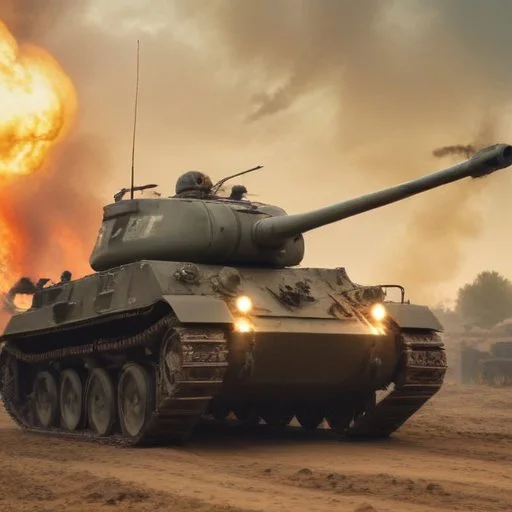
In the weeks leading up to the invasion, the world was oblivious to the secret Molotov-Ribbentrop Pact, a non-aggression treaty inked between the Soviet Union and Nazi Germany on August 23, 1939. This clandestine agreement divided Eastern Europe into Soviet and German spheres of influence, paving the way for a joint invasion of Poland. The pact was Stalin's insurance policy, securing his eastern flank and buying time to bolster the Soviet military.
With an estimated 500,000 troops, 3,000 tanks, and 2,000 aircraft at their disposal, the Soviet Union unleashed a military behemoth upon Poland. The Soviet invasion force swept through the eastern regions of the country, catching the Polish military off guard and leaving them ill-prepared to resist. The sheer scale of the invasion was overwhelming, with the Soviet army advancing up to 10 miles a day in some areas.
As the Soviet Union assertively claimed its share of Poland, the country was effectively divided along the Curzon Line, a border proposed by British Foreign Secretary Lord Curzon in 1920. The Soviet occupation of eastern Poland brought an estimated 13 million people under Stalin's control, while the remaining western regions fell under German occupation.
The international community was caught off guard by the Soviet invasion, with widespread condemnation pouring in from governments around the world. France and the United Kingdom, bound by a treaty to defend Poland, declared war on Germany on September 3, 1939. However, they failed to provide meaningful military assistance to Poland, leaving the country to face the onslaught alone.
The Soviet invasion of Poland marked a critical turning point in World War II, as the global conflict began to escalate. The invasion exposed the Soviet Union's aggressive expansionist policies, prompting a shift in alliances and strategic calculations among the world's powers. As the war raged on, the consequences of the Soviet invasion would reverberate across Europe, shaping the course of history for decades to come.
Joseph Stalin, the Soviet Union's paramount leader, was the mastermind behind the invasion of Poland. His cunning diplomatic maneuvering and ruthless military tactics cemented the Soviet Union's position as a global superpower. Stalin's invasion of Poland remains one of the most significant events of World War II, showcasing his willingness to pursue aggressive expansionism at any cost.
As we reflect on this pivotal moment in history, we are reminded of the devastating consequences of unchecked power and the importance of vigilance in the face of aggression. The Soviet invasion of Poland serves as a powerful reminder of the need for diplomacy, cooperation, and collective security in an increasingly complex world.
The Soviet Union's invasion of Poland was not a spontaneous decision. As early as 1938, Stalin had begun to strengthen the Soviet military presence along the Polish border. The Soviet leader was driven by a desire to reclaim the territories lost by Russia during World War I and to secure a strategic buffer zone against Nazi Germany. In the months leading up to the invasion, Stalin had carefully orchestrated a series of military maneuvers, including large-scale exercises and troop deployments, to deceive the Polish government and lull them into a false sense of security.
In the days immediately preceding the invasion, Stalin's forces were poised along the border, awaiting the signal to strike. On September 17, 1939, at dawn, the Soviet army crossed into Poland, catching the Polish military off guard and sparking a devastating conflict that would last for weeks.

Joseph Stalin's role in the Soviet invasion of Poland was more than just a strategic calculation. It was a reflection of his deeper ideological convictions and his ruthless determination to shape the course of history. As a Marxist-Leninist, Stalin believed in the inevitability of class struggle and the imperative of Soviet expansion.
Stalin's personal obsession with power and control drove his decision-making, often overriding more rational considerations. His paranoia about potential threats to Soviet security led him to take drastic measures, such as the purges of the 1930s and the invasion of Poland.
The Soviet Union's invasion of Poland marked a critical turning point in the diplomatic relations between the great powers. The Molotov-Ribbentrop Pact, signed just weeks earlier, had created a temporary alliance between the Soviet Union and Nazi Germany, allowing them to carve up Eastern Europe between them.
The invasion of Poland exposed the inherent contradictions of this alliance, as the Soviet Union and Nazi Germany began to jockey for influence and territory. The invasion also triggered a chain reaction of diplomatic realignments, as countries scrambled to respond to the new reality.
The Soviet Union's invasion of Poland was not an isolated event, but rather part of a larger geopolitical landscape. In the years leading up to the invasion, Europe was already fraught with tensions, as fascist and nationalist movements gained strength.
The Soviet invasion of Poland fit into a broader pattern of territorial expansion and aggression, as authoritarian regimes sought to expand their borders and solidify their power. The invasion marked a definitive shift toward a more aggressive and militarized approach to international relations.
The Soviet Union's invasion of Poland had far-reaching economic consequences, as the war effort and subsequent occupation drained the Polish economy. The Soviet Union's seizing of key industries and resources, such as coal and textiles, disrupted supply chains and crippled Polish production.
The economic costs of the war were staggering, with estimates suggesting that Poland lost up to 30% of its pre-war GDP. The invasion also disrupted trade relationships, as countries retaliated against the Soviet Union with economic sanctions.