


In the midst of World War II, the Soviet Union launched a surprise invasion of East Karelia and the previously Finnish-occupied territories on June 9, 1944, marking a pivotal moment in the Continuation War between Finland and the Soviet Union. This bold move would ultimately result in the Soviet Union reclaiming these strategic territories, a crucial victory that would have far-reaching implications for the war effort.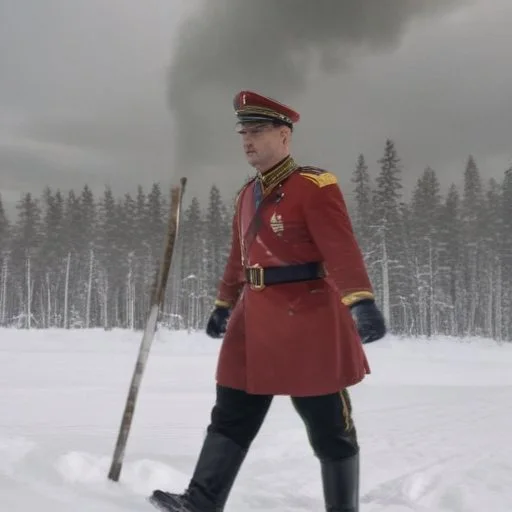
The roots of the Continuation War can be traced back to the Winter War of 1939-1940, when the Soviet Union, seeking to expand its borders, invaded Finland. Although the war ended with the signing of the Moscow Peace Treaty, Finland's territorial losses sparked a deep sense of resentment and a desire for revenge among the Finnish people. As World War II unfolded, Finland saw an opportunity to reclaim its lost territories and aligned itself with Nazi Germany, igniting the Continuation War in June 1941.
The Soviet Union, under the leadership of Joseph Stalin, had been patiently waiting for the perfect moment to strike back. That moment arrived on June 9, 1944, when the Red Army launched a surprise invasion of East Karelia, catching the Finnish forces off guard. The Soviet Union's military might, bolstered by its experience in the Eastern Front, proved too great for the Finns to withstand. A series of grueling battles ensued, but the Soviet Union's superior firepower and tactical prowess ultimately paved the way for its victory.
The Soviet Union's successful invasion of East Karelia had significant implications for the Continuation War and World War II as a whole. The recapture of these strategic territories dealt a crushing blow to Finland's military morale and paved the way for the eventual signing of the Armistice Agreement on September 19, 1944. The agreement forced Finland to cede its claims to East Karelia and other territories, marking a significant shift in the balance of power in favor of the Soviet Union.
The Soviet Union's invasion of East Karelia had a profound impact on the cultural and social fabric of the region. The influx of Soviet troops and administrators brought with it a wave of cultural and ideological changes, as the region was gradually integrated into the Soviet sphere of influence. The war also led to a massive displacement of people, as thousands of Finnish civilians fled their homes to escape the fighting.
One Finnish soldier, Unto Parvilahti, recalled the chaos and confusion of the Soviet invasion: "We were caught off guard, and our lines were quickly breached. I remember seeing the Red Army's tanks rolling in, their cannons blazing. It was a nightmare come true."
Another soldier, Ivan Petrov, a Soviet lieutenant, remembered the elation of his comrades as they pushed forward into East Karelia: "We were driven by a sense of duty and patriotism. We knew that reclaiming these territories was crucial for our country's survival. The Finnish forces put up a fierce fight, but we were determined to emerge victorious."
The Soviet Union's invasion of East Karelia set a precedent for future military actions in the region. The war marked a turning point in the Continuation War, as Finland was forced to reassess its military strategy and seek a negotiated peace. The event also had far-reaching implications for the post-war settlement, as the Soviet Union's dominance in the region was cemented.
The story of the Soviet Union's invasion of East Karelia serves as a powerful reminder of the devastating consequences of war and the importance of diplomacy in resolving conflicts. As we reflect on this pivotal moment in history, we honor the bravery and sacrifice of those who fought on both sides, and acknowledge the enduring impact of this event on the world stage.
The Continuation War between Finland and the Soviet Union was a complex and multifaceted conflict that has been interpreted in various ways by historians. Some have viewed it as a struggle for national survival, while others have seen it as a proxy war between Nazi Germany and the Soviet Union. Recent research has emphasized the agency of Finnish leaders, such as Marshal Carl Gustaf Mannerheim, in shaping the country's wartime strategy. Additionally, scholars have highlighted the importance of the Soviet Union's military reforms in the wake of the Winter War, which enabled the Red Army to mount a more effective campaign in 1944.
A closer examination of the historiography of the Continuation War reveals a stark contrast between Finnish and Soviet accounts of the conflict. Finnish historians have often portrayed the war as a heroic struggle against Soviet aggression, while Soviet historians have emphasized the war as a necessary response to Finnish collaboration with Nazi Germany. This dichotomy reflects the deeply politicized nature of historical memory in both countries.
The Soviet Union's invasion of East Karelia must be understood within the broader context of World War II. The war on the Eastern Front was a brutal and devastating conflict that drained the resources of both Nazi Germany and the Soviet Union. As the Soviet Union began to gain the upper hand, Stalin sought to secure his country's western border by reclaiming territories lost in the Winter War.
The war also had significant implications for the balance of power in Europe. The Soviet Union's victory in East Karelia marked a turning point in the war, as Finland was forced to seek a negotiated peace and Germany's position on the Eastern Front began to weaken.
The Soviet Union's invasion of East Karelia was a masterclass in political and military strategy. Stalin's leadership was characterized by a ruthless pragmatism, as he exploit ed the weaknesses of his opponents to achieve his goals. The war marked a significant shift in the balance of power in favor of the Soviet Union, as Finland was forced to cede territory and Nazi Germany's position on the Eastern Front began to weaken.
The war also highlighted the importance of diplomacy in achieving strategic objectives. The Soviet Union's ability to negotiate a favorable peace treaty with Finland, despite the latter's alliance with Nazi Germany, demonstrated the effectiveness of Stalin's diplomatic strategy.
The Soviet Union's invasion of East Karelia had a profound impact on the cultural and social fabric of the region. The influx of Soviet troops and administrators brought with it a wave of cultural and ideological changes, as the region was gradually integrated into the Soviet sphere of influence. The war also led to a massive displacement of people, as thousands of Finnish civilians fled their homes to escape the fighting.
The war also had a significant impact on the cultural identity of the region. The imposition of Soviet cultural norms and values led to a suppression of Finnish culture and language, as the region was assimilated into the Soviet Union.
The Soviet Union's invasion of East Karelia can be seen as a classic example of asymmetrical warfare, where a powerful military force confronts a much weaker opponent. The Soviet Union's superior firepower, manpower, and logistical capabilities gave it a decisive advantage over the Finnish military.
In contrast, the Finnish military's success in the Winter War was largely due to its ability to exploit the weaknesses of the Soviet Union's military strategy. The Finns' use of guerrilla warfare and ambushes allowed them to inflict significant casualties on the Soviet Union, despite being outnumbered.