


On April 29, 1945, General Heinrich von Vietinghoff, the commander of German forces in Italy, put his signature on the Surrender of Caserta, marking a crucial moment in World War II. This historic event paved the way for the Allied victory in Europe, as German forces in Italy laid down their arms, bringing an end to years of fierce fighting on the Italian front.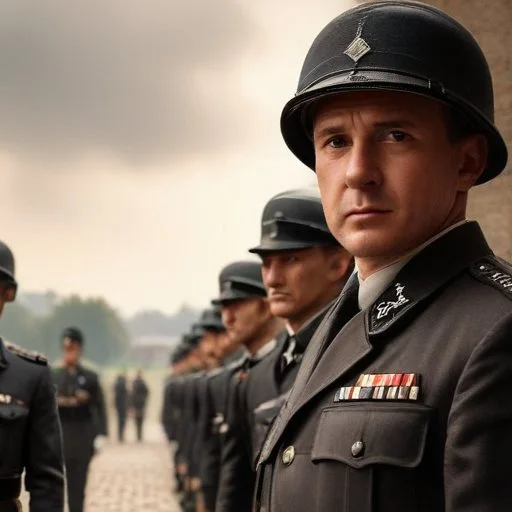
The Surrender of Caserta was the culmination of a long and brutal campaign fought on the Italian front. Following the Allied invasion of Sicily in 1943, German forces had been struggling to maintain control over the region. As the war turned in favor of the Allies, the German army found itself trapped in a desperate struggle to hold onto its last strongholds in Italy.
At the heart of the Surrender of Caserta were two men: General Heinrich von Vietinghoff, the commander of German forces in Italy, and General Harold Alexander, the Allied Commander-in-Chief of the Mediterranean Theater. Von Vietinghoff, a seasoned military commander, had been tasked with the impossible job of holding back the Allied advance, while Alexander, a skilled strategist, was determined to crush the German resistance and bring the war in Italy to a close.
The Surrender of Caserta had far-reaching consequences for the outcome of World War II. With German forces in Italy defeated, the Allies were able to focus their attention on the final push into Germany, leading to the eventual surrender of German forces on May 8, 1945. The surrender also marked a significant shift in the balance of power in Europe, as the Allies emerged victorious and the Axis powers crumbled.
The Surrender of Caserta left an indelible mark on the cultural and social fabric of Italy and beyond. As the war drew to a close, Italians began to rebuild their shattered communities, and the surrender paved the way for the country's transition from fascism to democracy. The event also had a profound impact on the global psyche, as people around the world began to envision a new world order, free from the tyranny of the Axis powers.
The Surrender of Caserta serves as a powerful reminder of the devastating consequences of war and the importance of diplomacy and cooperation. As the world looks back on this pivotal moment in history, it is clear that the surrender marked a turning point in the struggle against tyranny and oppression, paving the way for a more just and peaceful world.
As I reflect on the Surrender of Caserta, I am struck by the sheer bravery and resilience of those who fought on both sides of the conflict. It is a testament to the human spirit that even in the darkest of times, there is always hope for a better tomorrow. And as we look to the future, may we never forget the lessons of history and strive to build a world where such conflicts are a distant memory.
General Heinrich von Vietinghoff was a seasoned military commander who played a crucial role in the Surrender of Caserta. Born on December 6, 1887, in Mauer, German Empire, von Vietinghoff joined the German army at a young age and quickly rose through the ranks. Throughout his career, he demonstrated exceptional military prowess, earning him the respect of his peers and superiors alike.
Despite his unwavering commitment to the German war effort, von Vietinghoff was not immune to the deteriorating situation on the Italian front. As the Allies advanced, he was faced with the impossible task of holding back the enemy while struggling to maintain the morale of his troops.
The Italian Campaign, which lasted from 1943 to 1945, was one of the most brutal and devastating chapters of World War II. The Allies, determined to defeat the Axis powers, launched a series of ambitious assaults on the Italian peninsula, seeking to drive the Germans out of Italy and open up a new front against the enemy.
The campaign was marked by intense fighting, as both sides engaged in a fierce struggle for control of the region. From the bloody battles of Anzio and Monte Cassino to the grueling advances through the Apennine Mountains, the Italian Campaign was a testament to the bravery and resilience of the soldiers who fought on both sides.
The Surrender of Caserta had a profound impact on Italian culture, as the country began to transition from fascism to democracy. The event marked a turning point in the nation's history, as Italians began to rebuild their shattered communities and forge a new path forward.
The surrender also had a profound impact on the global cultural landscape, as people around the world began to envision a new world order, free from the tyranny of the Axis powers. The event inspired a new wave of creative expression, as artists, writers, and musicians sought to capture the essence of the moment and its implications for humanity.

The Surrender of Caserta had far-reaching economic consequences for Italy and the world at large. The defeat of German forces in Italy led to a significant shift in the balance of power, as the Allies emerged victorious and the Axis powers crumbled.
The surrender also marked the beginning of a new era of economic cooperation, as the Allies worked together to rebuild war-torn Europe and establish the foundations for a new world order. The event paved the way for the Marshall Plan, a massive economic aid package designed to stimulate economic growth and stability in Europe.
The Surrender of Caserta was a major political victory for the Allies, marking a significant turning point in the struggle against the Axis powers. The event was the culmination of a long and brutal campaign, as the Allies worked tirelessly to defeat the German military and pave the way for the eventual surrender of Germany.
The surrender also had significant implications for the post-war world order, as the Allies worked to establish a new balance of power and forge a lasting peace. The event marked a major milestone in the development of the Cold War, as the Allies and the Soviet Union began to exert their influence over the war-torn landscape of Europe.