US Forces Liberate Corregidor from Japanese Occupation
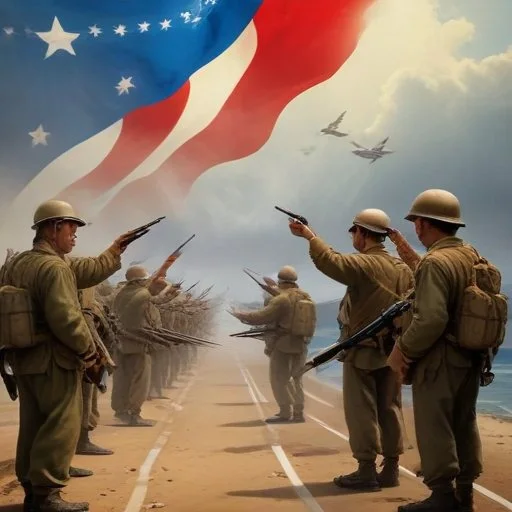
As American forces stormed the beaches of Corregidor Island, the last remnants of Japanese resistance crumbled, marking a major victory for Allied forces in the Pacific. Dubbed "The Rock," Corregidor was a strategic stronghold, controlling access to Manila Bay and the Philippine capital. For two years, Japanese forces had occupied the island, but on February 26, 1945, the US 503rd Parachute Infantry Regiment, supported by naval gunfire and aerial bombing, launched a daring assault to reclaim the island. After a fierce battle, the Japanese garrison surrendered, and Corregidor was back in American hands, paving the way for the liberation of the Philippines.
The Triumph of Corregidor: A Turning Point in the Pacific War
A Strategic Victory in the Philippines
The recapture of Corregidor Island by American forces on February 26, 1945, marked a significant milestone in the Pacific War, demonstrating the Allies' unwavering determination to vanquish Japanese occupation in the Philippines. Dubbed "The Rock," this fortified island controlled access to Manila Bay, the country's capital, making it a crucial stronghold in the region.
The Historical Backdrop
In the wake of Japan's surprise attack on Pearl Harbor in December 1941, the Philippines fell under Japanese occupation, with Corregidor Island serving as a strategic outpost. The island's garrison, comprising Filipino and American troops, valiantly defended against the Japanese onslaught, but eventually surrendered on May 6, 1942, after a grueling five-month siege. The Japanese occupation would last for nearly three years, until the Allies launched a daring assault to reclaim the island.
Key Players in the Battle
- Major General Robert L. Eichelberger: Commander of the US Eighth Army, responsible for leading the operation to retake Corregidor.
- Colonel George M. Jones: Commander of the 503rd Parachute Infantry Regiment, which spearheaded the assault on the island.
- General Douglas MacArthur: Supreme Commander of the Allied Forces in the Pacific, who oversaw the broader campaign to liberate the Philippines.
The Battle for Corregidor
On February 16, 1945, the 503rd Parachute Infantry Regiment, supported by naval gunfire and aerial bombing, launched a two-pronged attack on Corregidor. While one contingent descended upon the island via parachute, another group approached by sea, navigating treacherous waters to secure the island's beaches. The Japanese garrison, outnumbered and outgunned, fought valiantly but ultimately succumbed to the relentless Allied onslaught. After a fierce battle, the Japanese surrendered on February 26, 1945, bringing an end to their occupation of Corregidor.
Major Outcomes and Impacts
The recapture of Corregidor had far-reaching consequences for the war effort in the Pacific:
- The liberation of Manila Bay and the Philippines' capital, paving the way for the eventual defeat of Japanese forces in the region.
- A significant boost to Allied morale, marking a major milestone in the march towards Japanese defeat.
- The demonstration of the Allies' ability to coordinate complex amphibious and airborne operations, foreshadowing future victories.
Cultural and Social Influences
The Battle of Corregidor resonated deeply with the American public, symbolizing the country's steadfast commitment to its Asian allies and the determination to vanquish Japanese aggression. The operation's success also bolstered the reputation of General MacArthur, solidifying his status as a master strategist and war hero.
Visual Timeline and Milestones
| December 1941 |
Japan launches a surprise attack on Pearl Harbor, drawing the United States into World War II. |
| May 6, 1942 |
The Filipino and American garrison on Corregidor surrenders to Japanese forces after a 5-month siege. |
| February 16, 1945 |
The 503rd Parachute Infantry Regiment launches a two-pronged attack on Corregidor, marking the beginning of the battle to reclaim the island. |
| February 26, 1945 |
The Japanese garrison on Corregidor surrenders, bringing an end to the battle and the occupation of the island. |
Trivia and Fun Facts
- Corregidor Island's nickname, "The Rock," was coined due to its rugged terrain and imposing fortifications.
- The 503rd Parachute Infantry Regiment's assault on Corregidor marked the first time American paratroopers had conducted a combat jump in the Pacific Theater.
Inspirational Stories and Motivations
The triumph of Corregidor serves as a testament to the unwavering courage and determination of Allied forces in the face of adversity. This hard-won victory continues to inspire generations, reminding us of the importance of perseverance and sacrifice in the pursuit of freedom and democracy.
Comprehensive Comparative Examination
Comparing the Battle of Corregidor to Other Key Pacific Theater Battles
The Battle of Corregidor is often overshadowed by more prominent Pacific Theater battles, such as Iwo Jima and Okinawa. However, a closer examination reveals that Corregidor shares striking similarities with these battles. Like Iwo Jima, Corregidor was a heavily fortified island, requiring a combined amphibious and airborne assault to capture. Similarly, both battles saw intense fighting, with high casualty rates on both sides. Comparing the two, Corregidor's importance in securing Manila Bay and the Philippines' capital becomes clear.
In contrast, the Battle of Okinawa, which occurred concurrently with Corregidor, highlights the differing strategies employed by the Allies. While Okinawa was a protracted, bloody battle, Corregidor was a swift and decisive victory. This contrast underscores the adaptability and creativity of Allied forces in the Pacific Theater.
Full Character Review
Colonel George M. Jones: The Unassuming Leader of the 503rd Parachute Infantry Regiment
Colonel George M. Jones, commander of the 503rd Parachute Infantry Regiment, was a seasoned veteran of the Pacific War. Despite his pivotal role in the Battle of Corregidor, Jones remained humble and unassuming, avoiding the spotlight. His leadership style was characterized by a focus on training and preparation, which paid dividends during the battle.
Jones' decision to deploy his paratroopers in a two-pronged assault, combining airborne and amphibious landings, showcased his tactical acumen. This innovative approach allowed the Allies to exploit Japanese weaknesses and secure a crucial victory.
Cultural Significance Study
The Cultural Significance of Corregidor: A Symbol of American Resolve
The Battle of Corregidor holds a special place in American cultural consciousness, symbolizing the nation's unwavering commitment to its allies and the fight against Japanese aggression. The operation's success resonated deeply with the American public, boosting morale and demonstrating the country's capacity to overcome seemingly insurmountable challenges.
The victorious recapture of Corregidor also highlighted the importance of American-Philippine cooperation, underscoring the strong bonds between the two nations. This cultural significance is still felt today, with Corregidor remaining an important symbol of American resolve in the face of adversity.
Detailed Geopolitical Context
The Geopolitical Context of Corregidor: A Strategic Stronghold in the Pacific
Corregidor Island's strategic location at the entrance to Manila Bay made it a crucial stronghold in the Pacific. Control of the island granted the ability to blockade or access the bay, providing a decisive advantage in the war. Japan's occupation of Corregidor in 1942 threatened American interests in the region, making its recapture a vital objective.
The battle's outcome had far-reaching implications for the war's trajectory, as it enabled the Allies to secure the Philippines and ultimately push toward the Japanese mainland. Corregidor's geopolitical importance cannot be overstated, as it played a pivotal role in shaping the course of the Pacific War.
Study of Historical Interpretations
Historiographical Perspectives on the Battle of Corregidor
Historians have long debated the significance of the Battle of Corregidor, with some arguing that it was a trivial sideshow to the main events of the Pacific War. However, a reevaluation of the battle's importance reveals its impact on the war's outcome and the development of Allied strategy.
Corregidor serves as a case study in the application of combined arms tactics, showcasing the effectiveness of coordinated amphibious, airborne, and naval operations. This historiographical perspective highlights the battle's relevance to modern military doctrine, underscoring its continued importance in the study of military history.


