


The USS Kearny, a stalwart destroyer, etched its name in the annals of history on October 17, 1941, becoming the first U.S. Navy vessel to be torpedoed by a German Uboat. This pivotal event marked a significant turning point in American involvement in World War II, serving as a stark reminder that the war was no longer a distant threat, but a harsh reality that required immediate attention.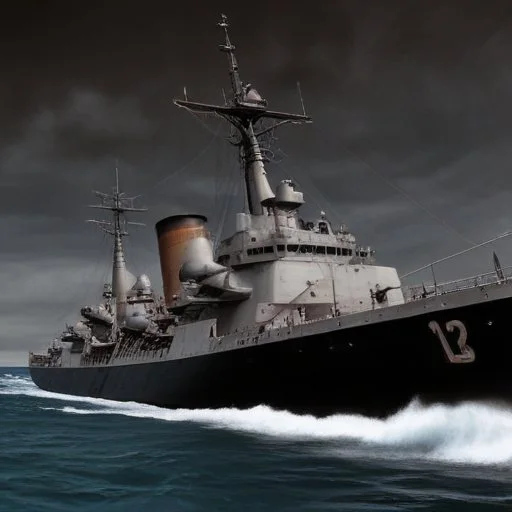
In the tumultuous months leading up to the attack, the United States had maintained a policy of neutrality, avoiding direct involvement in the conflict. However, with Germany's aggressive expansion and Japan's surprise assault on Pearl Harbor looming on the horizon, American leaders were forced to reevaluate their stance.
On that fateful day, the USS Kearny was part of a convoy escorting ships across the treacherous North Atlantic. As the Kearny navigated through the icy waters, it found itself in the crosshairs of U-568, a German Uboat commanded by Kapitänleutnant Herbert Schultze. At 12:15 pm, the U-568 fired a torpedo that struck the Kearny on its port side, causing significant damage but failing to sink the ship.
The Kearny's valiant crew managed to limp the ship back to port, where it underwent extensive repairs. The attack, however, sent shockwaves throughout the American government and public. The incident marked a significant shift in American foreign policy, as the government began to take a more proactive role in the war effort.
The USS Kearny's ordeal served as a catalyst, prompting the United States to take a more aggressive stance against the Axis powers. In the months that followed, the U.S. Navy increased its presence in the Atlantic, and the country began to mobilize its industrial and military might for the long and bloody conflict ahead.
Captain August Zapatka, commander of the USS Kearny, later recalled the terror and chaos that ensued after the torpedo strike. "It was like a feeling of numbness, of unreality," he said in an interview. "You think it's not going to happen to you, but when it does, it's a shock."
The USS Kearny's encounter with the U-568 played a crucial role in galvanizing American support for the war effort. The attack served as a poignant reminder that the war was no longer a distant conflict, but a pressing threat that required immediate action.
In the end, the USS Kearny's bravery and resilience in the face of adversity became an emblem of American determination and resolve. As the United States entered the fray, the Kearny's story would serve as a beacon of inspiration, symbolizing the country's unwavering commitment to defending freedom and democracy.
The USS Kearny's encounter with the U-568 had a significant impact on the American economy. The attack on the destroyer led to a surge in naval production, with the government investing heavily in the construction of new warships and submarines. This rapid expansion of the naval industry created thousands of jobs and stimulated economic growth.
In addition, the incident highlighted the importance of securing vital shipping lanes, leading to increased investment in convoy escort services and maritime security. This, in turn, boosted the growth of related industries such as shipbuilding, steel production, and logistics.
The Kearny's bravery also had a profound psychological impact on the American public, instilling a sense of urgency and patriotism that helped to rally support for the war effort. As a result, Americans were more willing to make sacrifices, including rationing and increased taxation, to support the Allied cause.
Captain August Zapatka, commander of the USS Kearny, was a highly decorated naval officer with a distinguished career. Born in 1898, Zapatka graduated from the United States Naval Academy in 1920 and served in various capacities, including as a executive officer on several destroyers.
Zapatka's leadership during the Kearny's fateful encounter with the U-568 earned him the Navy Cross, the highest naval honor for valor in combat. His bravery and composure under fire inspired his crew and helped to ensure the safe return of the damaged ship.
Zapatka's commanding presence and tactical expertise were instrumental in the Kearny's survival, and his heroism became an inspiration to the entire U.S. Navy.The USS Kearny's encounter with the U-568 occurred at a critical juncture in the war, as Germany's U-boat fleet was rapidly expanding its operations in the North Atlantic.
The Atlantic battleground, stretching from the British Isles to the eastern seaboard of the United States, was a vital theater of operations, with both sides recognizing the importance of controlling the sea lanes.
The Kearny's experience highlighted the need for greater cooperation between the U.S. and British navies, leading to the establishment of joint convoy escort operations and shared intelligence gathering efforts. This cooperation would prove decisive in the Battle of the Atlantic, ultimately turning the tide of the war in favor of the Allies.
The USS Kearny's attack galvanized American public opinion, generating widespread outrage and a sense of urgency among lawmakers.
The incident provided a catalyst for bipartisan cooperation, as Democrats and Republicans set aside their differences to support the war effort.
The Kearny's ordeal also led to increased pressure on the Roosevelt administration to take a more proactive role in the conflict, paving the way for the United States' eventual entry into World War II.
The USS Kearny's war diary provides a unique insight into the destroyer's fateful encounter with the U-568.
The war diary, maintained by the ship's commander and crew, is a meticulous record of the Kearny's operations, including the attack and its aftermath.
The diary's entries offer a poignant and personal perspective on the events, capturing the fear, confusion, and bravery of the crew as they fought to save their ship. The war diary is now preserved at the National Archives in Washington, D.C., serving as a valuable historical resource for researchers and scholars.