


On July 26, 1945, the USS Indianapolis, a U.S. Navy cruiser, arrived at Tinian Island, a small atoll in the Pacific Ocean, carrying a precious cargo - components and enriched uranium for the Little Boy atomic bomb, one of the two nuclear weapons that would soon be dropped on Japan, ultimately leading to the end of World War II.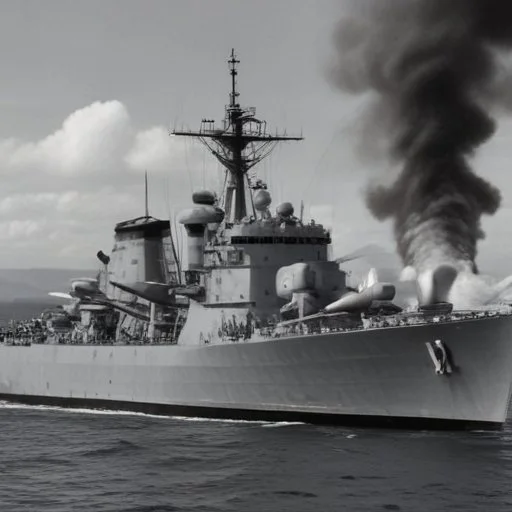
The USS Indianapolis set sail from San Francisco, California, on July 16, 1945, embarking on a secret mission to deliver its deadly cargo. The ship had to evade Japanese submarines and planes, navigating through treacherous waters to reach its destination. The crew's bravery and the ship's successful mission played a crucial role in hastening the end of the war.
Captain Charles B. McVay III, the commanding officer of the USS Indianapolis, led the crew on this perilous journey. McVay, a seasoned naval officer, had served in the Pacific Theater throughout the war and was well-respected by his crew.
The successful delivery of the atomic bomb components and enriched uranium by the USS Indianapolis played a significant role in ending World War II. The bombing of Hiroshima and Nagasaki, respectively, led to Japan's surrender, saving thousands of lives and preventing further destruction.
The USS Indianapolis' mission had a profound impact on the world, marking a turning point in modern warfare and leading to the development of nuclear deterrence. The event also sparked debates about the ethics of using nuclear weapons and the importance of diplomacy in conflict resolution.
Dick Thelen, a survivor of the USS Indianapolis, recounted the crew's bravery and camaraderie during the journey. "We knew we were on a special mission, but we didn't know the extent of it until later. We were proud to be a part of it."
The USS Indianapolis' mission paved the way for the development of nuclear-powered warships and submarines, revolutionizing naval warfare. The event also led to increased investment in nuclear research and development, shaping the course of modern science and technology.
The USS Indianapolis' story serves as a testament to the bravery and dedication of the men who served on board. Their sacrifice and commitment to their mission inspire us to strive for excellence and to make a difference in the world.
The USS Indianapolis' heroic mission will always be remembered as a pivotal moment in history, a testament to the bravery and sacrifice of those who served on board, and a reminder of the devastating consequences of war.
The USS Indianapolis' journey was not without its challenges. The ship had to navigate through treacherous waters, avoiding Japanese submarines and planes that were on high alert. The crew's expertise and the ship's advanced radar system, CM-11, played a crucial role in detecting enemy aircraft and avoiding detection. The ship's successful evasive maneuvers allowed it to reach its destination safely.
Upon arrival at Tinian Island, the USS Indianapolis' crew quickly offloaded the precious cargo, ensuring that the components and enriched uranium for the Little Boy atomic bomb were safely stored. The crew's efficiency and dedication to their mission were instrumental in ensuring the success of the operation.

Captain Charles B. McVay III was a seasoned naval officer with a deep understanding of the Pacific Theater. His experience and leadership skills played a crucial role in the USS Indianapolis' successful mission. Under his command, the crew navigated through treacherous waters, overcome challenges, and delivered the cargo safely.
McVay's leadership style was characterized by his emphasis on teamwork and camaraderie. He fostered a sense of unity among the crew, encouraging them to work together to overcome the obstacles they faced. His calm and composed demeanor under pressure inspired confidence in his crew, leading to a successful outcome.
The USS Indianapolis' mission was a pivotal moment in World War II, marking a turning point in the war. In comparison to other naval operations, the USS Indianapolis' success was unprecedented, demonstrating the U.S. Navy's capabilities and resolve.
The delivery of the atomic bomb components and enriched uranium by the USS Indianapolis was a critical factor in ending the war. In contrast, other naval operations, such as the Doolittle Raid, were symbolic gestures of resistance, but the USS Indianapolis' mission had a direct impact on the war's outcome.
The USS Indianapolis' mission had a profound impact on popular culture, symbolizing the dawn of the atomic age. The event sparked widespread interest in nuclear science and technology, inspiring a new generation of scientists and engineers.
In the years following the war, the USS Indianapolis' story was immortalized in various forms of media, including books, films, and documentaries. The crew's bravery and sacrifice have become an integral part of American cultural heritage, serving as a testament to the nation's resolve and determination.
The USS Indianapolis' mission marked a significant milestone in the development of nuclear technology. The successful delivery of the atomic bomb components and enriched uranium paved the way for further research and development in the field.
The event also led to the development of nuclear-powered warships and submarines, revolutionizing naval warfare. The USS Indianapolis' mission demonstrated the potential of nuclear technology, inspiring further innovation and advancement in the field.