


The Warsaw Uprising, a pivotal event in World War II, is famously known for the Polish resistance fighters' daring attempt to liberate their capital city from the brutal Nazi German occupation. This courageous insurrection, codenamed Operation Tempest, would go on to last 63 days, leaving an indelible mark on the city's history and the world's consciousness.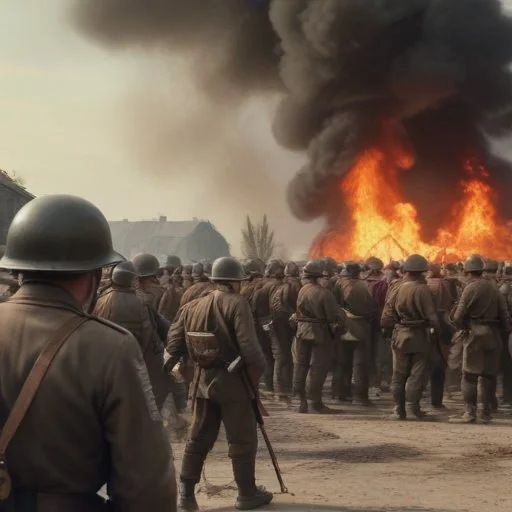
By the summer of 1944, Warsaw had been under Nazi occupation for nearly five years. The once-vibrant city was suffocating under the weight of German oppression, its people subjected to forced labor, mass deportations, and brutal suppression. Amidst this darkness, a secretive coalition of Polish resistance fighters, including the Home Army, Peoples Army, and National Armed Forces, began secretly plotting their rebellion.
At the forefront of the uprising was General Tadeusz Bór-Komorowski, the leader of the Home Army, who would become the symbol of Polish resistance. Alongside him were other notable figures, including Colonel Antoni Chruściel, who commanded the insurgency in Warsaw, and Jan Nowak-Jeziorański, a courier who risked his life to deliver vital information between the resistance groups and the Polish government-in-exile.
The Warsaw Uprising was a crushing defeat for the Polish resistance, with estimated losses ranging between 150,000 to 200,000 civilian casualties and 16,000-20,000 rebel fighters killed. The city itself was left in ruins, with over 80% of its buildings destroyed. However, the uprising also dealt a significant blow to the Nazi war machine, tying up valuable resources and manpower that could have been deployed elsewhere.
The Warsaw Uprising has become an enduring symbol of Polish bravery and defiance, inspiring numerous works of art, literature, and film. The event has also been recognized as a pivotal moment in the struggle against fascism, with many countries around the world paying tribute to the heroes of the uprising.
Janina, a young Warsaw resident, was just 19 years old when the uprising began. She risked her life to work as a courier for the resistance, delivering vital information and supplies between rebel groups. "I remember the sound of gunfire and explosions, the smell of smoke and fear," she recalls. "But I also remember the sense of hope, of fighting for something bigger than ourselves."
The Warsaw Uprising serves as a powerful reminder of the human spirit's capacity for courage and resilience in the face of overwhelming adversity. Today, the event is remembered and honored around the world, with memorials, museums, and ceremonies paying tribute to the heroes of the uprising.
In the end, the Warsaw Uprising may have been a military defeat, but it was a resounding moral victory, inspiring generations to come.
The Warsaw Uprising was not an isolated event, but rather part of a larger movement to liberate Poland from German occupation. The Polish resistance, comprising various factions and organizations, had been active since the early years of the war. One of the key figures in the resistance movement was the Polish government-in-exile, led by Prime Minister Stanisław Mikołajczyk, which played a crucial role in coordinating the uprising.
In the months leading up to the uprising, the Polish resistance had been intensifying its activities, carrying out sabotage, intelligence gathering, and guerrilla warfare against the German occupation. The decision to launch a full-scale uprising in Warsaw was made in response to the approach of the Soviet Red Army, which was poised to liberate the city from the east.
The uprising itself was a complex and multifaceted operation, involving not only the Polish resistance but also the Soviet Red Army, the Polish People's Army, and the Western Allies. Despite its ultimate defeat, the Warsaw Uprising marked a significant turning point in the war, as it drew German troops away from the front lines and weakened the Nazi grip on Poland.

One of the lesser-known heroes of the Warsaw Uprising is Captain Witold Pilecki, a Polish resistance fighter who volunteered to be imprisoned in Auschwitz concentration camp in order to gather intelligence on the Nazi regime. Pilecci, a charismatic leader and skilled organizer, played a key role in planning the uprising, using his connections with the Polish government-in-exile to secure vital supplies and support.
Despite his crucial role in the uprising, Pilecci remained humble and unassuming, often putting the needs of others before his own. His bravery and selflessness inspired countless others to join the fight against the Nazis, and his legacy continues to inspire Polish patriots to this day.
The Warsaw Uprising has had a profound impact on Polish culture, inspiring numerous works of art, literature, and music. The uprising's themes of bravery, sacrifice, and defiance in the face of overwhelming odds have resonated with Polish artists and writers, who have sought to capture its essence in their work.
One of the most famous examples of this is Andrzej Wajda's 1957 film "Kanał," which tells the story of a group of resistance fighters during the uprising. The film's stark, black-and-white imagery and poignant portrayal of the fighters' struggles have made it a classic of Polish cinema.
More recently, the Warsaw Uprising has inspired a new generation of Polish artists, who have sought to reinterpret its themes and motifs in their own work. From street art to heavy metal music, the uprising's influence can be seen in the many creative expressions of Polish culture.
The Warsaw Uprising had a devastating impact on the city's economy, with estimates suggesting that up to 80% of Warsaw's buildings were destroyed or damaged during the fighting. The city's infrastructure, including its roads, bridges, and public services, were also severely damaged, leaving millions of people without access to basic necessities like water, electricity, and sanitation.
The economic cost of the uprising was also immense, with estimated losses running into the hundreds of millions of dollars. The destruction of Warsaw's historic center, a UNESCO World Heritage Site, was particularly devastating, as it had been a major tourist attraction and economic driver for the city.
In the aftermath of the uprising, the Polish government faced the daunting task of rebuilding the city, a process that would take decades and require significant investment from the international community.
The Warsaw Uprising took place against the backdrop of a rapidly shifting geopolitical landscape. As the Soviet Red Army advanced on Warsaw, the Nazis' grip on the city was weakening, and the Polish resistance saw an opportunity to strike a decisive blow against their occupiers.
The uprising also had significant implications for the post-war settlement in Europe. The fact that the Soviet Union failed to provide significant support to the Polish resistance, despite its proximity to the city, raised questions about Soviet intentions in Eastern Europe and contributed to the growing tensions between the Soviet Union and the Western Allies.
In the end, the Warsaw Uprising marked a turning point in the war, as it drew attention to the plight of the Polish people and highlighted the need for greater cooperation between the Allies in the fight against Nazi Germany.