


On May 23, 1915, Italy shook the foundations of the Great War by declaring war on Germany, a move that would alter the course of history. This bold decision, orchestrated by the Italian government led by Antonio Salandra, marked a significant turning point in the conflict, as Italy strategically positioned itself to capitalize on Austrian territory and shift the balance of power in favor of the Allies.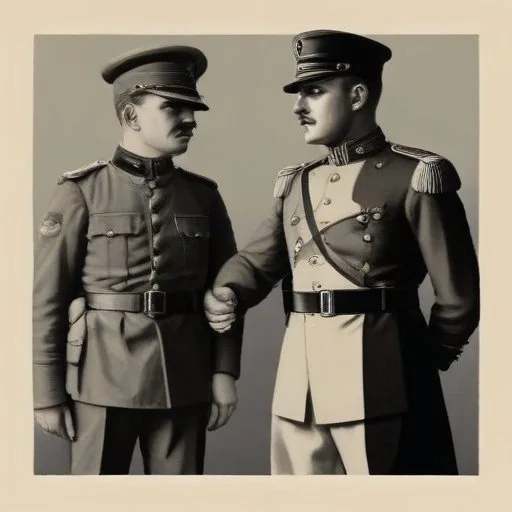
Italy's path to declaring war on Germany was marked by hesitation and secrecy. Initially, Italy had maintained a pact with the Central Powers, comprised of Germany, Austria-Hungary, and the Ottoman Empire, through the Triple Alliance. However, as the war unfolded, Italy began to question its allegiance, sensing opportunities to expand its territory and influence.
Italian leaders eyed the crumbling Austro-Hungarian Empire, seeking to annex the strategically located regions of Trentino, Trieste, and Istria. Simultaneously, they engaged in clandestine negotiations with the Entente powers, comprised of France, Britain, and Russia, to secure a more favorable treaty.
In the months leading up to the declaration of war, Italy's government secretly negotiated with the Allies, securing the Treaty of London on April 26, 1915. This pact promised Italy significant territorial gains, including the coveted regions of Trentino, Trieste, and Istria, as well as colonial territories in Africa and the Balkans.
In exchange, Italy committed to declaring war on Austria-Hungary within a month of signing the treaty, which it did on May 23, 1915. This calculated gamble would ultimately lead to Italy's declaration of war on Germany, as the country aimed to bolster its position in the conflict and reap the rewards of its new alliance.
Italy's declaration of war on Germany had far-reaching consequences, including:
Italy's declaration of war on Germany serves as a testament to the country's calculated gamble, as it navigated the treacherous landscape of World War I and emerged as a significant player on the global stage.
Italy's declaration of war on Germany can be seen as a calculated move to assert its position in the complex web of alliances that characterized World War I. Geographically, Italy's location in the Mediterranean made it a crucial player in the conflict, with the ability to exert pressure on both the Central Powers and the Allies. The country's decision to enter the war on the side of the Allies was in part driven by its desire to expand its territory and influence in the region.
Italy's strategic location also made it an attractive partner for the Allies, who sought to weaken the Central Powers by drawing Italy into the conflict. The Treaty of London, which promised Italy significant territorial gains, was a key factor in the country's decision to declare war on Austria-Hungary and eventually Germany. By entering the war, Italy was able to capitalize on its geographical position and emerge as a major power in the post-war settlement.

Sidney Sonnino: The Architect of Italy's War Effort
Sidney Sonnino, Italy's Foreign Minister, played a crucial role in negotiating the Treaty of London and convincing the Italian government to declare war on Germany. Born in 1847, Sonnino was a seasoned diplomat and statesman who had served in various roles in the Italian government. His experience and diplomatic skills made him an ideal candidate to lead Italy's foreign policy during the tumultuous years of World War I.
Sonnino's role in Italy's declaration of war on Germany was instrumental, as he worked tirelessly to secure the Treaty of London and persuade the Italian government to commit to the war effort. His diplomatic efforts ultimately paid off, as Italy emerged from the war with significant territorial gains and a newfound status as a major power.
The economic impact of Italy's declaration of war on Germany was significant, both in the short and long terms. In the short term, the war effort required a massive mobilization of resources, which put a strain on Italy's economy. The country's industrial production was redirected towards war-related goods, leading to a decline in consumer goods and a rise in inflation.
In the long term, however, Italy's entry into the war paved the way for economic growth and development. The Treaty of Saint-Germain-en-Laye, which officially recognized Italy's territorial gains, also provided for significant economic benefits, including reparations from Austria-Hungary and Germany. These gains enabled Italy to rebuild its economy and emerge as a major industrial power in the post-war period.
Italy's declaration of war on Germany on August 28, 1916, marked a significant turning point in the country's participation in World War I. The decision to declare war on Germany was not taken lightly, and was the result of months of diplomatic maneuvering and strategic calculations.
In the months leading up to the declaration of war, Italy had been engaged in secret negotiations with the Allies, seeking to secure a more favorable treaty than the one it had signed with the Central Powers in 1882. The Treaty of London, signed on April 26, 1915, promised Italy significant territorial gains, but at the cost of declaring war on Austria-Hungary.
Italy's declaration of war on Germany marked a significant escalation of its involvement in the war, and paved the way for the country's eventual emergence as a major power in the post-war settlement.
Historians have long debated the motivations behind Italy's declaration of war on Germany in 1916. Some have argued that the decision was driven by a desire to expand Italy's territory and influence, while others have seen it as a necessary response to the threat posed by the Central Powers.
Recent scholarship has shed new light on the diplomatic maneuvering that preceded Italy's declaration of war, highlighting the complex web of alliances and rivalries that characterized World War I. Historians have also emphasized the role of key figures such as Antonio Salandra and Sidney Sonnino in shaping Italy's war policy.
Despite these advances, however, the debate over Italy's motivations for declaring war on Germany remains ongoing, with different historians offering competing interpretations of this pivotal event.