


On April 26, 1915, Italy made a clandestine commitment that would alter the course of World War I. In a discreet ceremony, Italy signed the Treaty of London, binding itself to the Allied Powers and joining the fight against the Central Powers.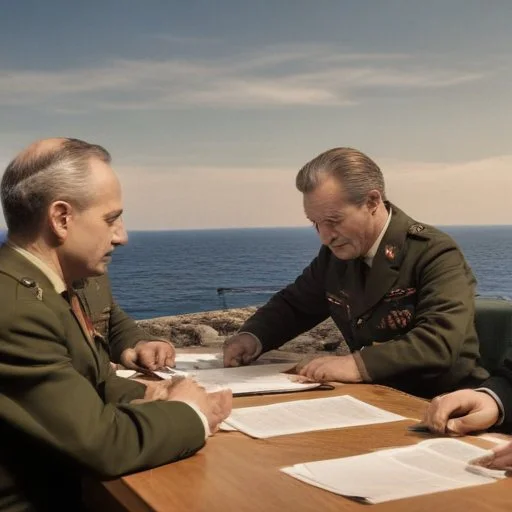
The Treaty of London was a meticulously crafted agreement between Italy and the Allied Powers – Britain, France, and Russia. The pact was the result of months of clandestine negotiations, with Italy leveraging its strategic position in the Mediterranean to secure significant territorial and economic concessions. The treaty's secrecy was paramount, as Austria-Hungary, Germany, and the Ottoman Empire would have been alarmed by Italy's sudden shift in allegiance.
The Treaty of London was the culmination of efforts by various key figures:
The Treaty of London had far-reaching consequences:
The Treaty of London remains a fascinating footnote in the history of World War I. Its secrecy and cunning diplomacy serve as a testament to the complexities of war and the pursuit of national interests.
"War is not merely a matter of equipment and numbers, but of intellect and diplomacy." – Sidney Sonnino
The road to the Treaty of London was paved by centuries of complex alliances and rivalries. Since the Congress of Vienna in 1815, Europe had been governed by a delicate balance of power, with nations constantly vying for influence and territory. Italy, in particular, had long been a focal point of strategic interest, with its unique geography and rich cultural heritage making it a coveted prize for the great powers.
In the decades leading up to World War I, Italy had been locked in a series of regional conflicts, including the Italo-Turkish War of 1911-1912, which had secured its control over Tripoli and Cyrenaica. However, these military adventures had come at a significant cost, leaving Italy's economy strained and its military depleted.
Against this backdrop, the outbreak of World War I in August 1914 presented Italy with a unique opportunity to reconsider its alliances and pursue a more advantageous strategic position. As the war raged on, Italy's leaders knew that they had to act quickly to capitalize on their country's strengthened bargaining position, culminating in the secret negotiations that would ultimately yield the Treaty of London.

Sidney Sonnino, Italy's foreign minister, was the mastermind behind the Treaty of London. A shrewd and cunning diplomat, Sonnino had spent years cultivating relationships with his European counterparts, establishing himself as a formidable negotiator.
Born in 1847, Sonnino was a product of Italy's aristocratic elite, with a family history steeped in politics and diplomacy. He was appointed foreign minister in 1914, just as the war was breaking out, and quickly set about negotiating a series of secret agreements with the Allied Powers.
Sonnino's counterpart in the British government was Edward Grey, the foreign secretary, who shared his commitment to securing a swift and decisive victory for the Allies. Together, these two seasoned diplomats crafted the intricate web of alliances that would ultimately draw Italy into the war.
The Treaty of London marked a significant shift in the balance of power on the European continent. For the first time, a major power had opted to change sides in the midst of a global conflict, sending shockwaves throughout the diplomatic community.
The treaty's impact was felt far beyond the Italian peninsula, as nations from Lisbon to Moscow and from Paris to Berlin reassessed their own strategic interests in light of Italy's sudden about-face. The treaty also underscored the growing importance of diplomacy in the modern era, demonstrating that even in the midst of war, nations could still find ways to negotiate and collaborate.
Furthermore, the Treaty of London highlighted the critical role played by middle powers like Italy, which possessed the strategic flexibility to pivot between rival alliances and exploit the rivalries of the great powers to their advantage.

The Treaty of London was not an isolated event, but rather a critical component of a broader geopolitical landscape. The war had already drawn in many of the great powers, but the addition of Italy marked a new phase in the conflict, as the Allies sought to exploit the Austrian and German weakness on the Italian front.
The treaty also underscored the ongoing struggle for dominance in the Balkans, where rival powers had long vied for influence and territory. Italy's entry into the war on the Allied side threatened to upend the fragile balance of power in southeastern Europe, sparking fears of further instability and conflict in the region.
Moreover, the treaty highlighted the growing importance of the Mediterranean as a critical theater of war, with control of the sea lanes and strategic ports becoming an increasingly vital component of military strategy.
The Treaty of London shares striking parallels with other secret agreements and diplomatic maneuvers throughout history. One such example is the Molotov-Ribbentrop Pact of 1939, in which Nazi Germany and the Soviet Union agreed to a non-aggression treaty, complete with secret protocols dividing Eastern Europe into spheres of influence.
Both the Treaty of London and the Molotov-Ribbentrop Pact demonstrate the willingness of nations to engage in clandestine diplomacy, often sacrificing long-term alliances and ideals for short-term strategic gain. These agreements also underscore the dangers of secret deals, which can have far-reaching and unintended consequences.
The comparative analysis of these two treaties offers valuable insights into the darker aspects of international relations, where nations prioritize their own interests above all else, even if it means sacrificing their values and reputations.