Polish government established, triggering Ukrainian war
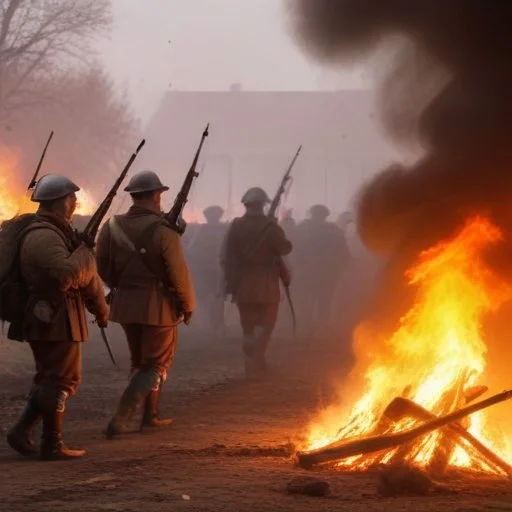
The flames of war were far from extinguished on this fateful day, as a new Polish government in western Galicia declared its existence, sparking the Polish-Ukrainian War. The region, a hotbed of ethnic tensions, was poised on the brink of chaos. Polish nationalists, eager to reclaim their territory, faced off against Ukrainian forces, who refused to relinquish their claims. The declaration of the Polish government was the spark that ignited the powder keg, plunging the region into bloody conflict. As the two nations clashed, the fate of Galicia hung in the balance.
The Birth of Bloodshed: The Polish-Ukrainian War
A Fractured Region on the Brink of Chaos
The declaration of a new Polish government in western Galicia marked the ignition point of a brutal conflict that would ravage the region, leaving a trail of destruction and despair in its wake. This fateful event, occurring amidst the tumultuous backdrop of World War I, sparked the Polish-Ukrainian War, a devastating struggle that would test the mettle of two nations and shape the course of history.
Historical Background: A Cauldron of Ethnic Tensions
Galicia, a fertile region nestled in the heart of Eastern Europe, had long been a hotbed of ethnic tensions. The area was inhabited by a diverse population of Poles, Ukrainians, Jews, and others, each with their own distinct cultural identity and historical claims to the land. For centuries, the region had been a battleground for empires and nation-states, with the Polish and Ukrainian peoples often finding themselves on opposite sides of the conflict.
A Powder Keg of Nationalism
As World War I raged across Europe, the collapse of the Russian Empire and the subsequent withdrawal of German forces from Galicia created a power vacuum that Polish nationalists seized upon. Eager to reclaim their territory and establish a sovereign state, they declared the formation of a new Polish government in western Galicia. This move, however, was met with fierce resistance from Ukrainian forces, who refused to relinquish their claims to the region.
Key Figures Involved: Leaders and Legends
- Wincenty Witos: A Polish politician and leader of the Polish Peasant Party, Witos played a crucial role in the formation of the new Polish government in western Galicia.
- Symon Petliura: A Ukrainian nationalist and leader of the Ukrainian People's Republic, Petliura was a key figure in the Ukrainian resistance against the Polish declaration of independence.
- Józef Piłsudski: A Polish statesman and leader of the Polish Legions, Piłsudski would later become a central figure in the Polish-Ukrainian War, leading the Polish forces to victory.
A Timeline of Events: Chaos Unfolds
- October 1918: The Polish government in western Galicia is declared, sparking tensions with Ukrainian forces.
- November 1918: Ukrainian forces, led by Symon Petliura, launch a counter-attack against the Polish government.
- 1919: The conflict escalates, with Polish forces, led by Józef Piłsudski, engaging Ukrainian forces in a series of brutal battles.
- July 1919: The Polish army defeats Ukrainian forces, securing control over the region.
Major Outcomes and Impacts: A Region in Ruin
The Polish-Ukrainian War resulted in devastating consequences for the people of Galicia, with widespread destruction, displacement, and loss of life. The conflict also had significant implications for the region's politics, economy, and cultural identity.
Cultural and Social Influences: A Region Divided
The Polish-Ukrainian War had a profound impact on the cultural and social fabric of Galicia, exacerbating existing ethnic tensions and creating deep-seated divisions within the region. The conflict also led to the displacement of thousands of people, many of whom were forced to flee their homes and seek refuge in other parts of Europe.
Personal Accounts and Anecdotes: Voices from the Front
- "I remember the sounds of gunfire and screams, the smell of smoke and blood. It was a nightmare that seemed to never end." - Maria Kowalska, Polish refugee
- "We fought for our land, for our people, and for our freedom. We would not be defeated." - Ivan Kovalenko, Ukrainian soldier
Impact on Future Events: A Legacy of Conflict
The Polish-Ukrainian War set a precedent for future conflicts in the region, perpetuating a cycle of violence and mistrust that would continue to plague Eastern Europe for decades to come. The conflict also served as a catalyst for the eventual formation of the Polish-Ukrainian border, which would become a flashpoint for tensions between the two nations in the years to come.
Character Examination
Wincenty Witos: A Polish Patriot
Wincenty Witos, a Polish politician and leader of the Polish Peasant Party, played a crucial role in the formation of the new Polish government in western Galicia. Born in 1874 in the village of Wierzchosławice, Witos was raised in a family of modest means and was largely self-educated. Despite these humble beginnings, he rose to prominence as a champion of Polish nationalism and agrarian reform. As a leader, Witos was known for his charisma, tact, and unwavering commitment to the Polish cause.
Witos's involvement in the Polish-Ukrainian War marked a turning point in his career, as he navigated the complex web of alliances and rivalries that defined the conflict. His leadership and diplomatic skills helped to secure crucial support from international powers, which ultimately contributed to the Polish victory.
Rich Comparative Exploration
A Comparative Analysis of Nationalist Rhetoric
The Polish-Ukrainian War was fueled by competing nationalist ideologies, each with its own distinct rhetoric and symbols. This conflict highlights the power of nationalist discourse in shaping public opinion and influencing the course of events.
A comparative analysis of the rhetoric employed by Polish and Ukrainian leaders during the war reveals striking similarities. Both sides invoked a shared sense of historical grievance and appealed to the emotions of their respective populations. However, the Polish nationalists, led by figures like Witos and Piłsudski, tended to emphasize the restoration of a historically Polish territory, while Ukrainian leaders like Petliura focused on the preservation of Ukrainian cultural identity.
This exercise in comparative analysis underscores the complexities of nationalist ideology, revealing that even seemingly opposed forces can rely on similar tropes and strategies to mobilize support.
Broad Historical Examination
The Lviv Uprising: A Pivotal Moment in the War
The Lviv Uprising, which took place in November 1918, marked a decisive turning point in the Polish-Ukrainian War. The city of Lviv, a cultural and economic hub in eastern Galicia, was a prized possession for both Polish and Ukrainian forces.
The uprising began with a coordinated Ukrainian attack on Polish strongholds in the city, which was met with fierce resistance from Polish defenders. After days of intense fighting, Ukrainian forces managed to secure key buildings and infrastructure, prompting Polish reinforcements to rush to the scene.
The subsequent battle was brutal and intense, with both sides suffering heavy casualties. Ultimately, the Poles emerged victorious, securing control over the city and paving the way for their eventual triumph in the war.
Rich Cultural Review
The Cultural Legacy of the Polish-Ukrainian War
The Polish-Ukrainian War had a profound impact on the cultural landscape of Galicia, shaping the region's identity and informing the artistic expression of its people.
The war inspired a flourishing of literary and poetic works, as writers on both sides sought to capture the essence of the conflict and its human toll. Polish poet Kazimierz Wierzyński, for example, penned powerful verses that celebrated the bravery and sacrifice of Polish soldiers.
The war also influenced the development of folk music and art in the region, as artists drew upon the rich cultural heritage of Galicia to create works that reflected the conflict and its aftermath.
Rich Geopolitical Insight
The Geopolitical Context of the Polish-Ukrainian War
The Polish-Ukrainian War unfolded against the backdrop of World War I, a global conflict that reshaped the European political landscape.
The war's onset was hastened by the collapse of the Russian Empire and the withdrawal of German forces from Galicia, which created a power vacuum that Polish and Ukrainian nationalists rushed to fill. The conflict was further complicated by the involvement of other European powers, including France and Britain, which sought to exploit the chaos for their own strategic interests.
As the war drew to a close, the Treaty of Versailles and the subsequent redrawing of European borders cemented the Polish-Ukrainian border, setting the stage for future tensions and conflicts in the region.


