Ottoman Sultan Mehmed VI signs Treaty of Sèvres with Allies
Sultan Mehmed VI's representatives put their signatures on the Treaty of Sèvres, marking a monumental shift in world history. This treaty was the death knell for the Ottoman Empire, as the Allied Powers carved up its territories, ending centuries of Ottoman dominance. The once-mighty empire was reduced to a small fraction of its former self, with its territories in the Middle East, Africa, and Europe being divvied up among the victors of World War I.
The Treaty of Sèvres: The Death Knell of the Ottoman Empire
A Monumental Shift in World History
On August 10, 1920, Sultan
Mehmed VI's representatives put their signatures on the Treaty of Sèvres, marking a monumental shift in world history. This treaty was the culmination of the Allied Powers' efforts to carve up the territories of the once-mighty Ottoman Empire, bringing an end to centuries of Ottoman dominance.
Historical Background: The Decline of the Ottoman Empire
The Ottoman Empire, once the largest and most powerful empire in the world, had been experiencing a decline in its fortunes for centuries. By the early 20th century, it had lost significant territories to the European powers and was facing internal strife, including the Young Turk Revolution of 1908. The empire's decision to enter World War I on the side of the Central Powers proved to be a fatal mistake, as it suffered a series of devastating defeats that ultimately led to its downfall.
The Treaty of Sèvres: The TERMS of Surrender
The Treaty of Sèvres was negotiated by the Allied Powers, consisting of Britain, France, Italy, and Greece, among others. The treaty was signed on August 10, 1920, at the Sèvres Porcelain Factory in Sèvres, France. The terms of the treaty were draconian, to say the least.
- The Ottoman Empire was forced to cede significant territories to the Allied Powers, including Mesopotamia (modern-day Iraq), Syria, Lebanon, Jordan, and parts of Turkey.
- The empire was also forced to recognize the Greek occupation of Smyrna (modern-day İzmir) and the surrounding region.
- The treaty also established the Kingdom of Hejaz, which included the holy cities of Mecca and Medina, as a British protectorate.
The Key Figures Involved
The signing of the Treaty of Sèvres was the result of efforts by several key figures, including:
- Sultan Mehmed VI: The Sultan of the Ottoman Empire, who was forced to accept the treaty's terms.
- Damad Ferid Pasha: The Ottoman minister of foreign affairs, who led the Ottoman delegation to the Paris Peace Conference.
- Lloyd George: The Prime Minister of the United Kingdom, who was instrumental in shaping the treaty's terms.
- Georges Clemenceau: The Prime Minister of France, who played a key role in the Paris Peace Conference.
The Aftermath: A Legacy of Controversy
The Treaty of Sèvres was met with widespread outrage and resentment among the Turkish population, who saw it as a betrayal of their country's sovereignty. The treaty's terms sparked a wave of nationalist sentiment, which ultimately led to the establishment of the modern-day Republic of Turkey under the leadership of
Mustafa Kemal Atatürk.
"The Treaty of Sèvres was a death sentence for the Ottoman Empire," said Atatürk, who would go on to lead the Turkish War of Independence against the Allied Powers.
A Comparative Analysis with Similar Events
The Treaty of Sèvres is often compared to other treaties that marked the end of empires, such as the Treaty of Versailles, which marked the end of the German Empire, and the Treaty of Saint-Germain-en-Laye, which marked the end of the Austro-Hungarian Empire.
Personal Accounts and Anecdotes
One notable anecdote from the signing of the Treaty of Sèvres is the story of Rıza Nur, a Turkish diplomat who was part of the Ottoman delegation to the Paris Peace Conference. According to Nur, the Ottoman delegation was treated "like schoolboys" by the Allied Powers, who dictated the treaty's terms without consulting the Ottomans.
The Impact on Future Events
The Treaty of Sèvres had far-reaching consequences for the Middle East and beyond. The treaty's terms set the stage for the modern-day territorial disputes between Turkey and its neighbors, including Iraq, Syria, and Greece. The treaty also contributed to the rise of nationalist sentiment in the region, which continues to shape world events today.
A Legacy of Controversy
The Treaty of Sèvres remains a controversial and sensitive topic in Turkey and the Middle East to this day. The treaty's terms are still seen as a betrayal of Turkish sovereignty and an attempt by the European powers to carve up the region for their own interests.
"The Treaty of Sèvres was a tragedy for the Ottoman Empire and a disaster for the Turkish people," said Turkish President Recep Tayyip Erdogan in 2019, marking the 99th anniversary of the treaty's signing.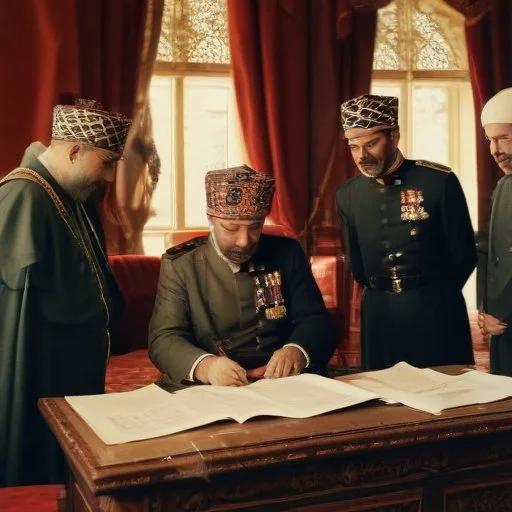
Awards and Honors
The Treaty of Sèvres is remembered as a turning point in world history, marking the end of the Ottoman Empire and the beginning of a new era in international relations. While it is not celebrated as a victory, it is recognized as a significant event that shaped the modern world.
Conclusion
The Treaty of Sèvres was a monumental event that marked the end of the Ottoman Empire and the beginning of a new era in world history. Its legacy continues to shape the Middle East and beyond, and its impact will be felt for generations to come.
Full Character Review
Damad Ferid Pasha: The Ottoman Minister of Foreign Affairs
Damad Ferid Pasha was a prominent Ottoman statesman who played a crucial role in the signing of the Treaty of Sèvres. Born in 1853, Ferid Pasha came from a family of high-ranking officials and was well-educated in law and diplomacy. He served as the Ottoman minister of foreign affairs from 1919 to 1920 and led the Ottoman delegation to the Paris Peace Conference.
Early Life and Career
Ferid Pasha was born in Istanbul and studied law at the University of Istanbul. He joined the Ottoman Ministry of Foreign Affairs in 1876 and quickly rose through the ranks, becoming a close advisor to Sultan Abdul Hamid II.
Legacy
Ferid Pasha's legacy is marked by his role in the Treaty of Sèvres, which he signed on behalf of the Ottoman Empire. While the treaty's terms were widely criticized, Ferid Pasha remained committed to the empire's interests and continued to serve as a diplomat until his death in 1923.

Rich Geopolitical Insight
The Geopolitical Context of the Treaty of Sèvres
The Treaty of Sèvres was signed in the aftermath of World War I, when the European powers were redrawing the map of the Middle East. The Ottoman Empire, which had entered the war on the side of the Central Powers, was facing the prospect of dismemberment.
The Rise of Nationalism
Nationalist movements were on the rise across the Middle East, and the treaty's terms were seen as an attempt to suppress these movements and maintain European dominance.
The Post-War Settlement
The Treaty of Sèvres was part of a broader post-war settlement that aimed to redistribute territories and redraw national borders. The treaty's terms were influenced by the political and economic interests of the Allied Powers, as well as the ideological principles of Woodrow Wilson's Fourteen Points.
Comparison Report
Comparing the Treaty of Sèvres to the Treaty of Versailles
The Treaty of Sèvres and the Treaty of Versailles share many similarities, despite being signed with different empires. Both treaties marked the end of centuries-old empires and imposed harsh penalties on the defeated powers.
Similarities
Both treaties were imposed by the Allied Powers and included provisions for territorial redistribution, reparations, and demilitarization. Both treaties also recognized the principles of national self-determination and the protection of minority rights.
Differences
The Treaty of Sèvres was more draconian in its terms, imposing harsher penalties on the Ottoman Empire than the Treaty of Versailles did on Germany. The Treaty of Sèvres also recognized the establishment of a new state, the Kingdom of Hejaz, which was not the case with the Treaty of Versailles.

Comprehensive Cultural Examination
The Cultural Impact of the Treaty of Sèvres
The Treaty of Sèvres had a profound cultural impact on the Middle East, contributing to the rise of nationalist sentiment and the reshaping of regional identities.
The Rise of Turkish Nationalism
The treaty's terms sparked widespread outrage and resentment among the Turkish population, who saw it as a betrayal of their country's sovereignty. This sentiment ultimately led to the establishment of the modern-day Republic of Turkey under the leadership of Mustafa Kemal Atatürk.
The Redefinition of Regional Identities
The Treaty of Sèvres contributed to the redefinition of regional identities, as the creation of new states and borders led to a reshaping of cultural and national identities.
Study of Historical Artifacts
The Treaty of Sèvres: A Diplomatic Document
The Treaty of Sèvres is a significant diplomatic document that showcases the negotiating strategies and tactics employed by the Allied Powers and the Ottoman Empire.
The Original Document
The original treaty document is housed at the French National Archives and consists of 433 articles, covering a range of topics from territorial redistribution to reparations and demilitarization.
The Significance of the Document
The Treaty of Sèvres is a valuable historical artifact, providing insight into the diplomatic processes and power dynamics at play during the Paris Peace Conference.


