


On November 2, 1914, the Russian Empire made a pivotal decision that would alter the course of World War I: it declared war on the Ottoman Empire. This bold move had far-reaching consequences, as it effectively closed the Dardanelles, a crucial trade route connecting the Black Sea to the Mediterranean Sea.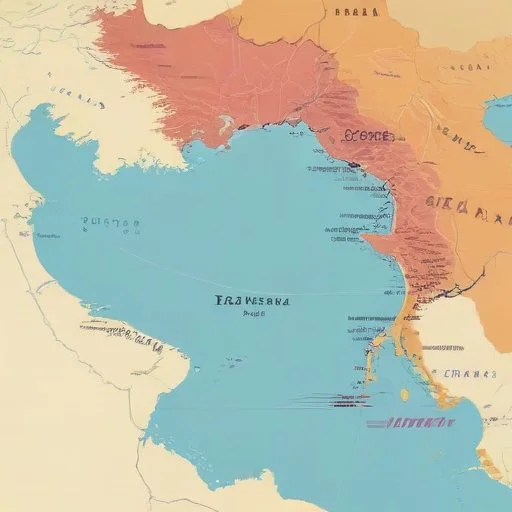
In the early stages of World War I, the complex web of alliances between European powers had created a volatile situation. Russia, allied with France and Britain, was determined to gain control of the strategic Dardanelles, which would grant it access to the Mediterranean Sea and strengthen its position in the region.
The Dardanelles, a narrow strait in northwest Turkey, was the Ottoman Empire's sole connection to the Black Sea, which was critical for its economy. The strait allowed for the exchange of goods, resources, and people between the Ottoman Empire and its allies. With the Dardanelles closed, the Ottoman Empire's ability to trade and receive essential supplies was severely crippled.
Here's a brief timeline of the events leading up to the Russian Empire's declaration of war against the Ottoman Empire:
The Russian Empire's declaration of war against the Ottoman Empire had significant consequences, including:
The war between the Russian Empire and the Ottoman Empire had a profound impact on the cultural and social fabric of both nations. It led to a surge in nationalism, as people rallied behind their respective governments and armed forces.
As the war dragged on, propaganda campaigns became increasingly intense, with both sides portraying the other as the aggressor and the enemy of civilization. The war also saw the rise of revolutionary movements, as people began to question the authority and legitimacy of their governments.
The Russian Empire's decision to declare war on the Ottoman Empire was met with mixed reactions. Some saw it as a necessary step to protect Russian interests and expand its influence in the region.
Others, however, viewed the move as a reckless and aggressive act that would only lead to further bloodshed and instability in the region. The controversy surrounding the war effort would continue to simmer, even as the conflict dragged on.
In conclusion, the Russian Empire's declaration of war against the Ottoman Empire in 1914 marked a pivotal moment in World War I. The closure of the Dardanelles had far-reaching consequences, shaping the trajectory of the war and leaving a lasting impact on the cultural and social fabric of both nations.
The war between the Russian Empire and the Ottoman Empire had a profound impact on the cultural landscape of both nations. In Russia, the war effort led to a surge in nationalist sentiment, with many artists and writers creating works that glorified the Russian military and its role in the war.
In the Ottoman Empire, the war had a devastating impact on the cultural heritage of the region. The closure of the Dardanelles led to a decline in trade and cultural exchange between the Ottoman Empire and Europe, leading to a sense of isolation and cultural stagnation.

Rasputin's influence on Tsar Nicholas II was a significant factor in the Russian Empire's decision to declare war on the Ottoman Empire. Rasputin, a mystic and faith healer, had gained a significant amount of influence over the Tsar, and was known for his bold and adventurous spirit.
Rasputin's influence extended beyond the Tsar, however, and he was known to have connections with various Russian officials and nobles. His influence was so great that many believed he was the de facto ruler of Russia, rather than the Tsar himself.
The war between the Russian Empire and the Ottoman Empire had significant economic consequences for both nations. The closure of the Dardanelles led to a decline in trade between the two nations, which had a devastating impact on the economies of both countries.
In Russia, the war effort led to a significant increase in government spending, which put a strain on the country's finances. The war also led to a decline in agricultural production, as many farmers were conscripted into the military.

The war between the Russian Empire and the Ottoman Empire took place within the context of a complex and volatile geopolitical landscape. The Balkan region, where the war began, was a hotbed of nationalist sentiment, with various ethnic and nationalist groups vying for power and influence.
The war was also influenced by the alliances between European powers, with Russia, France, and Britain on one side, and Germany, Austria-Hungary, and the Ottoman Empire on the other. This complex web of alliances made it difficult for either side to back down, leading to a prolonged and bloody conflict.
Historians have debated the causes and consequences of the war between the Russian Empire and the Ottoman Empire for decades. Some have argued that the war was a result of the imperialist ambitions of both nations, while others have seen it as a struggle for survival in a rapidly changing world.
Recent historians have also highlighted the role of nationalist sentiment and ethnic tensions in the war, arguing that these factors played a significant role in the escalation of the conflict.