


On August 10, 1977, the people of New York City breathed a collective sigh of relief as David Berkowitz, aka the Son of Sam, was finally apprehended by police in Yonkers, New York. Berkowitz's arrest marked the end of a year-long terror campaign that left six people dead and seven others wounded, earning him the notorious moniker "The .44 Caliber Killer."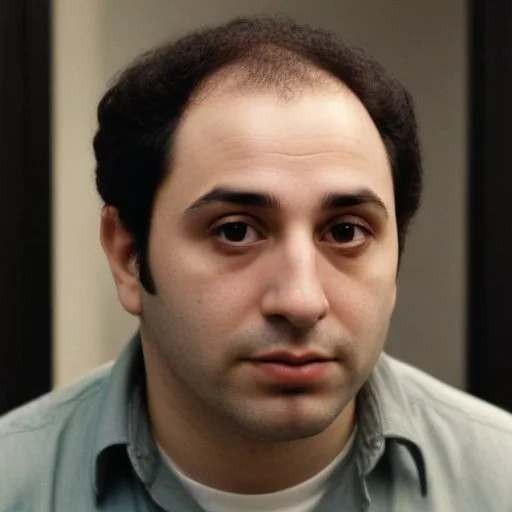
Berkowitz's modus operandi was as calculated as it was chilling: targeting young women with long, dark hair, usually in parked cars, and firing at point-blank range with his .44 caliber handgun. This eerie pattern of attacks earned him widespread media attention and public fear, as the city struggled to make sense of the seemingly random and motiveless killings.
Despite an unprecedented level of media coverage and public attention, the police investigation into the Son of Sam killings was slow to gain traction. Berkowitz's clever use of misleading letters and cryptic messages sent to the press and police departments only added to the confusion, leading to a series of false leads and dead ends. It wasn't until a parking ticket issued in Yonkers on July 31, 1977, that the police finally had their breakthrough, tracing the ticket to Berkowitz's car and subsequently his arrest.
The Son of Sam killings had a profound impact on the cultural psyche of New York City in the late 1970s. As the killings continued, a climate of fear and paranoia pervaded the city, with women feeling particularly vulnerable to attack. This led to a shift in social attitudes, as people became more cautious and security-conscious, and the city's nightlife and social scene began to change. The Son of Sam killings also sparked a renewed debate about gun control, mental health, and the role of the media in covering violent crime.
David Berkowitz's reign of terror may have ended on August 10, 1977, but his legacy continued to haunt the city long after his arrest. The Son of Sam killings remain one of the most infamous and traumatic events in New York City's history, serving as a dark reminder of the horrors that humanity is capable of inflicting. As a cultural phenomenon, the Son of Sam killings continue to fascinate and disturb, inspiring countless books, films, and documentaries that explore the twisted mind of a serial killer.
In the end, it was not the motiveless killings or the cryptic messages that defined the Son of Sam, but the sense of relief and closure that his arrest brought to the people of New York City. As the city slowly began to rebuild and heal, the legacy of David Berkowitz served as a somber reminder of the dangers that lurked in the shadows, waiting to strike.
Born on June 1, 1953, in Brooklyn, New York, David Berkowitz grew up in a tumultuous household with a troubled childhood. His adoptive parents, Nathan and Pearl Berkowitz, struggled to provide a stable environment, and David was often left to fend for himself.
Despite his intellectual abilities, Berkowitz dropped out of college and joined the US Army, where he served in the Army Reserve. However, his military career was marked by disciplinary issues and a lack of direction.
The exact motivations behind Berkowitz's transformation into the Son of Sam remain unclear, but experts have suggested that a combination of factors, including his troubled childhood, social isolation, and a fascination with the occult, contributed to his descent into madness.

The Son of Sam's reign of terror had a profound impact on New York City's nightlife, as people became increasingly fearful of venturing out after dark.
Clubs and bars reported a significant decline in attendance, and the city's thriving music scene began to suffer. Many residents opted to stay indoors, altering their social habits and routines to avoid becoming the next victim.
The Son of Sam's attacks also led to a shift in popular culture, with the rise of "stay-at-home" entertainment and a renewed focus on personal safety.
One of the most fascinating aspects of the Son of Sam case is the series of cryptic letters sent by Berkowitz to the police and press.
These letters, often written in a bizarre, almost poetic style, hinted at Berkowitz's twisted motivations and provided a glimpse into the mind of a serial killer.
"Blood and death to all those who are lucky enough to be killed by me." wrote Berkowitz in one letter, providing a chilling insight into his psyche.

The breakthrough in the Son of Sam case came on July 31, 1977, when a parking ticket was issued to a yellow Ford Galaxie in Yonkers, New York.
Police discovered that the car belonged to David Berkowitz, and a subsequent search of his home revealed a treasure trove of evidence, including the .44 caliber handgun used in the attacks.
The parking ticket, often overlooked in the narrative of the Son of Sam, played a crucial role in bringing an end to Berkowitz's reign of terror.
The Son of Sam killings marked a significant shift in social attitudes towards personal safety and security.
In the aftermath of the attacks, women began to take greater precautions when going out at night, and the city's residents became more vigilant and aware of their surroundings.
The Son of Sam case also highlighted the importance of community policing and neighborhood watch programs, as people came together to reclaim their streets and combat crime.