


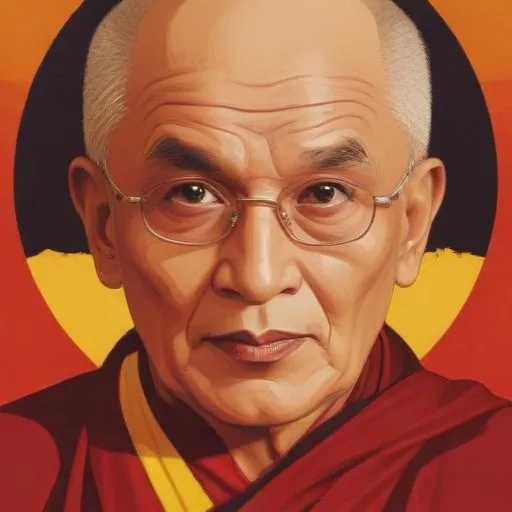
The spiritual leader of Tibetan Buddhism, guiding millions on a path of compassion and inner peace, and advocating for Tibetan autonomy.
The 9th Dalai Lama, Lungtok Gyatso, was born on December 1, 1805, near the monastery of Dan Chokhor in Tibet. He was born under auspicious signs, and his early life was marked by indications of his spiritual significance, leading to his identification as the reincarnation of the Dalai Lama.
In 1808, Lungtok Gyatso was examined by Tibetan officials, including the Qing representatives, the ambans, and was ultimately identified by the Seventh Panchen Lama, Gedun Choekyi Nyima, who performed the tonsure ceremony and gave him the name Lobzang Tenpai Wangchuk Lungtok Gyatso.
In 1810, at the age of five, Lungtok Gyatso was enthroned at the Potala Palace on the Golden Throne of the Ganden Podrang Government. During his short reign, he demonstrated a keen interest in spirituality and showed great potential as a leader.
In 1812, the English explorer Thomas Manning met with the 9th Dalai Lama, who was then seven years old. Manning was struck by the young Dalai Lama's beauty, simplicity, and unaffected manners, describing him as "affectingly beautiful" and "of a gay and cheerful disposition."
Also in 1812, the Seventh Panchen Lama gave the young Dalai Lama the vows of novice monk in Lhasa, further solidifying his spiritual path.
Tragically, Lungtok Gyatso's life was cut short when he passed away on March 6, 1815, at the age of nine. He remains the only Dalai Lama to have died in childhood.
Despite his short reign, the 9th Dalai Lama left an indelible mark on Tibetan Buddhism and the institution of the Dalai Lama. His life serves as a poignant reminder of the importance of spiritual leadership and the significance of the Dalai Lama in Tibetan society.
The 9th Dalai Lama, Lungtok Gyatso, may have had a short life, but his impact on Tibetan Buddhism and the institution of the Dalai Lama is undeniable. His story serves as a testament to the enduring power of spirituality and leadership, inspiring generations to come.
91 Years Old
The spiritual leader of Tibetan Buddhism, advocating for peace, compassion, and human rights, while guiding millions on a path of inner peace and enlightenment.
Born in 1869
Indian freedom fighter, activist, and philosopher who led India to independence from British rule through non-violent civil disobedience, inspiring civil rights movements worldwide.
97 Years Old
A prominent leader in the civil rights movement, advocating for racial equality and social justice through nonviolent means, leaving a lasting impact on American history.
Born in 1918
A South African lawyer and politician who fought against apartheid, becoming the country's first black president and a symbol of racial reconciliation, earning a Nobel Peace Prize. He's a beacon of hope and freedom.
81 Years Old
A democracy icon and human rights activist, she led the fight against Myanmar's military rule and was awarded the Nobel Peace Prize in 1991.
