


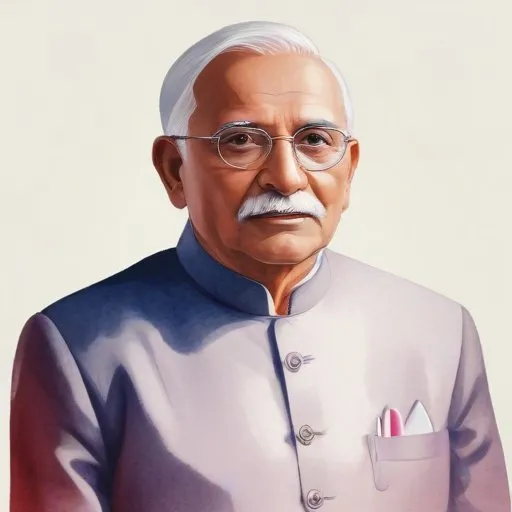
Indian educator and politician who played a key role in the country's independence movement and was a prominent figure in the Communist Party of India, advocating for workers' rights and social justice.
A. K. Gopalan, affectionately known as AKG, was a stalwart Indian communist politician who left an indelible mark on the country's political landscape. As one of the 16 Communist Party of India members elected to the first Lok Sabha in 1952 and a founding member of the Communist Party of India (Marxist), Gopalan's legacy is woven into the fabric of India's struggle for independence and social justice.
Born on October 1, 1904, in Peralasseri, Kannur District of Northern Kerala, AKG was educated at Basel Evangelical Mission Parsi High School and Government Brennen College in Thalassery. His early life was marked by a strong sense of social responsibility, which was further exacerbated by Mahatma Gandhi's independence movement.
Gopalan's involvement in the Khilafat Movement, a Muslim-led agitation against the British colonial powers, marked a significant turning point in his life. He became a dedicated full-time social and political worker, eventually joining the Indian National Congress in 1927. His participation in the Khadi Movement and the upliftment of Harijans (outcastes) showcased his commitment to social justice.
AKG's exposure to communism during his imprisonment for participating in the Salt Satyagraha in 1930 would change the course of his life. He became a member of the Congress Socialist Party and later the Communist Party of India (CPI) when it was established in Kerala in 1939. Gopalan's leadership in the hunger march from Malabar to Madras in 1936 and the Malabar Jatha in support of the movement for responsible government in Travancore cemented his reputation as a fearless champion of the people.
In a defiant act, AKG led a procession through the public road in front of the Kandoth Thiyya caste Temple in Palliyara, near Payyanur, Kannur, challenging the strongest caste system in North Kerala. This bold move enabled the lower caste people to walk on a public road, which was previously denied to them by the Thiyyar chiefs.
Gopalan's unwavering dedication to the communist ideology led to his role as a founding member of the Communist Party of India (Marxist) in 1964. This marked a significant milestone in Indian politics, as the CPI(M) emerged as a strong force in the country's Left-wing movement.
A. K. Gopalan's life and legacy serve as a testament to his unwavering commitment to social justice, equality, and the empowerment of the marginalized. As a pioneer of India's Left-wing movement, his contributions continue to inspire generations of social and political activists. Through his unrelenting struggle against casteism, imperialism, and capitalist exploitation, AKG has left an indelible mark on India's history.
A. K. Gopalan's life is a testament to his unwavering dedication to social justice, equality, and the empowerment of the marginalized. As a pioneer of India's Left-wing movement, his contributions continue to inspire generations of social and political activists.
Born in 1909
Indian theorist and politician who served as the first Chief Minister of Kerala, known for his role in implementing land reforms and promoting socialist policies in the state. He was a key figure in Indian communism and played a significant role in shaping the country's political landscape.
85 Years Old
Indian Minister of Defence from 2006 to 2014, known for his efforts to modernize the Indian military and strengthen national security. He played a key role in shaping India's defence policies.
74 Years Old
Leader of the Communist Party of India (Marxist), a prominent left-wing political party, and a vocal critic of neoliberal policies and Hindu nationalism. Known for his strong oratory skills and unwavering commitment to socialist ideals.
Born in 1914
The 6th Chief Minister of West Bengal, a stalwart of Indian communism, led the state for 23 years, implementing land reforms and promoting industrialization. He was a key figure in Indian politics, known for his pragmatic approach and secular values.
