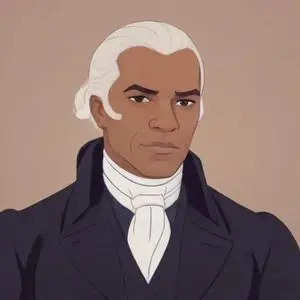
Aaron Burr: The Infamous Duelist and Third Vice President of the United States
A Life of Controversy and Politics
Aaron Burr, one of America's most infamous Founding Fathers, is remembered for his tumultuous political career and the legendary duel that shook the nation. As the third Vice President of the United States, Burr's life was marked by controversy, public feuds, and a legacy that continues to fascinate historians and the public alike.
Early Life and Education
Born on February 6, 1756, in Newark, New Jersey, Burr was the son of a prominent family. He studied theology at Princeton University, where he developed a passion for law and politics. After graduating, he began his career as a lawyer and soon found himself drawn to the patriotic cause, joining the Continental Army as an officer in 1775.
A Rising Star in Politics
After the Revolutionary War, Burr's political career took off. He became a leading figure in the Jeffersonian Democratic-Republican Party and was elected to the United States Senate in 1791, where he served until 1797. In 1800, he ran as the Democratic-Republican vice-presidential candidate, resulting in an electoral college tie with
Thomas Jefferson. Although Jefferson was eventually declared the winner, Burr became his vice president due to receiving the second-highest share of votes.
The Fateful Duel
Burr's most infamous moment came on July 11, 1804, when he engaged in a duel with
Alexander Hamilton, the former Secretary of the Treasury and his long-time political rival. The duel, which took place in Weehawken, New Jersey, resulted in Hamilton's fatal shooting. Burr's motives behind the duel remain unclear, but it marked the beginning of his downfall in public opinion.
Later Life and Legacy
After the duel, Burr's political career began to unravel. He was charged with murder in New York and New Jersey, but was eventually acquitted. He spent the remainder of his life practicing law and pursuing business ventures, including the establishment of the Manhattan Company in 1799. Burr died on September 14, 1836, at the age of 80, leaving behind a complex and multifaceted legacy.
Philosophical Contributions and Beliefs
Burr was a staunch supporter of individual liberties and states' rights. He believed in the importance of a strong central government, while also advocating for the rights of the common man. His views on slavery were nuanced, having owned slaves himself, but also supporting a bill to end slavery in New York in 1785.
Personal Milestones and Key Life Events
- February 6, 1756: Born in Newark, New Jersey
- 1775: Joined the Continental Army as an officer
- 1785: Elected to the New York State Assembly
- 1791: Elected to the United States Senate
- 1799: Founded the Manhattan Company
- 1800: Ran as the Democratic-Republican vice-presidential candidate
- 1804: Engaged in the duel with Alexander Hamilton
- September 14, 1836: Died at the age of 80
Influence on Modern Society
Burr's legacy continues to shape American politics and society. His duel with Hamilton highlights the dangers of political rivalries and the importance of civility in public discourse. His contributions to the development of the Manhattan Company paved the way for modern urban infrastructure. Burr's complex persona serves as a reminder of the multifaceted nature of human beings, even those who have shaped the course of history.
Trivia and Fun Facts
- Burr was known for his flamboyant fashion sense, often wearing bright colors and elaborate hairstyles.
- He was a skilled linguist, speaking fluently in French, Spanish, and Italian.
- Burr was a passionate advocate for women's education, supporting the establishment of the first women's college in New York City.
Historical Context and Legacy
Aaron Burr's life was a microcosm of the tumultuous early years of the United States. His rise to power, marked by controversy and public feuds, serves as a reminder of the complexities of human nature. As we reflect on his legacy, we are reminded of the importance of understanding the multifaceted nature of historical figures, acknowledging both their achievements and their flaws.
FAQ
What were Aaron Burrs accomplishments as Vice President of the United States?
Aaron Burr served as the 3rd Vice President of the United States from 1801 to 1805, during which he played a key role in shaping the countrys early development.
What led to Aaron Burrs duel with Alexander Hamilton?
Aaron Burrs duel with Alexander Hamilton in 1804 was the result of a long-standing feud between the two, fueled by political and personal differences.
What were Aaron Burrs military achievements?
Aaron Burr served as a colonel in the Continental Army during the American Revolutionary War, participating in several key battles, including the Battle of Quebec.
What were Aaron Burrs later years like?
After his vice presidency, Aaron Burr traveled extensively and practiced law, eventually returning to the United States, where he died in 1836.
How did Aaron Burrs legacy shape American politics?
Aaron Burrs legacy continues to influence American politics, with his duel with Hamilton serving as a cautionary tale about the dangers of political rivalries.