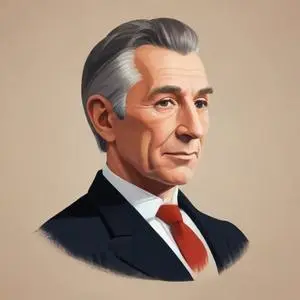
James Monroe: The Architect of American Expansion
A Legacy of Diplomacy and Stewardship
James Monroe, the fifth President of the United States, is remembered as the chief architect of American expansion and the last of the Founding Fathers to hold the office. His presidency, which spanned from 1817 to 1825, was marked by the Era of Good Feelings, a period of relative calm and prosperity that saw the country emerge from the tumultuous years of the War of 1812.
The Shaping of American Foreign Policy
Monroe's most enduring legacy is the Monroe Doctrine, a foundational principle of American foreign policy that rejected European colonialism in the Americas. This bold assertion of hemispheric supremacy, enshrined in his 1823 annual address to Congress, marked a seismic shift in the country's relationship with the Old World. By drawing a line in the sand against European encroachment, Monroe effectively established the United States as a global power broker, securing its place among the ranks of the world's great nations.
A Life of Public Service
Born on April 28, 1758, in Westmoreland County, Virginia, Monroe was a child of the Enlightenment, instilled with a deep sense of duty and civic responsibility. He served in the Continental Army during the American Revolutionary War, where his bravery and leadership earned him the respect of his peers. Subsequently, he studied law under the tutelage of
Thomas Jefferson, a mentorship that would shape his political worldview and fuel his ascent to prominence.
Early Forays into Politics
Monroe's entry into politics was marked by his election as a delegate to the Virginia Ratifying Convention, where he opposed the ratification of the United States Constitution. Unfazed by this early setback, he went on to serve in the United States Senate, where he became a leader of the Democratic-Republican Party. His diplomatic acumen and negotiating skills soon earned him a permanent place in the nation's capital, with stints as U.S. ambassador to France and Britain, as well as Secretary of State and Secretary of War.
The Shaping of American Identity
During his presidency, Monroe oversaw a period of unprecedented growth and territorial expansion. He supported the Adams-Onís Treaty, which secured Florida from Spain, and oversaw the Missouri Compromise, which admitted Missouri as a slave state and prohibited slavery in the Louisiana Territory north of the 36°30' parallel.
Personal Milestones and Key Life Events
- Married to Elizabeth Kortright Monroe, with three children: Eliza, James, and Maria
- Survived by his wife, who died in 1830, and two daughters, Eliza and Maria
- Returned to his Virginia estate, Oak Hill, after leaving office in 1825, where he spent the remainder of his life
Legacy and Impact
James Monroe's presidency marks a turning point in American history, a moment of consolidation and expansion that set the stage for the country's emergence as a global superpower. His commitment to American sovereignty, his advocacy for westward expansion, and his championing of the Monroe Doctrine have cemented his place among the pantheon of great American leaders.
Visual Timeline and Milestones
- 1758: Born on April 28th in Westmoreland County, Virginia
- 1775: Serves in the Continental Army during the American Revolutionary War
- 1780-1783: Studies law under Thomas Jefferson
- 1790-1794: Serves in the United States Senate
- 1794-1796: Serves as U.S. ambassador to France
- 1799-1802: Serves as Governor of Virginia
- 1811-1817: Serves as Secretary of State under President James Madison
- 1817-1825: Serves as the fifth President of the United States
- 1831: Dies on July 4th at Oak Hill, his Virginia estate
In conclusion, James Monroe's life and legacy are a testament to the enduring power of vision, leadership, and statesmanship. As the last of the Founding Fathers to occupy the highest office in the land, he embodied the ideals of American exceptionalism, guiding the nation through a period of unparalleled growth and transformation.
FAQ
What were James Monroes accomplishments as President of the United States?
James Monroe is known for his Monroe Doctrine, which stated that the United States would not tolerate further European colonization in the Americas. He also oversaw the acquisition of Florida from Spain.
What were James Monroes early years like?
James Monroe was born in 1758 in Virginia and attended the College of William & Mary. He later served in the Continental Army during the American Revolutionary War.
How did James Monroes foreign policy shape Americas role in the world?
James Monroes foreign policy emphasized American independence and sovereignty, setting a precedent for future U.S. presidents and shaping the countrys role in international relations.
What were James Monroes domestic achievements?
James Monroe is credited with reducing national debt, strengthening the U.S. economy, and promoting infrastructure development, including the construction of roads and canals.
How did James Monroes presidency shape the development of the United States?
James Monroes presidency marked a significant period of growth and expansion for the United States, setting the stage for westward expansion and the countrys rise as a global power.