


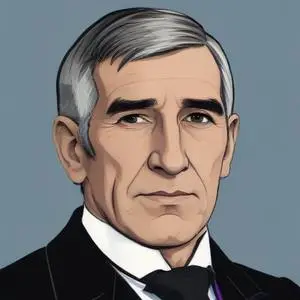
The first president to die in office, serving for only one month, and known for being the oldest president elected until Ronald Reagan. He was a military hero in the War of 1812 and later a senator and governor.
William Henry Harrison, the ninth President of the United States, is remembered for his brief yet significant tenure in office, which lasted from March 4 to April 4, 1841. He holds the unfortunate distinction of being the first U.S. President to die in office, leading to a constitutional crisis that would shape the country's future.
Born on February 9, 1773, in Charles City County, Virginia, Harrison was the youngest of seven children to Benjamin Harrison V, a Founding Father and signer of the Declaration of Independence. Harrison's early life was marked by a strong sense of duty and public service, which led him to pursue a career in the military.
In 1794, Harrison participated in the Battle of Fallen Timbers, a decisive American victory that brought an end to the Northwest Indian War. This early success propelled him to prominence, earning him the respect of his peers and the recognition of his superiors. His military prowess continued to grow, and in 1811, he led a force against Tecumseh's confederacy at the Battle of Tippecanoe, where he earned the nickname "Old Tippecanoe."
Harrison's political career began in 1798, when he was appointed as secretary of the Northwest Territory. His dedication and leadership skills quickly earned him recognition, and in 1799, he was elected as the territory's nonvoting delegate in the U.S. House of Representatives.
Over the years, Harrison continued to build his political reputation, serving as governor of the Indiana Territory from 1801 to 1812 and negotiating numerous treaties with Native American tribes, resulting in the acquisition of millions of acres of land. His experience and leadership skills made him an attractive candidate for public office, and in 1824, he was elected to the U.S. Senate.
After a brief stint as minister plenipotentiary to Gran Colombia, Harrison returned to private life in Ohio, only to be nominated as one of several Whig Party nominees in the 1836 U.S. presidential election. Although he lost to Martin Van Buren, his popularity and reputation continued to grow, ultimately leading to his nomination as the Whig Party candidate in the 1840 presidential election.
Harrison's presidency, though brief, was marked by significant events that would shape the country's future. His inaugural address, delivered on a cold and rainy day, lasted nearly two hours, and he contracted pneumonia, which ultimately led to his death just one month into office.
The circumstances of Harrison's death led to a constitutional crisis, as the issue of presidential succession was not fully defined in the U.S. Constitution at the time. Vice President John Tyler, who succeeded Harrison, established the precedent that the VP would assume the presidency, setting a crucial precedent for future succession crises.
Despite his short time in office, Harrison's legacy continues to be felt. He was the last president born as a British subject in the Thirteen Colonies, and his paternal grandson, Benjamin Harrison, would later become the 23rd President of the United States.
William Henry Harrison's life may have been cut short, but his impact on American history continues to be felt. His military prowess, leadership skills, and dedication to public service have made him an important figure in the country's development.
Born in 1790
The first vice president to assume the presidency after the death of the incumbent, serving from 1841 to 1845 and annexing the Republic of Texas. He's known for his strong states' rights views and being the first president born after the American Revolution.
Born in 1795
The 11th President of the United States was a strong leader who aggressively expanded the country's territory through the annexation of Texas and the Mexican-American War, nearly doubling the size of the US. He's also known for being a strong advocate for Manifest Destiny.
Born in 1784
The 12th President of the United States was a military hero who led the country to victory in the Mexican-American War, and later became a short-lived president. He's known for his strong leadership and sudden death in office.
Born in 1800
The 13th President of the United States, a member of the Whig party, is known for being a compromise candidate and signing the Compromise of 1850, which attempted to address the issue of slavery in new states. He's also notable for being one of the lesser-known presidents in U.S. history.
Born in 1767
A fiery leader who expanded democracy and shaped the country's economy, known for his populist policies and controversial decisions, including the forced relocation of Native Americans.
Born in 1777
A skilled orator and compromiser who played a crucial role in shaping the country's early development, particularly through his "American System" economic plan. He's also known for his numerous presidential bids and influential leadership in the Senate.
Born in 1782
A renowned lawyer and politician who served as the 14th United States Secretary of State, known for his exceptional oratory skills and influential role in shaping the country's early development.
Born in 1767
The 6th President of the United States was a skilled diplomat and leader who played a key role in shaping America's foreign policy and expansion. He's also known for being the son of a president and a president himself, making him part of a unique American political dynasty.
