


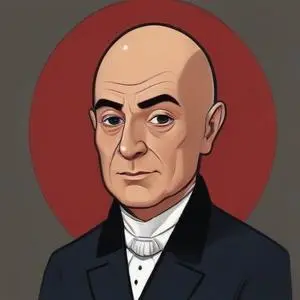
The 6th President of the United States was a skilled diplomat and leader who played a key role in shaping America's foreign policy and expansion. He's also known for being the son of a president and a president himself, making him part of a unique American political dynasty.
Known as the sixth President of the United States, John Quincy Adams was a shrewd statesman, politician, diplomat, lawyer, and diarist who navigated the intricate landscape of American politics with finesse. From 1825 to 1829, Adams helmed the presidency, leaving an indelible mark on the country's foreign policy and domestic affairs.
Born on July 11, 1767, in Braintree, Massachusetts, Adams was the eldest son of John Adams, the second President of the United States, and Abigail Adams. His early life was deeply influenced by his father's diplomatic career, which took the family on extensive travels across Europe. This exposure instilled in Adams a deep understanding of international relations, languages, and cultures.
In 1794, Adams began his foray into politics when President George Washington appointed him as the U.S. ambassador to the Netherlands. Over the next several years, Adams held high-ranking diplomatic posts, eventually becoming a member of the United States Congress, representing Massachusetts in both chambers. His versatility and diplomatic prowess earned him recognition, and in 1802, he was elected to the United States Senate.
Adams' differences with the Federalist Party over foreign policy led to a rift, and he was denied reelection to the Senate in 1804. This setback did not deter him, and he continued to build his reputation as a skilled diplomat and statesman. In 1809, President James Madison appointed Adams as the U.S. ambassador to Russia, where he played a crucial role in negotiating an end to the War of 1812.
In 1817, President James Monroe selected Adams as his secretary of state, a position he held until 1825. During this tenure, Adams negotiated the Adams-Onís Treaty, which led to the American acquisition of Florida. He also played a key role in formulating the Monroe Doctrine, a cornerstone of U.S. foreign policy that emphasized American opposition to European colonization in the Western Hemisphere.
In 1824, Adams was elected as the sixth President of the United States, defeating Andrew Jackson in a highly contested election. During his presidency, Adams focused on internal improvements, tariffs, and the development of infrastructure. He also supported the growth of education and sciences, advocating for the establishment of a national observatory.
Adams was a prolific writer and maintained a detailed diary throughout his life. He was also known for his strong advocacy for the abolition of slavery. After leaving office, Adams returned to Congress, serving as a representative from Massachusetts until his death on February 23, 1848.
Today, John Quincy Adams is remembered as a shrewd statesman, diplomat, and politician who left an indelible mark on American history. His commitment to public service, his diplomatic prowess, and his vision for a strong, united America continue to inspire generations of Americans.
Born in 1732
The first President of the United States, a military hero who led the country to independence, and set the standard for the office of the presidency. He's known for his honesty, integrity, and leadership skills.
Born in 1743
The principal author of the Declaration of Independence and a strong advocate for individual liberties and limited government, shaping America's foundational principles. He oversaw the Louisiana Purchase, doubling the country's territory.
Born in 1751
The 4th President of the United States, often referred to as the "Father of the Constitution," played a crucial role in drafting the US Constitution and Bill of Rights, shaping the country's government and laws. He was a strong advocate for individual liberties and limited government power.
Born in 1758
The 5th President of the United States was a skilled military leader and statesman who oversaw the acquisition of Florida from Spain and issued the Monroe Doctrine, a policy of opposing European colonization in the Americas. He is also known for being the last of the Founding Fathers to hold the presidency.
Born in 1767
A fiery leader who expanded democracy and shaped the country's economy, known for his populist policies and controversial decisions, including the forced relocation of Native Americans.
Born in 1782
The first president born after American independence, he's known for being a skilled politician and statesman who navigated the country through the Panic of 1837. He's also remembered for being the first president born a citizen of the United States.
Born in 1773
The first president to die in office, serving for only one month, and known for being the oldest president elected until Ronald Reagan. He was a military hero in the War of 1812 and later a senator and governor.
Born in 1790
The first vice president to assume the presidency after the death of the incumbent, serving from 1841 to 1845 and annexing the Republic of Texas. He's known for his strong states' rights views and being the first president born after the American Revolution.
