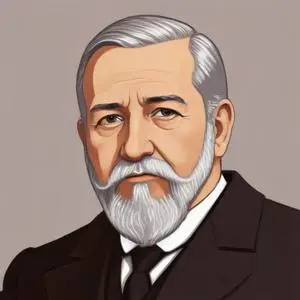
Benjamin Harrison

Benjamin Harrison

Benjamin Harrison was born on August 20th, 1833

Full Name: Benjamin Harrison
Place of Birth: North Bend, Ohio, USA
Nationality: American
Occupation: General, Lawyer, Politician
Zodiac Sign: Pisces
Date of Birth: August 20, 1833
Spouse: Caroline Lavinia Scott
Presidency: 23rd President of the United States

The 23rd President of the United States was a prominent leader who oversaw the admission of six new states to the Union and supported education and conservation efforts. He's also known for being the grandson of William Henry Harrison, the 9th President.

Written by: Emma Thompson Emma Thompson

Benjamin Harrison: The 23rd President of the United States

A Legacy of Progress and Protectionism

Benjamin Harrison is remembered as the 23rd President of the United States, serving from 1889 to 1893, and is known for his significant contributions to the country's economic growth, environmental conservation, and military modernization. During his presidency, Harrison implemented landmark legislation, including the McKinley Tariff and the Sherman Antitrust Act, which shaped the nation's trade policies and corporate landscape.

Early Life and Education

Born on August 20, 1833, on a farm by the Ohio River, Harrison was a descendant of the esteemed Harrison family of Virginia. He graduated from Miami University in Oxford, Ohio, and later moved to Indianapolis, where he established himself as a prominent local attorney and Presbyterian church leader.

Military Service and Political Rise

Harrison's military career was marked by his service in the Union Army as a colonel during the American Civil War. In 1865, the U.S. Senate confirmed him as a brevet brigadier general of volunteers. He later ran for governor of Indiana in 1876, although unsuccessfully. However, the Indiana General Assembly elected him to a six-year term in the Senate, where he served from 1881 to 1887.

Presidency and Key Achievements

Harrison's presidency was marked by several significant accomplishments:

Challenges and Controversies

Despite his accomplishments, Harrison's presidency was not without challenges and controversies. He faced opposition from Democrats and Populists, who criticized his economic policies and perceived him as being out of touch with the common man. Additionally, his proposals for federal education funding and voting rights enforcement for African Americans were unsuccessful.

Personal Life and Legacy

Harrison married Caroline Lavinia Scott in 1853, and they had three children together. After leaving office, Harrison returned to Indianapolis, where he practiced law and remained active in politics until his death on March 13, 1901. Today, Benjamin Harrison is remembered as a president who championed American industries, protected the environment, and modernized the military. His legacy continues to inspire leaders and policymakers, offering valuable lessons in the importance of balancing economic growth with social responsibility.
Timeline
1833
Birth in North Bend, Ohio
Benjamin Harrison was born in North Bend, Ohio, USA. He would go on to become a American general, lawyer, and politician.
1862
Enlistment in the Union Army
Harrison enlisted in the Union Army during the American Civil War, serving as a brigadier general.
1888
Election as 23rd President of the United States
Harrison was elected as the 23rd President of the United States, serving from 1889 to 1893.
1892
Defeat in Presidential Election
Harrison lost his re-election bid to Grover Cleveland, marking the end of his presidential term.
1901
Death in Indianapolis, Indiana
Benjamin Harrison passed away in Indianapolis, Indiana, leaving behind a legacy as a notable American politician.
Benjamin Harrison

Benjamin Harrison Quiz

What was a significant achievement of Benjamin Harrison's presidency?

Score: 0/5
FAQ
What were Benjamin Harrisons accomplishments as President?
Benjamin Harrison was the 23rd President of the United States, serving from 1889 to 1893. He is known for his strong support of education, voting rights, and conservation, as well as his advocacy for a strong navy and foreign policy initiatives.
How did Benjamin Harrisons presidency shape American education?
Harrison signed the Dependent Pension Act, which provided education and support to Civil War veterans and their families. He also advocated for federal funding for education and established the Office of Education.
What was Benjamin Harrisons position on Civil Rights?
Harrison supported civil rights and voting rights for African Americans, advocating for the passage of the Lodge Bill, which aimed to protect African American voting rights in the South.
How did Benjamin Harrisons presidency influence American foreign policy?
Harrisons presidency marked a shift towards a more assertive American foreign policy, with a focus on naval power and international trade. He also supported the annexation of Hawaii and negotiated the Treaty of Paris, ending the First Hawaiian Republic.
What is Benjamin Harrisons legacy in American history?
Benjamin Harrison is remembered as a strong leader who advocated for important social and political causes. His presidency set important precedents for education, civil rights, and American foreign policy.

Related People:

Grover Cleveland

Born in 1837

The first Democrat elected after the Civil War, he served two non-consecutive terms, earning him a unique spot in history, and is often remembered for his strong leadership and commitment to limited government.

William McKinley

Born in 1843

The 25th President of the United States, a strong leader who championed high tariffs and annexed Hawaii, is most known for being assassinated at the 1901 World's Fair. He played a significant role in shaping the country's economy and foreign policy.

Theodore Roosevelt

Born in 1858

A pioneering leader who championed progressive reforms, trust-busting, and conservation, earning a Nobel Peace Prize for mediating the Russo-Japanese War. He's also famous for his rugged outdoorsmanship and "big stick" diplomacy.

Woodrow Wilson

Born in 1856

The 28th President of the United States, a Nobel Peace Prize winner, and a historian who played a key role in shaping international relations and global governance after World War I. He's most known for his idealistic vision of a League of Nations and his efforts to promote peace and diplomacy.

Warren G. Harding

Born in 1865

The 29th President of the United States, a journalist-turned-politician, led the country through a period of post-war prosperity and scandalous corruption. He's infamous for his administration's numerous scandals and his own extramarital affairs.

Calvin Coolidge

Born in 1872

The 30th President of the United States, a lawyer and politician, led the country through a period of economic prosperity and limited government intervention, earning the nickname "Silent Cal" for his frugal and humble nature. He's most known for his minimalist approach to governance and tax cuts.

Herbert Hoover

Born in 1874

The 31st President of the United States was a humanitarian and politician who led the country through the Great Depression and is known for his humanitarian efforts and infrastructure development. He's also infamous for his inability to mitigate the economic crisis.

Franklin D. Roosevelt

Born in 1882

Led the United States through the Great Depression and World War II, implementing a series of reforms known as the New Deal and helping to establish the country as a global superpower.