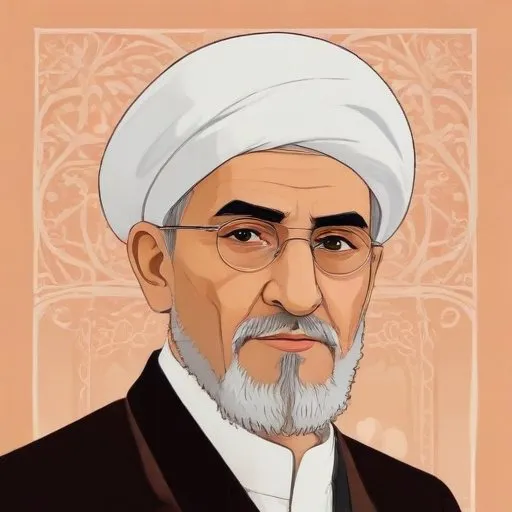
AbdulBah: The Visionary Leader of the Baha'i Faith
Introduction to a Luminous Life
AbdulBah, also known as `Abdu'l-Bahá, was the eldest son of Bahá'u'lláh, the prophet-founder of the Baha'i Faith, and is revered as the perfect exemplar of his father's teachings. Throughout his life, AbdulBah demonstrated extraordinary wisdom, compassion, and leadership, earning him the title "Master" and solidifying his position as a central figure in the Baha'i Faith.
Early Life and Upbringing
Born in 1844 in Tehran, Persia, AbdulBah was raised in a household of profound spirituality and dedication to the well-being of humanity. His father, Bahá'u'lláh, was a renowned poet, philosopher, and religious leader who would eventually announce his mission as the prophet of a new era of human history. AbdulBah's upbringing instilled in him a deep understanding of his father's teachings, which would shape his future as a leader and ambassador of the Baha'i Faith.
Leadership and Wisdom
Following Bahá'u'lláh's passing in 1892, AbdulBah assumed leadership of the Baha'i community, guiding it through a period of rapid growth and transformation. His wisdom, compassion, and extraordinary leadership abilities enabled him to navigate complex theological and social issues, while fostering a spirit of unity and cooperation among the faithful. AbdulBah's renowned wisdom and leadership earned him widespread respect and admiration, attracting visitors from diverse backgrounds, including scholars, politicians, and royalty.
Philosophical Contributions and Beliefs
AbdulBah's philosophical contributions and beliefs were deeply rooted in the principles of the Baha'i Faith, which emphasize the oneness of God, the unity of humanity, and the importance of education, justice, and world peace. He believed in the inherent nobility of human beings and advocated for the empowerment of women, the promotion of education, and the abolition of racial and religious prejudices. His philosophical perspective was characterized by a profound understanding of humanity's potential and the importance of collective effort in achieving a more just and peaceful world.
Influence on Modern Society
AbdulBah's influence on modern society is multifaceted and far-reaching. He was a pioneer in promoting international cooperation, advocating for the establishment of a world government, and championing the cause of world peace. His vision for a unified humanity inspired countless individuals to work towards creating a more just and harmonious world. Through his teachings and example, AbdulBah continues to inspire people from diverse backgrounds to strive for excellence, compassion, and wisdom.
Career Highlights and Major Works
Some of AbdulBah's most notable works include:
- The Secret of Divine Civilization, a treatise on social and political reform
- The Mysterious Forces of Nature, a philosophical exploration of the human condition
- Talks and Addresses, a collection of public lectures and private conversations
- Seven Valleys, a mystical allegory on the journey of the soul
- Tablets of the Divine Plan, a collection of letters outlining the Baha'i Faith's global strategy
Personal Milestones and Key Life Events
AbdulBah's life was marked by numerous personal milestones and key events, including:
- His imprisonment in the Siyah-Chal dungeon in Tehran, where he was subjected to harsh conditions and torture
- His journey to the West, during which he traveled to Europe and North America, promoting the Baha'i Faith and fostering dialogue with prominent thinkers and leaders
- His role in the development of the Baha'i World Centre in Haifa, Israel, which would become the administrative headquarters of the Baha'i Faith
Legacy and Historical Context
AbdulBah's legacy is deeply rooted in the history of the Baha'i Faith, which he played a crucial role in shaping and developing. His extraordinary life and teachings have inspired generations of Baha'is and non-Baha'is alike, fostering a culture of unity, compassion, and service to humanity. As a visionary leader, AbdulBah's impact on modern society continues to grow, as people from diverse backgrounds come to appreciate the wisdom and values he embodied.
Conclusion
AbdulBah's life and teachings offer a profound lesson in the power of wisdom, compassion, and leadership. As a champion of human unity and a beacon of hope in a world torn apart by conflict and division, his legacy continues to inspire and guide generations of people striving to make a positive difference in the world.
FAQ
What was Abdul-Bahás role in the Baháí Faith?
Abdul-Bahá was a prominent figure in the Baháí Faith, serving as the head of the faith from 1892 until his death in 1921. He was the son of Baháulláh, the founder of the faith, and was instrumental in spreading the teachings of Baháulláh around the world.
What was Abdul-Bahás most notable achievement?
Abdul-Bahás most notable achievement was his ability to spread the teachings of the Baháí Faith to a global audience. He traveled extensively throughout his life, visiting Europe, North America, and other parts of the world, and established a network of Baháí communities that continue to thrive today.
What was Abdul-Bahás relationship with Baháulláh?
Abdul-Bahá was the son of Baháulláh, the founder of the Baháí Faith. He was his fathers chosen successor and played a key role in spreading the teachings of Baháulláh around the world. Abdul-Bahá was deeply devoted to his father and worked tirelessly to fulfill his fathers vision for the Baháí Faith.
What were Abdul-Bahás teachings?
Abdul-Bahás teachings emphasized the importance of unity, social justice, and the elimination of prejudice. He believed in the unity of all religions and advocated for the establishment of a world government and a global system of education.
What was Abdul-Bahás legacy in the Baháí Faith?
Abdul-Bahás legacy in the Baháí Faith is that of a visionary leader who helped to establish the faith as a global religion. He is remembered as a champion of unity and social justice, and his teachings continue to inspire Baháís around the world.