


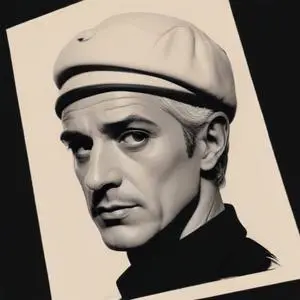
A pioneering filmmaker who revolutionized the cinematic experience with innovative techniques and epic productions, most notably the silent film "Napoleon".
Abel Gance, a French film director, producer, writer, and actor, is renowned for his groundbreaking work in the theory and practice of montage, leaving an indelible mark on the world of cinema. His three major silent films, J'accuse (1919), La Roue (1923), and Napoléon (1927), continue to inspire filmmakers and audiences alike.
Born Abel Eugène Alexandre Privon on October 25, 1889, in Paris, Gance was the illegitimate son of a prosperous doctor and a working-class mother. His early life was marked by instability, with his mother remarrying a chauffeur and mechanic, Adolphe Gance, whose name Abel later adopted. Despite the challenges he faced, Gance's love for literature and art flourished through self-education.
Gance's silent films showcased his innovative use of montage, which he believed was the key to conveying complex emotions and ideas on screen. His breakthrough film, J'accuse, is a powerful anti-war statement that explores the futility of war through a series of haunting and poignant images.
La Roue, a six-hour epic, is considered one of the greatest silent films of all time, featuring a complex narrative and pioneering camera techniques. Gance's masterpiece, Napoléon, is a visual feast that showcases his mastery of montage, with its iconic triptych sequence and innovative use of camera angles.
Gance's work has inspired generations of filmmakers, including Alfred Hitchcock, Akira Kurosawa, and Martin Scorsese, among many others. His innovative use of montage has influenced the development of filmmaking techniques, and his silent films continue to be celebrated for their artistic and historical significance.
In 1981, Gance passed away at the age of 92, leaving behind a legacy that continues to inspire and captivate audiences today. As a pioneer of montage and silent film, Abel Gance remains one of the most important figures in the history of cinema.
"The cinema is the modern equivalent of the fresco; it is a mural art, a painting that moves and speaks." - Abel Gance
"The future of cinema lies in the fusion of drama and documentary, of fiction and reality." - Abel Gance
Abel Gance's remarkable life and work continue to inspire filmmakers, scholars, and audiences around the world, cementing his place as one of the most important and influential figures in the history of cinema.
Born in 1769
A French military leader who rose to prominence during the French Revolution and became Emperor of France, known for his military conquests and reorganization of Europe. He is also famous for his Napoleonic Code, which remains a foundation of modern law.
Born in 1889
A pioneer of silent film, he is renowned for his iconic "Little Tramp" character and groundbreaking work in writing, directing, and starring in his own movies.
Born in 1875
Pioneering filmmaker behind groundbreaking silent movies, credited with developing innovative camera techniques and narrative storytelling styles.
Born in 1898
A pioneer of montage editing, he revolutionized filmmaking with his iconic scenes and theories, influencing generations of directors.
95 Years Old
A pioneer of French New Wave cinema, known for experimental and provocative films that challenged traditional narrative structures and explored themes of politics, philosophy, and social commentary.
94 Years Old
A pioneering filmmaker of the French New Wave, known for directing iconic films like "Jules and Jim" and "The 400 Blows", which redefined cinematic storytelling.
