


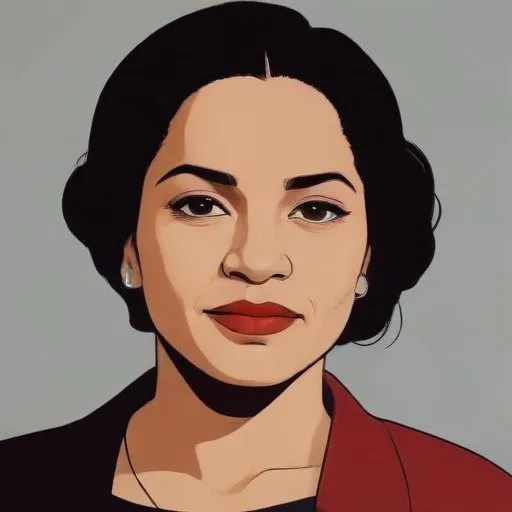
A pioneering figure in Dominican feminist movement, advocating for women's rights and education, while contributing to literary criticism and nationalist discourse.
Abigail Mejia, a renowned Dominican feminist, nationalist, literary critic, and educator, is celebrated for her tireless efforts to promote women's rights and education in the Dominican Republic. She is particularly recognized for founding the Club Nosotras in 1927 and Accin Feminista, two influential organizations that championed women's empowerment and social justice.
Born on April 15, 1895, in Santo Domingo, Dominican Republic, Mejia was raised in a family of intellectuals who nurtured her intellectual curiosity. She completed her primary education at the Salom Urea de Henrquez School for Girls and Liceo Dominicano, laying the foundation for her future academic pursuits.
In 1912, Mejia moved to Barcelona with her family, where she obtained a degree from normal school in 1919. Her experiences in Europe, particularly in metropolitan cities like Barcelona and Paris, deeply influenced her feminist thought and activism.
Mejia's return to Santo Domingo in 1925 marked the beginning of her remarkable career as a professor of Spanish language and literature at the Escuela Normal Superior de Santo Domingo. During this period, she became increasingly involved in the feminist movement, drawing inspiration from her encounters with European feminist pioneers.
In 1927, Mejia founded the Club Nosotras, a women's organization dedicated to promoting education, social justice, and women's rights. This milestone marked the beginning of a new era in Dominican feminism, with Mejia at its forefront.
Her literary criticism and feminist activism earned her widespread recognition, including her appointment as a professor of Literature, Pedagogy, and History at the Superior Normal School of Santo Domingo. Mejia's work had a profound impact on the Dominican Republic's educational system, shaping future generations of scholars and thinkers.
Mejia's contributions to Dominican feminism and education have left an indelible mark on the country's social and cultural landscape. Her tireless advocacy for women's rights, education, and social justice continues to inspire future generations of activists, scholars, and educators.
Today, Mejia is remembered as one of the leading figures of feminism in the Dominican Republic, a testament to her unwavering commitment to creating a more just and equitable society.
Mejia's friendships with prominent Spanish feminist pioneers, including Concha Espina Santander, Blanca de los Ros Sevilla, and Emilia Pardo Bazn, had a profound impact on her work and worldview. These relationships not only influenced her feminist thought but also shaped her literary criticism and educational philosophy.
Mejia's remarkable achievements have been recognized through various awards and honors, solidifying her position as a pioneering figure in Dominican feminism and education.
Despite facing numerous challenges and setbacks, Mejia's unwavering dedication to her ideals has left a lasting legacy, inspiring future generations to continue fighting for social justice and women's empowerment.
Born in 1839
A prominent figure in Latin American philosophy, he advocated for education, women's rights, and independence, shaping modern Puerto Rican thought and identity.
