


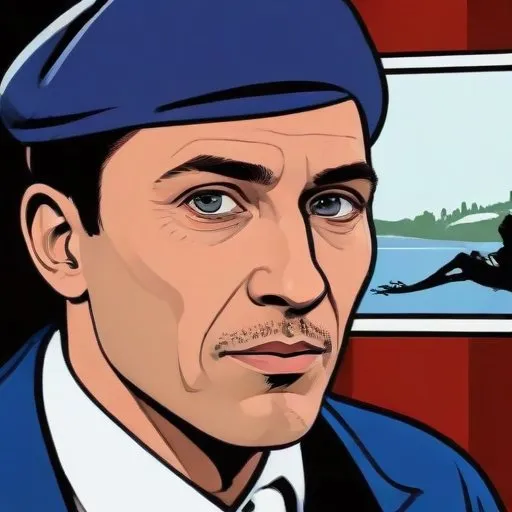
A pioneering Estonian artist celebrated for his vibrant, avant-garde paintings that blended Cubism and Futurism, capturing the essence of urban life. His works are a testament to the country's rich cultural heritage.
Ado Vabbe was a renowned Estonian painter, printmaker, and teacher, credited with introducing abstraction to his homeland after studying at Anton ABe's art school in Munich from 1911 to 1913. His innovative style and teachings had a profound impact on the development of Estonian modern art, earning him a reputation as a pioneer in his field.
Born on March 19, 1892, Vabbe's early life and education laid the foundation for his future success. His studies in Munich not only exposed him to the latest artistic trends but also instilled in him a deep appreciation for the avant-garde movement.
Vabbe's most significant contribution to Estonian art was his introduction of abstraction, a style that was new to the region at the time. His "Paraphrases" series, created in the 1920s, is considered a turning point in the country's art history. This innovative style, characterized by bold colors and geometric shapes, paved the way for future generations of Estonian artists.
Vabbe's impact on Estonian art extended beyond his own creations. As a dedicated teacher, he inspired and guided many young artists, fostering a new wave of modern Estonian art. His legacy as an educator is still celebrated today, with many of his students going on to become prominent artists in their own right.
In recognition of Vabbe's contributions to Estonian art, the Ado Vabbe Art Fellowship was established by the city of Tartu and the Tartu Cultural Endowment. This prestigious award honors Vabbe's memory and continues to support emerging artists in their creative endeavors.
Vabbe's personal life was marked by a strong connection to his homeland. He spent most of his life in Estonia, where he continued to create and teach until his passing on April 20, 1961, in Tartu. His legacy lives on through his art and the many artists he inspired during his lifetime.
Ado Vabbe's innovative style, dedication to teaching, and contributions to Estonian art have left an indelible mark on the country's cultural landscape. As a pioneer of abstraction, he paved the way for future generations of artists, ensuring his legacy continues to inspire and influence Estonian art to this day.
Born in 1878
A pioneering Estonian artist and educator who introduced French Impressionism and Fauvism to Estonia, influencing the country's modern art movement. Known for his vibrant, expressive landscapes and portraits.
Born in 1898
A pioneering Estonian printmaker and artist, renowned for his bold, expressive, and often unsettling etchings and engravings that explored the human condition.
Born in 1868
Estonian linguist and diplomat who contributed significantly to the development of Estonian language and literature, and served as a cultural ambassador between Estonia and other European countries.
Born in 1890
A celebrated Estonian literary figure, known for his poignant poetry and novels that explored the human condition, love, and the Estonian identity.
