


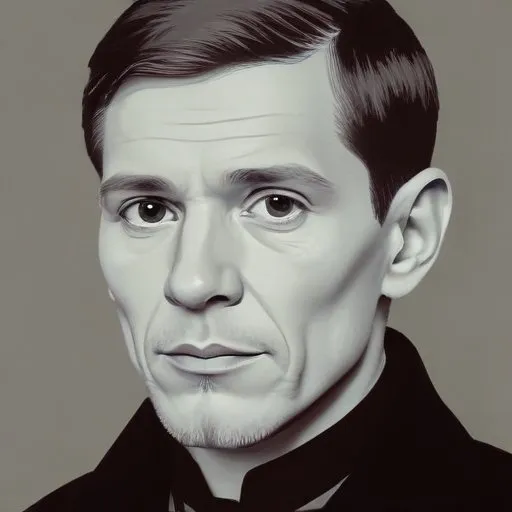
A pioneering Estonian artist and educator who introduced French Impressionism and Fauvism to Estonia, influencing the country's modern art movement. Known for his vibrant, expressive landscapes and portraits.
Konrad Mgi was a renowned Estonian painter, celebrated for his breathtaking landscape works that showcased his extraordinary sensitivity to color. Born on November 1, 1878, Mgi's artistic career spanned over two decades, leaving an indelible mark on the art world.
Mgi's artistic journey began in Tartu, Estonia, where he received his elementary art education from the drawing courses of the German Artisans Society between 1899 and 1902. During this period, he was also involved in theater, violin, and sports, showcasing his multifaceted personality.
In 1903, Mgi continued his art education as an unattached student in Saint Petersburg, studying under the guidance of Amandus Adamson. This exposure laid the foundation for his future artistic pursuits. A year later, in 1907, Mgi traveled to Paris, where he was drawn to the city's vibrant art scene and studied at a free academy.
Mgi's artistic style was significantly influenced by his experiences in Paris, where he was exposed to Impressionism and Fauvism. This is evident in his works from the late 1900s, such as "Lilleline vli majakesega" (A flower field with a little house, 1908-1909) and "Norra maastik mnniga" (A Norwegian landscape with a pine, 1910).
Upon his return to Estonia, Mgi's work began to exhibit Expressionist undertones, reflecting his sensitivity to the turmoil of the time. This is evident in his works from the 1910s, including "Phajrv Lake Pha" (1918-1920) and "Otep maastik" (Landscape of Otep, 1918-1920).
Mgi's artistic direction took a new turn during his trip to Italy in the early 1920s. His works from this period, such as "Varemed Capril Ruins in Capri" (1922-1923), showcased a more subdued and serene tone, marking a departure from his earlier, more expressive works.
In addition to his landscape works, Mgi was also known for his captivating portraits and flower paintings. His portraits, such as "Holsti" (1916), embodied the Art Nouveau ideal of beauty, while his later portraits from the 1920s, like "Madonna" (1923-1924), revealed a more serious and contemplative tone.
Konrad Mgi's artistic contributions have left an indelible mark on Estonian art. His works continue to inspire and captivate audiences, showcasing his extraordinary sensitivity to color and his ability to capture the essence of the natural world.
Through his diverse and captivating works, Mgi has left a lasting legacy, cementing his position as one of the most celebrated Estonian painters of the twentieth century.
Born in 1856
A Russian Symbolist painter who created vibrant, dreamlike works that blended fantasy and reality, often featuring mythical creatures and folklore-inspired themes.
Born in 1884
Estonian painter and illustrator renowned for vibrant, Symbolist-inspired works that captured the essence of his homeland's landscapes and folklore. His art often blended traditional motifs with modernist techniques.
Born in 1868
Estonian linguist and diplomat who contributed significantly to the development of Estonian language and literature, and served as a cultural ambassador between Estonia and other European countries.
Born in 1892
A pioneering Estonian artist celebrated for his vibrant, avant-garde paintings that blended Cubism and Futurism, capturing the essence of urban life. His works are a testament to the country's rich cultural heritage.
Born in 1898
A pioneering Estonian printmaker and artist, renowned for his bold, expressive, and often unsettling etchings and engravings that explored the human condition.
