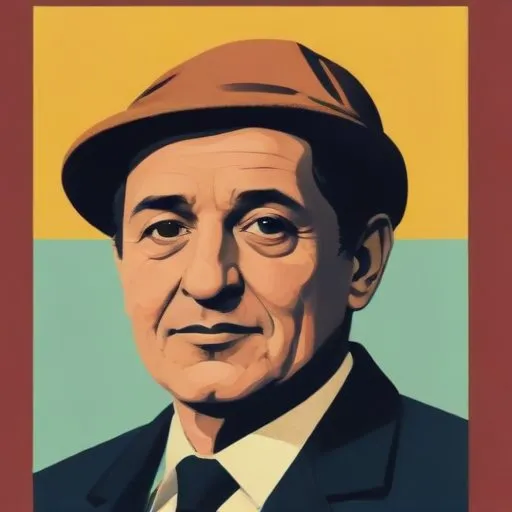
Adrian Punescu: The Charismatic Romanian Writer and Cultural Icon
A Poetic Force in Romanian Literature
Adrian Punescu was a renowned Romanian writer, publisher, cultural promoter, translator, and politician, known for his profound impact on Romanian literature and culture. Dubbed "Romania's most famous poet" by the Associated Press, Punescu's work continues to resonate with the Romanian people, despite controversy surrounding his involvement with the Communist regime.
A Complex and Charismatic Figure
Born on July 20, 1943, in Copceni, Bli County (now part of the Republic of Moldova), Punescu's life was a testament to his multifaceted personality. With a childhood spent in Brca, Dolj County, and later pursuing secondary studies at the Fraii Buzeti High School in Craiova and Saint Sava High School in Bucharest, Punescu's foundation in education lay the groundwork for his future success.
Rise to Prominence
Punescu studied philology at the University of Bucharest, becoming a writer and journalist, and eventually an influential public figure in the 1970s and early 1980s. His popularity soared with frequent television appearances, earning him widespread recognition among Romanian youth.
However, Punescu's rise to fame was not without controversy. He faced criticism for writing flattering poems about Nicolae Ceaușescu, the notorious Romanian dictator, which sparked debates about his integrity and literary value. Despite this, Punescu remained a beloved figure in Romania, where his charismatic personality and literary talent continue to inspire.
Flacra and Cenaclul Flacra: A Cultural Legacy
Punescu's involvement with the Union of Communist Youth (1966-1968) and the Romanian Communist Party (1968-1989) led to his control over the major weekly publication, Flacra. He also founded Cenaclul Flacra, an itinerant cultural event series that combined folk and pop music, poetry, and more, which became incredibly popular between 1973 and 1985.
Personal Milestones and Key Life Events
- Punescu's membership in the Union of Communist Youth (1966-1968)
- Membership in the Romanian Communist Party (1968-1989)
- Founding of Cenaclul Flacra (1973)
-
Philosophical Contributions and Beliefs
Punescu's literary work often explored themes of identity, morality, and the human condition, reflecting his deep philosophical roots. While his association with the Communist regime raises questions about his beliefs, his later critiques of the regime suggest a complex and nuanced perspective.
Awards and Honors
Despite controversy surrounding his legacy, Punescu's contributions to Romanian literature and culture have earned him a place in the nation's heart. Today, he remains an enigmatic figure, embodying both the complexity and beauty of Romanian identity.
Legacy and Impact on Modern Society
Punescu's influence extends beyond his literary work, shaping the cultural landscape of Romania and inspiring generations of writers, artists, and thinkers. As the România Liber newspaper summarized, "Punescu is still viewed as a hero by the man in the street, although intellectuals continue to question his integrity and the literary value of his work."
FAQ
What were Adrian Păunescus most notable literary works?
Adrian Păunescu was a prolific poet, journalist, and politician, and his most notable literary works include poetry collections such as Lumea fizică and Cronica Anastasiei.
What was Adrian Păunescus role in Romanian politics?
Adrian Păunescu served as the Romanian Minister of Culture between 1990 and 1991, and was a prominent figure in the countrys post-Ceaușescu era.
How did Adrian Păunescus literary style evolve?
Adrian Păunescus literary style evolved from a focus on lyrical poetry to more experimental and avant-garde works, reflecting his involvement in the Romanian avant-garde movement of the 1960s and 1970s.
What awards did Adrian Păunescu receive?
Adrian Păunescu received several awards for his literary and journalistic work, including the Nichita Stănescu Prize for Poetry and the Ion Creangă Prize for Journalism.
Is Adrian Păunescus work still widely read today?
Yes, Adrian Păunescus work remains widely read and studied in Romania today, and his poetry and essays continue to influence contemporary Romanian literature.