


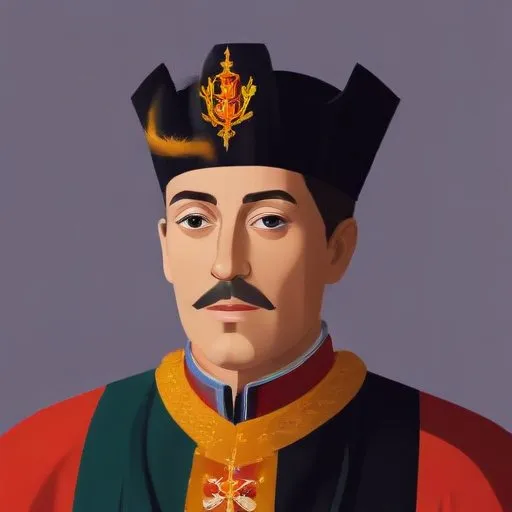
Daughter of a king and queen, she was a medieval princess who played a key role in 13th-century Portuguese politics and royal marriages. Her life was marked by strategic alliances and family power struggles.
Afonso III of Portugal, also known as Afonso, the Boulonnais, or Alphonso, reigned as the King of Portugal and the Algarve from 1249 to 1279. He is renowned for being the first monarch to use this title, marking a significant shift in the country's identity and unifying the kingdom.
Born on May 5, 1210, in Coimbra, Afonso was the second son of King Afonso II of Portugal and Urraca of Castile. Initially, he was not expected to inherit the throne, which was destined for his elder brother, Sancho II. Instead, Afonso lived in France, where he married Countess Matilda II of Boulogne in 1238, becoming the count of Boulogne, Mortain, Aumale, and Dammartin jure uxoris.
Conflict between his brother, Sancho II, and the church reached a boiling point in 1246. In 1247, Pope Innocent IV ordered Sancho's removal from the throne, paving the way for Afonso's ascension. Afonso did not hesitate, marching to Portugal and eventually ascending to the throne after his brother's death in 1248.
Afonso III's reign was marked by a series of significant reforms aimed at strengthening the Portuguese monarchy and resolving the ongoing conflicts with the church. He established the first session of the Portuguese Cortes in Leiria in 1254, providing a platform for the middle class, comprising merchants and small landowners, to voice their concerns.
In an effort to consolidate power and assert his authority, Afonso III abolished the title of Count of Portugal and adopted the title of King of Portugal and the Algarve, symbolizing the unity of the kingdom. He also established the Portuguese mint, introducing a new currency, and reorganized the administration of justice.
Afonso III's personal life was marked by two significant marriages. His first marriage to Countess Matilda II of Boulogne in 1238 was a strategic alliance that granted him control over various French territories. However, he divorced Matilda in 1253 to marry Beatrice of Castile, the illegitimate daughter of Alfonso X, King of Castile, and Mayor Guillén de Guzmán.
Afonso III's reign had a profound impact on Portuguese history, establishing the country as a unified and centralized state. His reforms and policies laid the foundation for the development of a strong and stable monarchy, paving the way for future generations of Portuguese rulers.
Today, Afonso III is remembered as a visionary leader who worked tirelessly to strengthen the Portuguese monarchy and promote the welfare of his people. His legacy serves as a testament to the power of effective leadership and the importance of reform and unity in shaping a nation's destiny.
Afonso III's remarkable life and reign continue to inspire generations, serving as a powerful reminder of the importance of unity, reform, and effective leadership in shaping a nation's destiny.
Born in 1209
King of Portugal from 1223 to 1248, known for his military campaigns to reconquer territories from the Moors and his conflicts with the Catholic Church.
Born in 1320
King of Portugal who ruled from 1357 to 1367 and is remembered for his brutal suppression of the nobility and his role in the Portuguese succession crisis. He's also known for his tumultuous personal life, including the murder of his mistress's lover.
Born in 1432
King of Portugal who ruled from 1438 to 1481, known for his military conquests in North Africa and the expansion of Portuguese trade and exploration.
