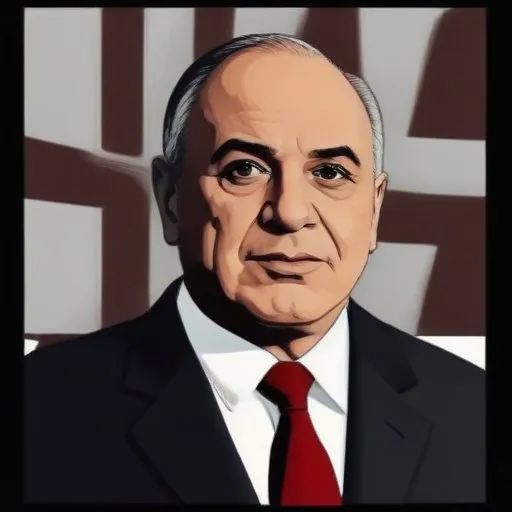
Ahmed Chalabi: The Enigmatic Iraqi Politician
A Life of Political Intrigue and Controversy
Ahmed Chalabi, a prominent Iraqi politician, is best known for his role as the founder of the Iraqi National Congress (INC) and his influential position in shaping the political landscape of post-
Saddam Hussein Iraq. Throughout his career, Chalabi has been at the forefront of several pivotal events, from the lead-up to the 2003 US-led invasion to his subsequent roles in the Iraqi government.
Early Life and Education
Born on October 30, 1945, in Baghdad, Iraq, Ahmed Chalabi hails from a prominent Shiite family. He pursued higher education in the United States, earning a bachelor's degree in mathematics from the Massachusetts Institute of Technology (MIT) in 1969. Chalabi later went on to earn a Ph.D. in mathematics from the University of Chicago in 1973.
Early Political Career and INC Formation
Chalabi's foray into politics began in the 1990s, when he became an outspoken critic of Saddam Hussein's regime. In 1992, he founded the Iraqi National Congress (INC), a political organization aimed at overthrowing Hussein's government and promoting democracy in Iraq. The INC received significant financial support from the United States, which saw Chalabi as a key player in the struggle against Hussein.
Rise to Prominence and Controversy
Chalabi's relationship with the US government was instrumental in shaping his rise to prominence. Prior to the 2003 invasion, the INC provided intelligence to the US government, which was later found to be largely inaccurate. This intelligence was used to justify the invasion, and Chalabi was hailed as the "
George Washington of Iraq" by some American supporters. However, his fortunes began to decline when the US government realized the extent of the INC's faulty intelligence.
Government Roles and Scandals
Chalabi held various government positions, including President of the Governing Council of Iraq, interim Minister of Oil, and Deputy Prime Minister. However, his tenure was marked by controversy, including his involvement in the Petra Bank scandal in Jordan. In 2006, he lost his seat in parliament and subsequently fell out of favor with the US government.
Legacy and Impact
Despite his controversial career, Chalabi's influence on modern Iraqi politics cannot be overstated. His role in shaping the post-Saddam Hussein era has been significant, and his legacy continues to be felt in the country's ongoing political struggles.
Personal Life and Milestones
Little is known about Chalabi's personal life, but it is reported that he was married and had two children. Throughout his life, he has been known for his charismatic personality and his ability to navigate complex political landscapes.
Philosophical Contributions and Beliefs
Chalabi's philosophical beliefs are largely centered around his commitment to democracy and his desire to see Iraq become a modern, secular state. While his methods have been criticized, his dedication to the cause of Iraqi democracy remains unwavering.
Career Highlights and Major Works
- Founder of the Iraqi National Congress (INC)
- President of the Governing Council of Iraq
- Interim Minister of Oil
- Deputy Prime Minister of Iraq
Controversies and Public Perception
Ahmed Chalabi's legacy is marred by controversy, with many viewing him as a "fabricator" who provided false intelligence to the US government. His subsequent fall from grace has led to a reevaluation of his role in shaping modern Iraqi politics.
Historical Context and Legacy
Chalabi's story serves as a cautionary tale about the complexities of international politics and the dangers of relying on flawed intelligence. Despite his flaws, Chalabi remains an important figure in modern Iraqi history, and his legacy continues to shape the country's political landscape.
FAQ
What was Ahmed Chalabis role in the Iraq War?
Ahmed Chalabi was a key figure in the lead-up to the Iraq War, providing US policymakers with intelligence about Saddam Husseins regime. He was a strong advocate for regime change and worked closely with the Bush administration to promote the invasion of Iraq.
What is Ahmed Chalabis background in politics?
Ahmed Chalabi was born in Baghdad in 1944 and was educated at MIT and the University of Chicago. He has held various positions in Iraqi politics, including serving as the head of the Iraqi National Congress, a group of exiles opposed to Saddam Hussein.
What is Ahmed Chalabis business career like?
Ahmed Chalabi has had a successful business career, working as a banker and investor. He has been involved in various ventures, including a bank in Jordan and several real estate developments in the Middle East.
What has Ahmed Chalabi been accused of?
Ahmed Chalabi has been accused of providing false intelligence to the US government about Saddam Husseins regime, leading to the Iraq War. He has also been accused of embezzlement and other financial crimes, although these charges have not been proven.
What is Ahmed Chalabis current status?
Ahmed Chalabi passed away in 2015, but his legacy remains controversial. Many have criticized his role in the Iraq War and his business dealings, while others have praised his bravery in opposing Saddam Husseins regime.