


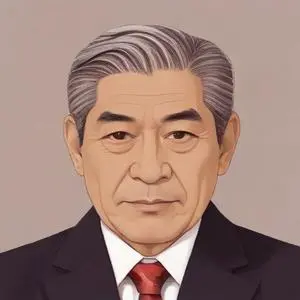
The Japanese monarch who reigned from 1989 to 2019, known for his efforts to promote peace and reconciliation, particularly in regards to Japan's wartime past. He also played a key role in modernizing the monarchy.
Akihito, born on December 23, 1933, is known for his remarkable 30-year reign as the 125th emperor of Japan, a period marked by efforts to bring peace and reform to the nation. His era, known as the Heisei era, was characterized by his commitment to achieving peace worldwide, and his reign saw significant changes in Japan's monarchy and society.
Akihito was born as the fifth child and first son of Emperor Hirohito and Empress Nagako. During World War II, he was evacuated from Tokyo and spent time in Nikko, returning to the capital in 1945. In 1952, he underwent his Coming-of-Age ceremony and was invested as crown prince, beginning his official duties. He went on to complete his university education in 1956.
In 1959, Akihito married Michiko Shoda, a commoner, in a televised ceremony that drew 15 million viewers. The couple has three children: Naruhito, Fumihito, and Sayako. This union marked a significant shift in the imperial family's approach to marriage, as it was the first time a monarch had married a commoner.
Following his father's death in 1989, Akihito succeeded to the Chrysanthemum Throne and became emperor of Japan. His enthronement ceremony took place in 1990. During his reign, Akihito made efforts to bring the imperial family closer to the Japanese people, making official visits to all 47 prefectures of Japan and many remote islands. He also developed a keen interest in natural life and conservation, as well as Japanese and world history.
Akihito's commitment to peace and conservation was reflected in his travels abroad, where he represented Japan at international events and met with world leaders. He was a strong advocate for international cooperation and worked to promote peace and understanding between nations.
In 2019, Akihito abdicated the throne, citing his advanced age and declining health. He assumed the title of Emperor Emeritus, a new title created for him. His legacy as a symbol of peace and reform continues to shape Japan's monarchy and society. At 90, Akihito is the longest-lived verifiable Japanese emperor in recorded history.
Akihito's reign had a significant impact on modern Japanese society. He worked to promote peace and understanding, both domestically and internationally. His commitment to conservation and natural life helped raise awareness about environmental issues in Japan.
"I think it is important to think about the history of the past, but I also think it is important to think about the future." - Akihito
Akihito's reign can be compared to that of Queen Elizabeth II of the United Kingdom, who also reigned for over three decades and worked to promote peace and understanding between nations. Both monarchs played significant roles in promoting their countries' interests abroad while maintaining a commitment to their people.
Born in 1901
The Japanese emperor who ruled from 1926 to 1989, leading the country through World War II and its post-war reconstruction, and is known for his symbolic role in Japanese politics and culture. He is also remembered for his rare public apology for Japan's wartime atrocities.
